Advertisement
PostMag
Life.Culture.Discovery.

How an American student discovered a passion for tea, travelling in Kunming and Darjeeling

Jason Cohen tells PostMag about his 20-year journey from exchange student to researcher in the world of Chinese tea

Reading Time:3 minutes
Why you can trust SCMP
Jason Cohen takes in the aroma of Sheng Puer tea in Yiwu, Yunnan province. Photo: courtesy Jason Cohen

I’ve been tasting tea for almost 20 years. Most of my tastings are analytical. I’m learning something about the tea, the pairing of wares, the brewing method. I’m in a frame of mind to judge and compare each brew to my past experiences, to place the tea into a context for future recall and understanding.
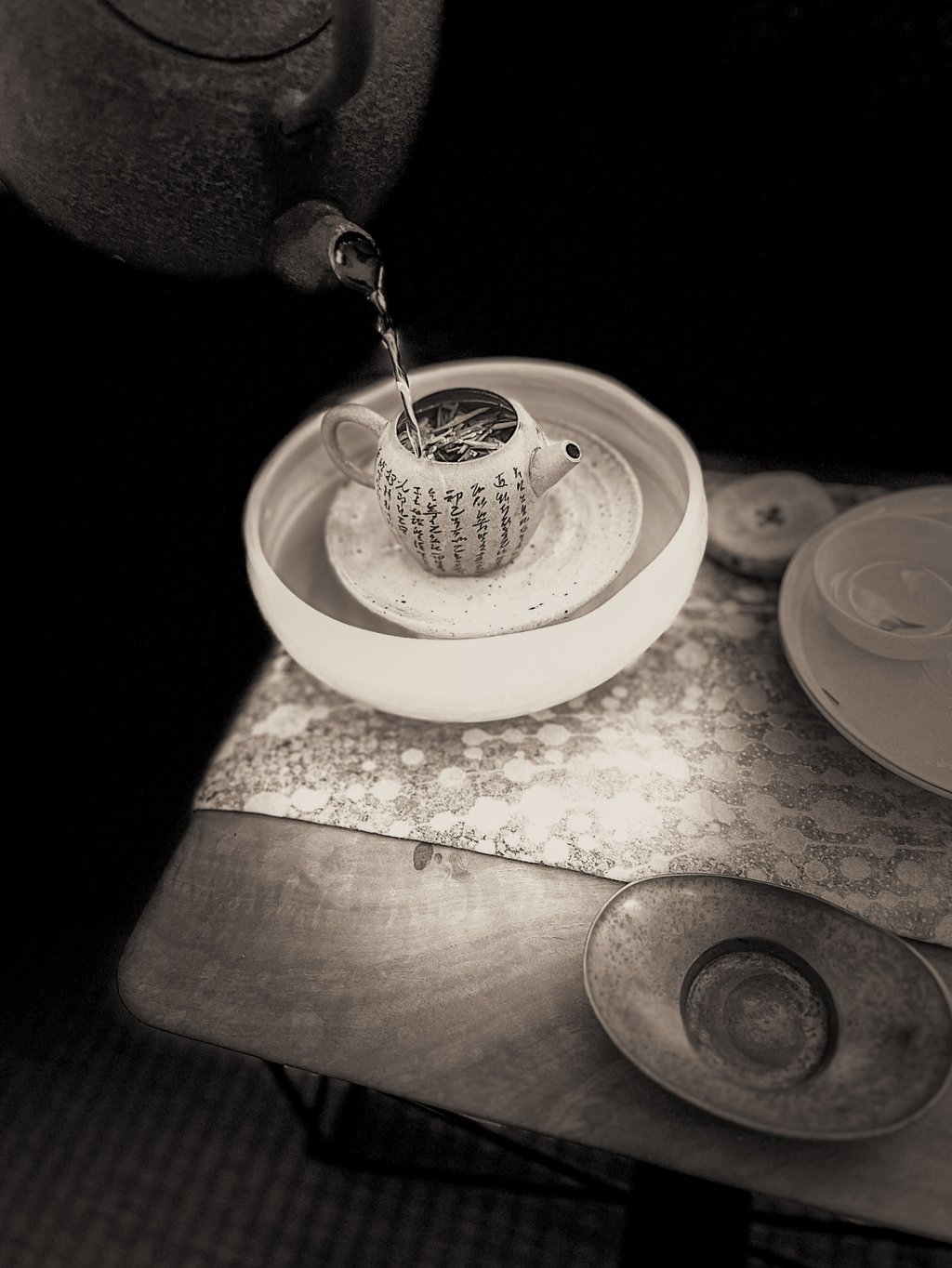
Tea in China is suffused into unexpected places. For most, tea is simply a beverage you order by the cup. But if you step beyond the basics, there’s a world of sensory experiences, aesthetic debate, philosophical reasoning and history.
It would be easy to buy and drink tea as a hobby, but writing my “Tea Technique” series of books allowed me to meet tea farmers, makers, collectors, ceramicists, museum curators and other tea tasters to both learn from and share experiences with them.
Jason Cohen brews tea in a teapot with the Heart Sutra carved into it. Photo: courtesy Jason Cohen

I first travelled to Kunming, in Yunnan province, in 2007 (to study politics), with no local contacts or Mandarin skills and only a passing interest in tea. At the time, the Chinese were seeking products with a local provenance and history, and Puer tea captured that desire. I was taken by the rustic authenticity of Sheng Puer, the romantic notion of aged tea and the idea of rediscovering an ancient cultural treasure.

Advertisement
I went to the tea market to drink tea and practise my Chinese, and met a former production master of China National Native Products, the state-run tea enterprise. He had started his independent brand focused on the then-new idea of single-origin Puer, and invited me to sit with his group. Visiting them daily, struggling with language while trying to describe tastes, I learned to discern origin, leaf quality and processing skill. They must have seen something in me because, despite my fledgling Mandarin, they nurtured my interest.
Jason Cohen processes tea in Yiwu. Photo: courtesy Jason Cohen
In 2008, I studied in Darjeeling, India, on the Makaibari Tea Estate. By 2009, I had founded the Tea Institute at Penn State University, an interdisciplinary research institute dedicated to the study of tea and tea culture. As its executive director until 2016, I oversaw the education of more than 80 students on topics related to tea. Developing lessons and teaching analytical tasting were a big element of my personal progression as a cha ren (tea person). We had students from all over the world who adopted Chinese tea as part of their lives and came to the institute’s teahouse to taste, learn and support or challenge each other.
Advertisement
Advertisement
Select Voice
Choose your listening speed
Get through articles 2x faster
1.25x
250 WPM
Slow
Average
Fast
1.25x