Advertisement
PostMag
Life.Culture.Discovery.
Interiors
PostMagDesign & Interiors

This seaview home in Hong Kong’s Southside is designed to evolve over time

Stylus Studio was inspired by the surrounding hills and the sea to incorporate elements of natural timber and stone

3-MIN READ3-MIN
Listen
The living room in the Ap Lei Chau apartment in Hong Kong, designed by Stylus Studio. Photo: Steven Ko
Peta Tomlinson

Intending to live there for years to come, the new owners of this Ap Lei Chau flat anticipate waking up every day to the picture-postcard seascape beyond their bedroom window.
The scenic Southside outlook was only one reason the couple, parents of two young daughters, bought the 1,950 sq ft apartment in 2023. They knew they could also personalise the place. During a 10-month renovation (completed in December 2024) Simon Zeng, co-founder of Stylus Studio, was enlisted to create a home that would grow with the family, with designated spaces for adults and children that could evolve over time.
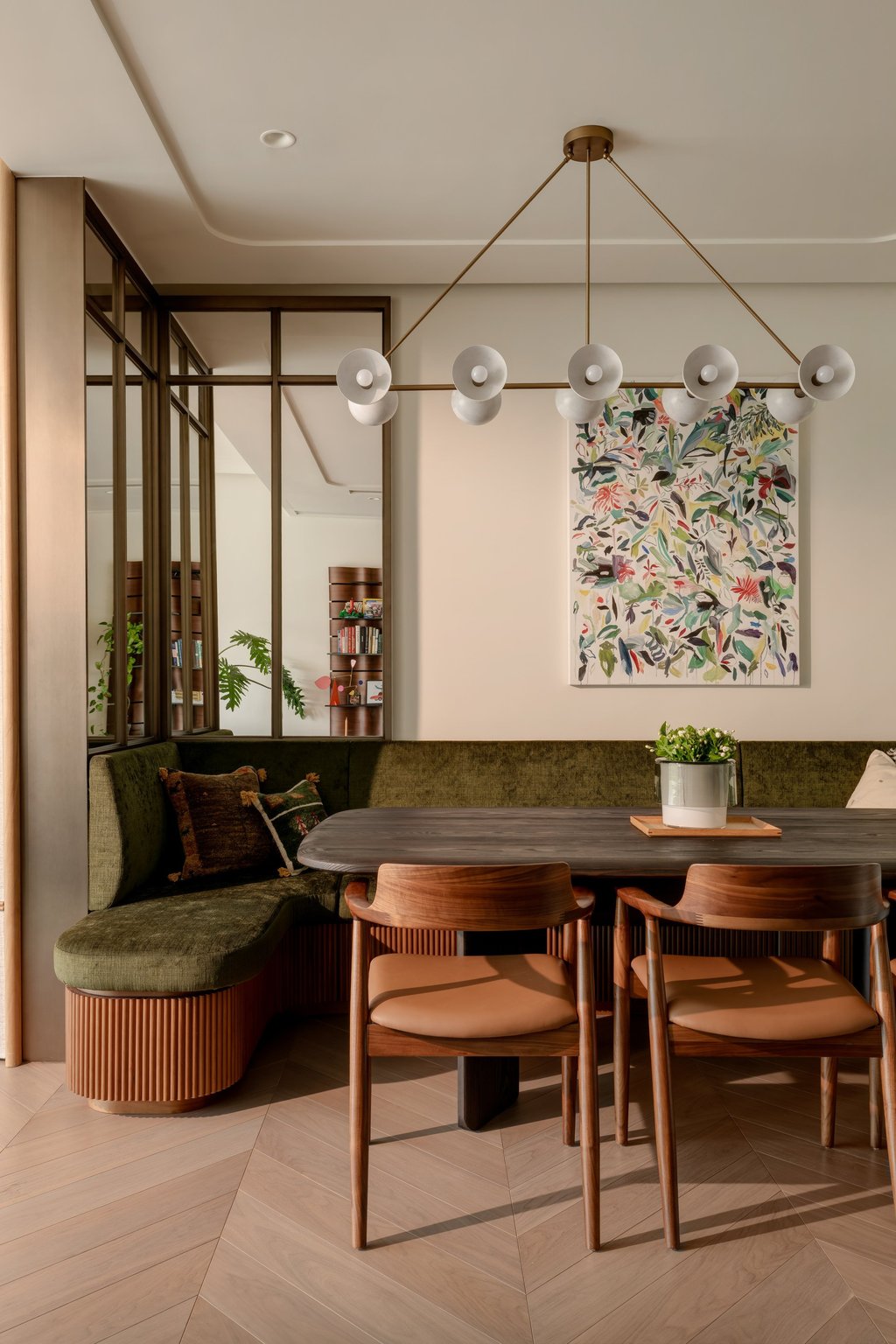
The dining area. Photo: Steven Ko

The couple wanted to add a third bedroom to the original two, and a study-cum-parents’ retreat for themselves. Zeng was able to accommodate both requests, creating a nursery for the younger daughter within the floor plate of the living room and converting a walk-in wardrobe in the parents’ bedroom to a study. Repositioning the doorway to a different access point enabled new wardrobes to be built inside the main bedroom.

Advertisement

The 14-year-old apartment’s layout left no scope to expand the long, narrow kitchen, but Zeng remedied that constraint in an adjacent area between the kitchen and living/dining room left “fluid” by the developer.

Within this roughly 100 sq ft space, he positioned a batwing island bar that can toggle between evening cocktails and morning breakfasts, when it is bathed in sunlight through a glass door opening to a balcony big enough for alfresco dining. A wall of joinery behind the bar provides additional kitchen storage and includes an extra sink for immediate clean-ups.

Advertisement

Because the developer had allowed for flexibility in the interior, the spatial realignment was “relatively simple”, Zeng says. “We also gave a lot of thought to reducing the feeling of long corridors, putting the space to more functional uses like storage,” he adds.

Advertisement
Select Voice
Select Speed
1.00x