We use cookies to tailor your experience and present relevant ads. By clicking “Accept”, you agree that cookies can be placed per our Privacy Policy
ACCEPT
avatar image
Advertisement
PostMag
Life.Culture.Discovery.

Revitalising Hong Kong’s Olympian City plaza – in the shade

An architect-designed shell-like structure for and by the community has transformed a forlorn plaza in Tai Kok Tsui

Reading Time:4 minutes
Why you can trust SCMP
0
The pavilion was designed
to reflect the history and
culture of Tai Kok Tsui in Hong Kong. Photo: Eugene Chan

The Olympian City plaza plays host to Christmas markets, and maybe the odd commercial event, but for the most part, it remains empty, a vast expanse of sun-beaten brick next to a noisy road, punctuated by palm trees offering little shade. “There’s a lot of space but nobody actually stays here,” says architect Su Chang. “So how do you form a sense of place? It’s quite challenging.”

In 2023, Su and his studio, Su Chang Design Research Office, had the opportunity to improve the space when community art and design initiative RE: Tai Kok Tsui organised a competition to create a pavilion for community events in the plaza. “There are very few design competitions for architecture in Hong Kong, so it was a rare opportunity,” says Su. They submitted their proposal at the end of that year and learned they had won in March 2024. The pavilion was officially inaugurated this January.
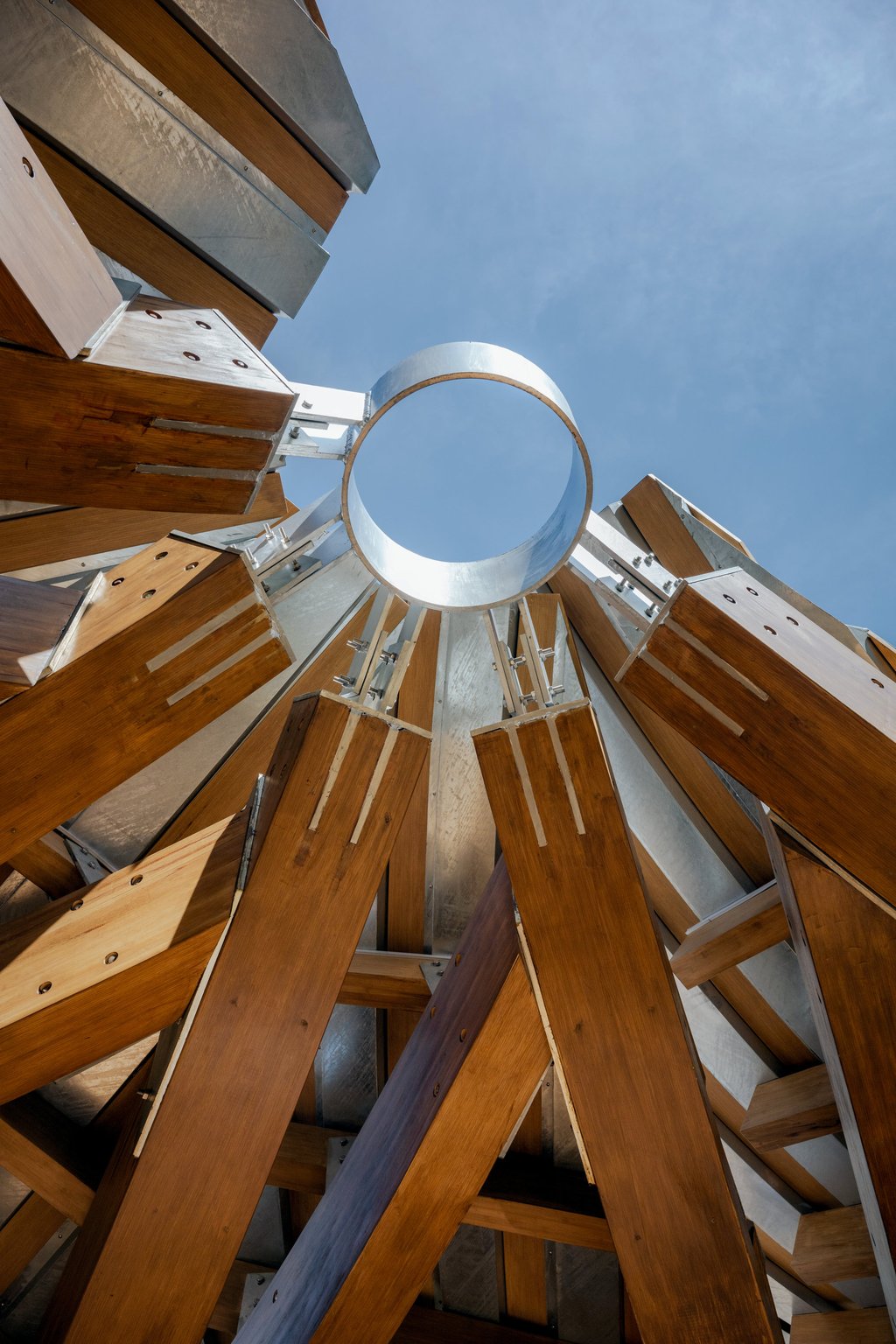
The pavilion, designed by Su Chang Design Research Office, is made of galvanised steel and bamboo, the latter referencing the many old workshops still operating around Tai Kok Tsui, Hong Kong. Photo: Eugene Chan
Sponsored by the Urban Renewal Fund (URF) and organised by the Hong Kong Arts Centre (HKAC), RE: Tai Kok Tsui is a 30-month project (ending in September) that engages with residents in Tai Kok Tsui to create murals, art installations, dance performances, theatre pieces and more, all with a focus on exploring the culture and history of the fast-changing neighbourhood just west of Mong Kok. The project’s HK$33 million budget is provided by the URF, the not-for-profit arm of the Urban Renewal Authority, which has facilitated the redevelopment of many blocks in Tai Kok Tsui in the past 15 years.

“After redevelopment so many things disappear,” says Timothy Ma Kam-wah, chairman of the URF’s board of directors. “But the neighbourhood heritage is the people who live here.”

Each of the 300-plus activities and projects under RE: Tai Kok Tsui have been staged with local residents and businesses, including the pavilion, which draws its inspiration from the neighbourhood’s maritime and industrial history.
Architect Su Chang says, “There are a lot of things you can test with these kinds of pavilions,” including materials, forms, techniques and community engagement. Photo: Eugene Chan

Originally a narrow peninsula extending into Victoria Harbour from Mong Kok’s farmland, Tai Kok Tsui was home to the Cosmopolitan Dock, one of Hong Kong’s largest shipyards, from 1880 to 1972. The docks attracted factories, workshops and a working-class community that survives today, even as Tai Kok Tsui’s central location has made it a magnet for new office and housing developments.

Advertisement
Select Voice
Choose your listening speed
Get through articles 2x faster
1.25x
250 WPM
Slow
Average
Fast
1.25x