Ode to the horse: 5,000 years of equine domestication on display in new Kazakh museum
In rural Kazakhstan, a father and son have built a temple to our equine companions – the animal that once carried monks, traders and armies across the steppes. PostMag visits their museum, where myth and reality graze side by side

On the scenic drive east from Almaty, in Kazakhstan, along the old corridor of the A351 highway, towards the Charyn Canyon National Park, and the Xinjiang border beyond that, sits an unassuming museum run by an unlikely duo.
Nurbol Baimukhanov, 50, is an independent, published researcher of shezhire – traditional Kazakh genealogies, historically memorised and passed down through generations – and an award-winning documentary producer who speaks in equal parts archaeology and mysticism. His son Ilyas, 23, with a MacBook tucked under his arm and an eye for systems, is pursuing a master’s in management at Satbayev University, the nation’s oldest technical institute.
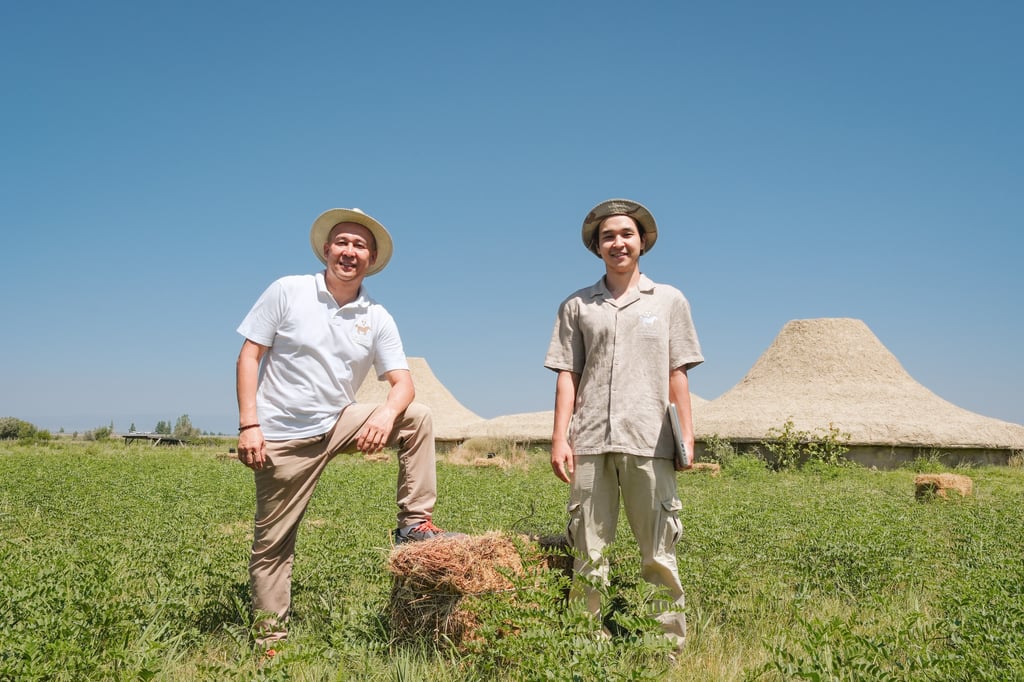
On a quiet stretch of the A351, father and son have built a showcase dedicated to the ancient Botai, the multi-hyphenate people of the Eurasian steppes – hunter-gatherer-herder-settlers – who some archaeologists believe were among the first to domesticate the horse more than 5,000 years ago.
Located around 70km from Almaty, the Ush Qiyan Open-Air Museum sits near the village of Akshiy, in the Enbekshikazakh district – the kind of place most travellers pass without noticing.
Opened this summer, it rises from the flat landscape as three circular log dwellings with sloping roofs – constructed from more than 1,000 logs, the exhibition brochure proudly proclaims – and is designed to evoke what some researchers believe are among the oldest known permanent settlements of the steppes.