Hong Kong guqin devotees embrace the ancient zither’s history, philosophy and craft
A renewed appreciation of the seven-stringed zither is as much about understanding ancient Chinese culture as it is enjoying the music

When civil servant Jackel Wan Chak-kui, 28, first heard a guqin being played, he was a young boy wandering through Chi Lin Nunnery, in Diamond Hill. He remembers being entranced by the instrument’s music, at once subtle and comforting. It seemed to envelop him like a warm embrace, complementing the natural beauty of the gardens, melding with stone, water, wood and stillness.
Years later, as a student at Baptist University, Wan chanced upon the sound again, while scrolling through YouTube. He delved deeper this time, yearning to learn more. He ordered his first guqin from Taobao (“Not a good one, but at least I could have a touch [of the instrument],” he says) and taught himself from scores found in the university library, learning where to place his fingers on the seven silk strings.
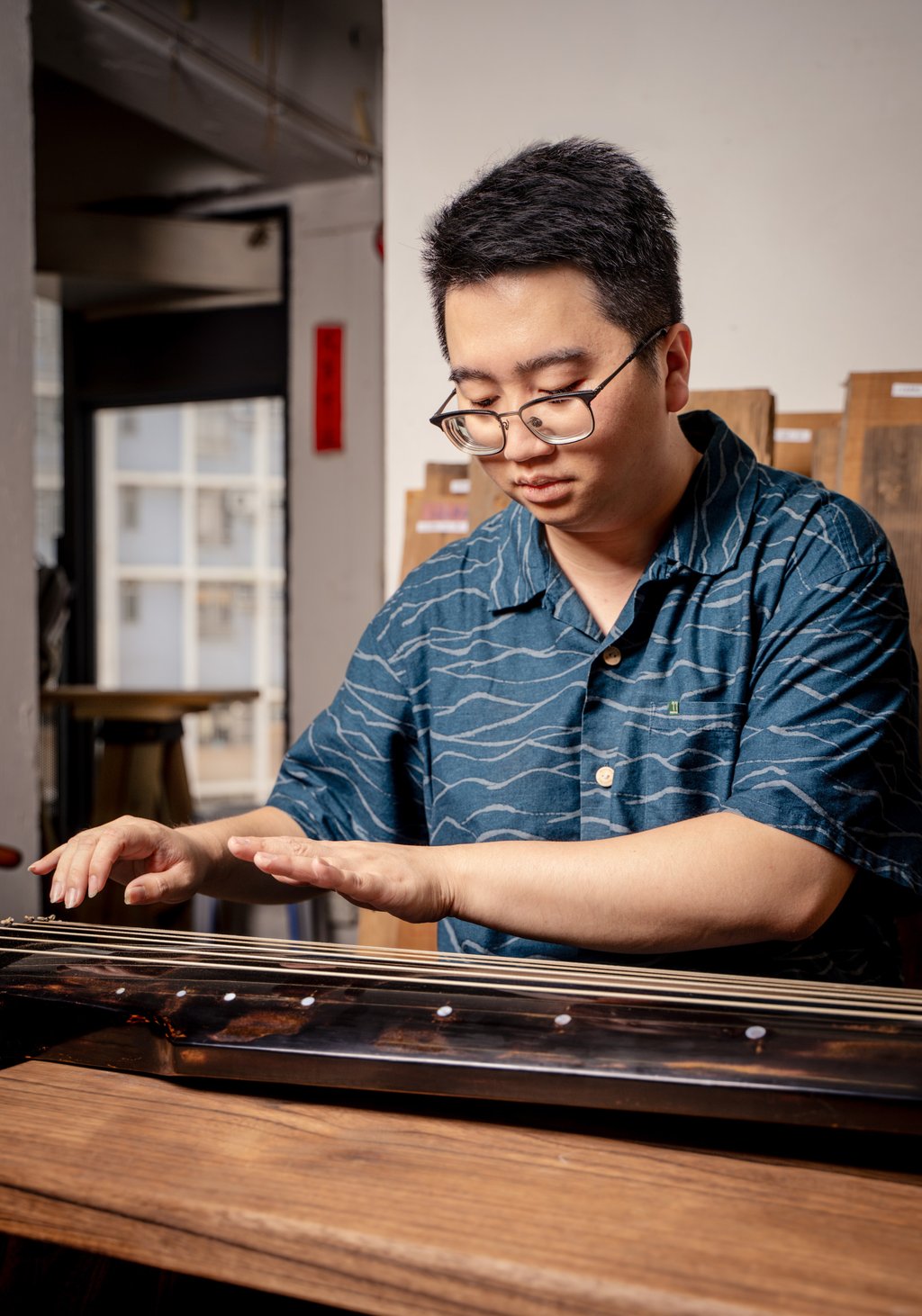
A seven-stringed zither, the guqin (“ancient stringed instrument”) was once the preserve of noblemen and royal courts, poets and scholars, and has been part of a musical tradition that has existed for more than 3,000 years in China, played in small, elite gatherings.
Since Unesco first recognised guqin music as part of humanity’s intangible cultural heritage in 2003, the seven-stringed zither has become more widely appreciated, with the instrument itself having been inscribed on China’s National List of Intangible Cultural Heritage in 2006. Virtuoso Chen Leiji played a specially composed piece on the guqin during the opening ceremony of the 2008 Beijing Olympics, reaching millions of viewers worldwide, and today, it’s commonly seen being played in concerts and online videos, with younger musicians being drawn to the instrument.

In Hong Kong, the guqin’s renaissance goes beyond simply renewed popularity, say scholars and players, many of whom construct their own. What they want to preserve are not just the rich sounds of an ancient instrument, but also a traditional way of life.
When it comes to the instrument and its music, “the guqin may be more accessible than before, but true revival is not just about more people playing it. It is about whether people understand its inner life: its craft, philosophy, subtle sound, cultural memory and intensely personal mode of expression”, Wan explains. “Because the more you understand Chinese culture, the more you realise that the guqin goes beyond music to explore other cultural aspects, such as Taoism, philosophy and history.”