An artist’s dream of a cultural renaissance in remote Bhutan
Asha Kama Wangdi is embarking on an ambitious project: a high-altitude sanctuary for local and international creatives

In 2022, Wangdi moved to this patch of high-altitude land, part of an inheritance handed down to his elder sister that she had given to him (inheritance usually favours daughters in Bhutan). He then raided his savings to buy adjacent plots and converted a donated Toyota Coaster minibus into his initial residence.
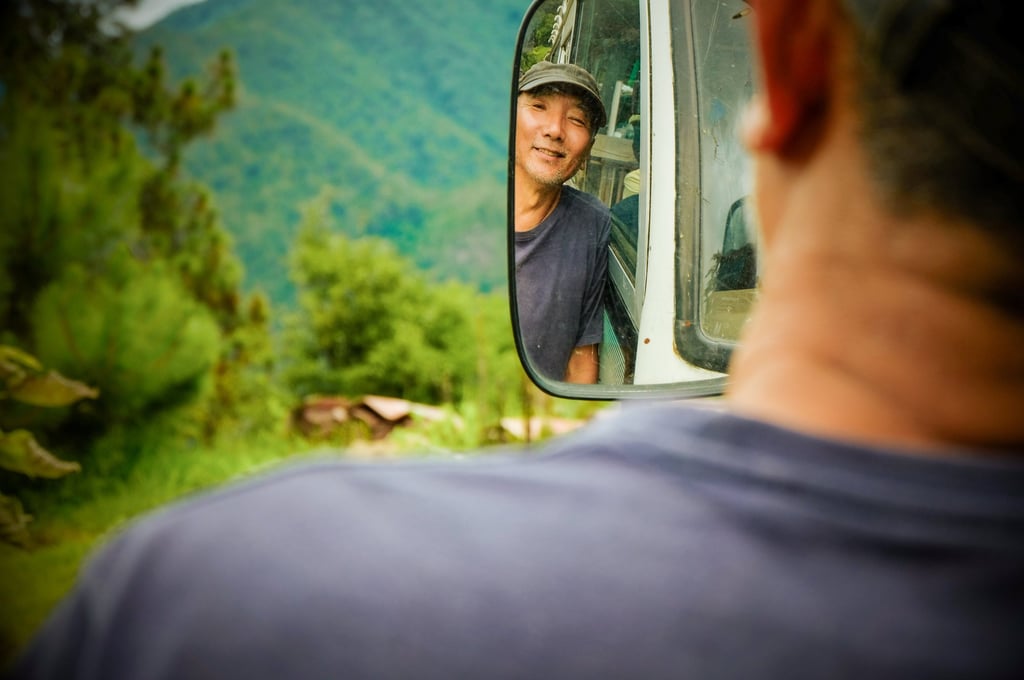
The bus is still parked on his half-hectare site, but the now 67-year-old Wangdi occupies a two-storey wooden structure that previously served as what’s known in the local Dzongkha language as a domchim, a hut built with a vantage point to guard surrounding farms against roaming animals. It is fitted with a compact kitchen and bathroom on the ground floor while a steep staircase leads to a cosy bedroom with a balcony, which serves as his open-air studio.
But he isn’t just here to paint. Wangdi wants local and international artists to stay at the sanctuary he is building, where they can inspire each other as they work. It will be part residency, part workshop, part gallery. His contemporaries call it an “art village”, but he says it will be more “a shelter for artists” that includes accommodation in his old bus for paying guests.
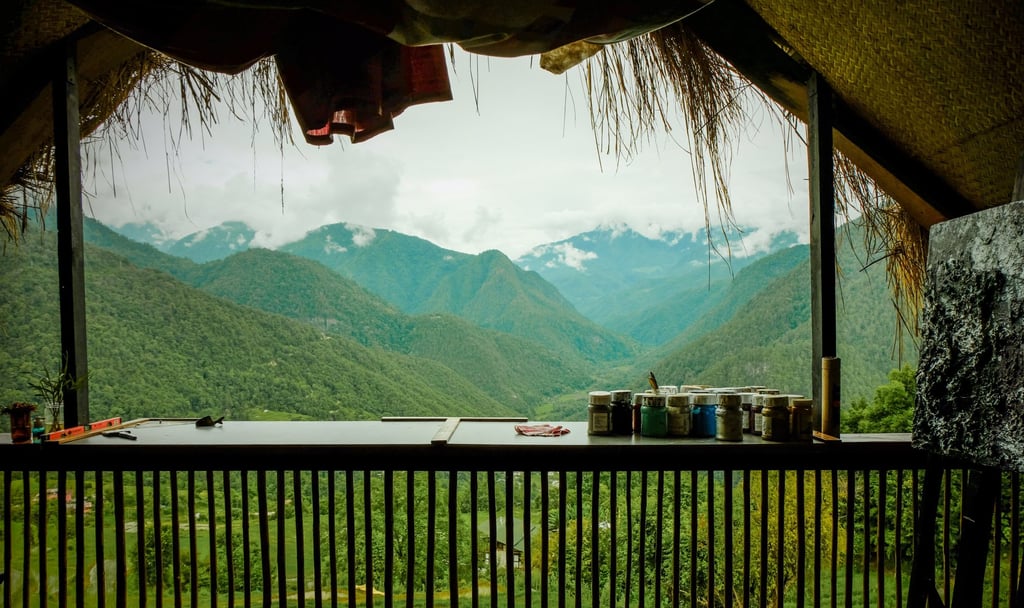
Located about 1,700 metres above sea level, the hilltop will feature “artist bunkers in the forest”, says Wangdi, while strolling through avocado, pomegranate, mango and orange trees along soon-to-be walking and jogging tracks. Nearby, an under-construction treehouse, swimming pool and therapeutic hot-stone bath area are all being built using as many salvaged materials as possible.
“Something will work by next year,” Wangdi laughs, passing the future library, which is set to house more than 3,000 art-related books. He needs to “stop dawdling”, he says. “Soon the villagers will be free from their fieldwork and I’ll be employing them to build up this space.”