Advertisement
PostMag
Life.Culture.Discovery.
Environment
PostMagCulture

Your clothes are shedding bits of plastic. Here’s what people are doing about it

Plastic fibres are common in many kinds of clothing, but most current washing machines are ill-equipped to filter them – and it’s having a devastating effect on the environment

Reading Time:4 minutes
Why you can trust SCMP
Rachael Z. Miller, founder of the Rozalia Project for a Clean Ocean, conducts a tape test on clothing items to compare how much each material sheds microfibres. Photo: AP
Associated Press
Bottles and bags, food wrappers and straws. Piping, packaging, toys and trays. Plastic is everywhere – and yet some people may be surprised at how much they actually wear.
A typical wardrobe is loaded with plastic, woven into polyester activewear, acrylic sweaters, nylon swimsuits and stretchy socks – and it’s shedding into the environment nonstop.
When garments are worn, washed and put through the dryer, they shed plastic fibre fragments. A single load of laundry can release millions that are so tiny waste water treatment plants can’t capture them all. They wind up in local waterways that connect to the ocean. Marine animals eat them, and that can pass plastic to larger animals and humans.
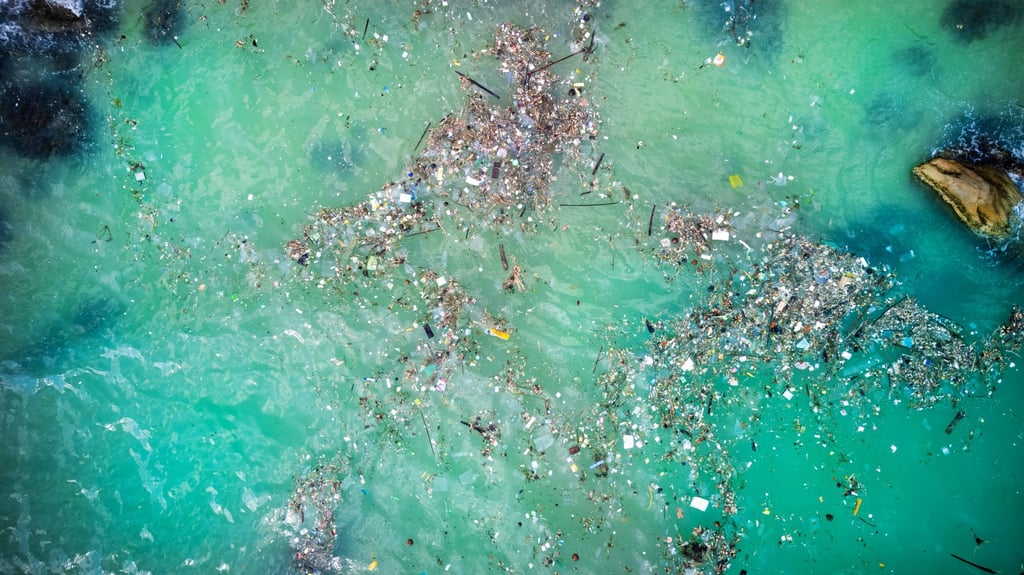
Plastic pollution and debris seen floating in the ocean – but it is the tiny microfibres that cannot be seen that are also doing untold environmental damage. Photo: Shutterstock
Even natural fabrics shed fibres and have chemicals that can leach into the environment. But polyester is the most widely used fibre on Earth, and along with other synthetic fibres accounts for about two-thirds of production worldwide.
Advertisement
April 22 marked Earth Day, when people worldwide contemplate ways to reduce their impact on the planet.

“Everyone who wears and launders clothing is part of this problem but everyone who wears and launders clothing can be part of the solutions,” said Rachael Z. Miller, founder of Vermont-based Rozalia Project for a Clean Ocean in the US.

Rachael Z. Miller says everyone can be part of the solution to the problem of microfibre plastics escaping into the environment. Photo: AP
Simple changes like washing clothes less and using cold water instead of hot can help reduce the shedding of fibres. More challenging is that textiles need to be produced and used in a more sustainable way, said Elisa Tonda at the UN Environment Programme. For example, designing clothes that shed fewer microfibres and are high-quality to last longer, said Tonda, who leads the resources and markets branch.
Advertisement
Select Voice
Choose your listening speed
Get through articles 2x faster
1.25x
250 WPM
Slow
Average
Fast
1.25x