Rewilding the city: the urban forests of Asia
Urban greening is evolving: Asian cities are embracing biodiverse urban forests, moving beyond mere decoration to create ecological, human-centric spaces

Greenery used to be a nice thing to have in an architectural project. Now it’s the star of the show. In many Asian cities, new developments are treating nature as more than just decoration, orienting themselves around green spaces that are at once useful to humans and beneficial to the environment.
At least, that’s the idea. Reality is more complicated. Integrating nature and architecture “[is] always a challenge”, says Stephen Buckle, design director of Chinese studios for Aspect, a global landscape architecture firm.
But it’s a challenge that more and more developers and architects are willing to take on. In Seoul, landscape architects SWA are creating a 36-acre urban forest in the heart of Gangnam. In Shenzhen, architect Ole Scheeren is designing two high-profile projects – one a mixed-use complex developed by tech giant Tencent; the other its new headquarters – that he describes as being “threaded through nature”. Even in space-crunched Hong Kong, Swire Properties has made a point of focusing on biodiversity in its design for Taikoo Square, a green space that opened in 2024.
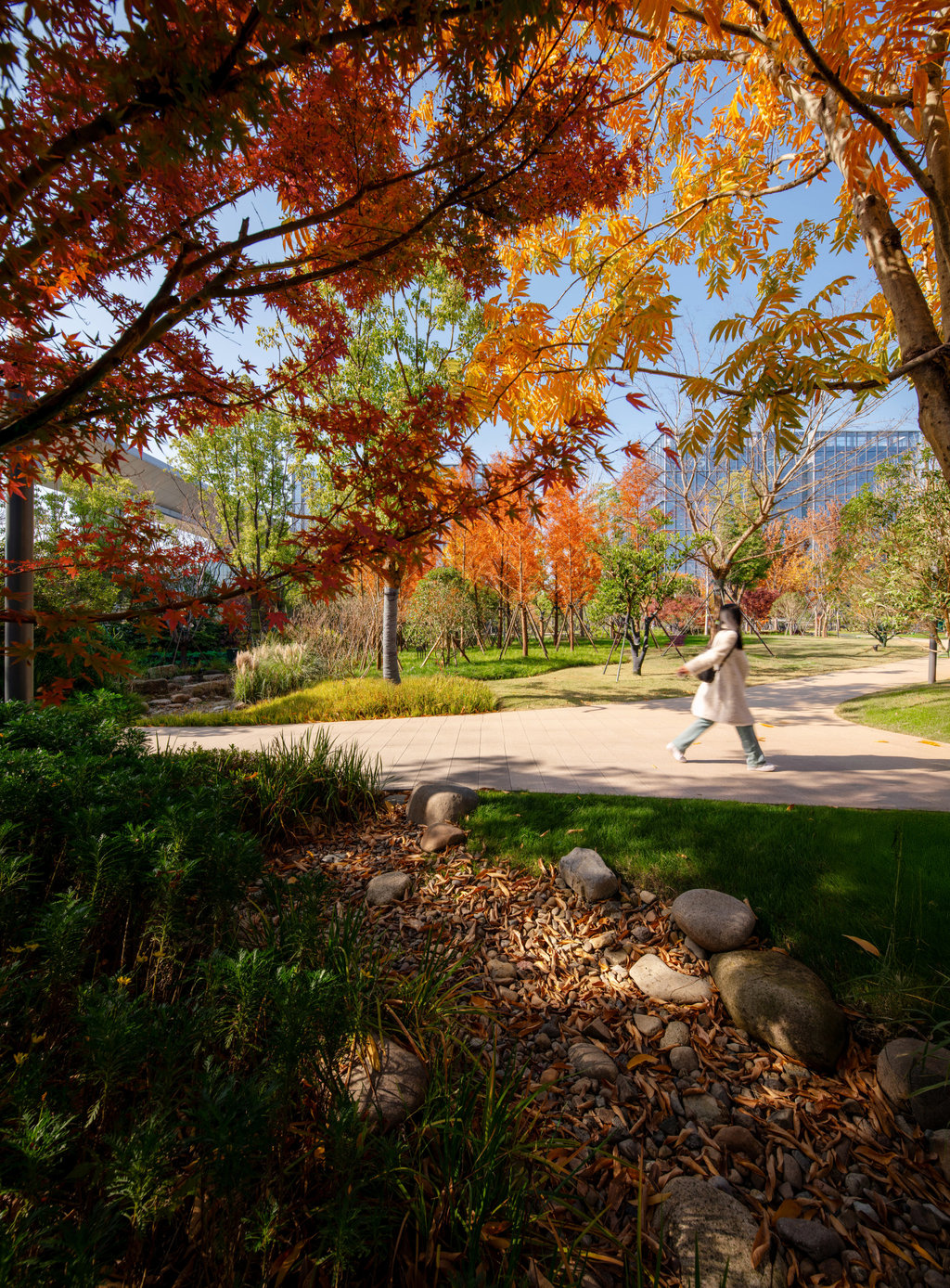
“We look at it holistically as a system of biodiversity, soil and water, and then embed the human experience in that system,” says Buckle, whose team recently completed the landscape for the new headquarters in Hangzhou of Alibaba (owner of the South China Morning Post). A complex natural environment was woven into a giant podium structure by engineering generous soil depths and water infrastructure that mimics natural hydrology, including bioswales and a central lake.
That approach marks a major shift in mentality from the days when greenery was essentially “landscape as fashion”, in the words of Gavin Coates, who helped design parts of major green spaces such as Hong Kong Park and more recently worked with the government to plant more than 20,000 native and exotic trees in previously denuded parts of urban Hong Kong.
Biodiversity, ecological benefits – “40 years ago, nobody was talking about this at all,” says Coates, who in 1980 began working as a landscape architect, and later cartoonist, and now lectures at the University of Hong Kong. Today, the notion that urban greening should serve a bigger goal than simply looking good is “becoming part of mainstream thinking”.