Advertisement
Opinion
After Davos, the search begins for what comes after the post-Cold War order
While they continue to flatter Trump, politicians and businesses are also pursuing new deals and trading partners, diversifying supply chains and exploring ways to reduce dependence on the US
3-MIN READ3-MIN
5
Listen

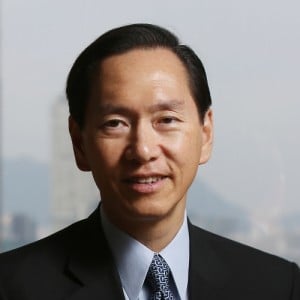
Bernard Chan, born in 1965, is a Hong Kong businessman.
Europe’s political and business elite arrived at the World Economic Forum in Davos this year with nerves already frayed after a bruising first year of US President Donald Trump’s second term. That period was defined by the imposition of a protectionist tariff strategy to gain economic and geopolitical leverage, an often combative approach to the war in Ukraine and renewed doubts over Nato security guarantees.
In the run-up to Davos, the White House threatened eight European countries – including the UK, Germany and Denmark – with tariffs of 10 to 25 per cent unless they supported the administration’s ambitions to control Greenland. The move turned a grinding war, a long-running trade dispute and a revived Arctic land grab into a single, combustible test of transatlantic economic and security solidarity.
At the outset, US Secretary of Commerce Howard Lutnick outlined the Trump administration’s position and the reason for attending Davos. He claimed that years of globalisation had failed, leaving American workers behind. Lutnick challenged Europe’s net zero ambitions, arguing that they would increase dependence on China. He also said that any economic dependence should be limited to close allies. That message, however, sat uneasily alongside the administration’s increasingly combative treatment of strategic partners and allies.
It is apparent that Trump is not merely challenging elements of the post-Cold War order – he is actively reshaping it. His transactional approach is contingent on political alignment and loyalty rather than on embedded rules. The effect is a dramatic shift from a system anchored in institutions to one organised around leverage, personal authority and bilateral deals, one with which many nations are struggling to come to terms.
Select Voice
Select Speed
1x
AI-generated voice