Advertisement
Opinion
Will China and Russia’s WWII narrative resonate with the world?
Beijing and Moscow are crafting an interpretation of world affairs that directly challenges that of their rivals
3-MIN READ3-MIN
15

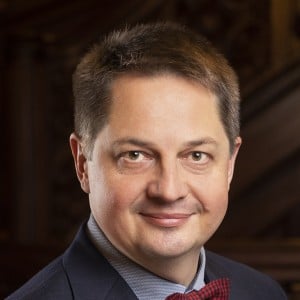
Dominik Mierzejewski is head of the Centre for Asian Affairs and associate professor in the Department of Asian Studies at the Faculty of International and Political Studies at the University of Lodz, Poland.
When Chinese President Xi Jinping travelled to Moscow, many headlines focused on energy talks, bilateral cooperation and handshakes signalling deeper China–Russia ties. However, another type of strategy was unfolding behind the formalities, one rooted not in policy, but in narrative.
In their joint statements and ceremonial remarks, Chinese and Russian officials weren’t simply affirming mutual interests. They were rewriting the language of legitimacy. History, the United Nations and the actions of the United States and Japan were all interpreted through a lens that challenges the foundations of the post-World War II global arena.
At the centre of this narrative strategy lies a deliberate reinterpretation of historical events. The commemoration of the 80th anniversary of the end of World War II was not used as a moment of unity with the West. Instead, the war was framed as a two-front struggle in which China and the Soviet Union bore the primary burden of defeating fascism.
Select Voice
Select Speed
1x
AI-generated voice