Advertisement
Opinion
Hong Kong must go beyond its intermediary role to become a global anchor
The city can be a bedrock for world commerce, finance, governance and civilisational exchange as we enter a new phase of globalisation
3-MIN READ3-MIN
1
Listen

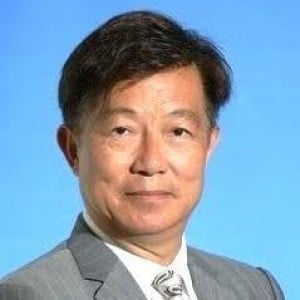
Francis Neoton Cheung is the chairman of Doctoral Exchange, a public policy research collective, and a former member of the Land and Building Advisory Committee.
The world is undergoing a transformation of historic proportions. Geopolitical rivalry, economic restructuring and technological acceleration are converging to reshape the global order. These changes transcend the logic of any single nation, industry or moment in time, exerting profound influence on international politics, geoeconomics, industrial structures, capital flows and investment strategies.
For Hong Kong, this “great change unseen in a century” is not an abstraction. It is a pressing reality with far-reaching consequences for the city’s economic and social development. At this juncture, Hong Kong faces both the challenge of remaking its development model and the opportunity to serve national strategy, while also embracing a new phase of globalisation.
Hong Kong’s success in the last wave of globalisation was built on its unique institutional framework and geographic advantage. As a channel for international trade and an intermediary for global finance, the city thrived, laying the foundation for its current competitiveness. Yet today, intensifying great-power competition and the rise of protectionism have exposed the fragility of this model.
Select Voice
Select Speed
1x
AI-generated voice