Advertisement
Being Chinese
The great Chinese New Year divide and how I bridged it
After sitting through the Spring Festival Gala with mainland Chinese friends, I had to introduce them to a delightful ritual from Singapore
3-MIN READ3-MIN
4
Listen

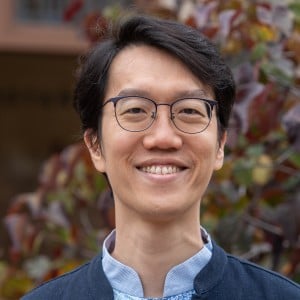
Chang Zi Qian is a visiting scholar at the University of California, Berkeley School of Law.
If the world assumes Chinese to be a monolith, then Chinese New Year brings a curious paradox. This is the festive season that ostensibly brings all Chinese people together, yet I have found it is also when our cultural deviations are most sharply magnified.
In Singapore, the celebration has always been joyous and largely predictable. Then I moved to the San Francisco Bay Area and suddenly, thanks to my mainland Chinese friends, the festival took on new meaning and my festive experience began to feel more like an anthropological study.
It all started last year when I tried to wish my professor at Berkeley Law, who hails from northeast China, a happy Chinese New Year. As I proffered two mandarin oranges with ceremonial gravitas, she looked genuinely startled, as if I was handing her a live fish. Uncertain, she took one orange, passed the other to another professor standing nearby and walked away. I stood there, frozen, realising she had no idea I was just trying to bainian – or extend New Year greetings – as I had been doing since childhood.
This epic fail threw me off (though she did email me a few days later, having cracked the code). I immediately launched an emergency survey of my mainland Chinese friends and a classmate from Sichuan confirmed that he would have been equally baffled by my offering. “Why oranges? Why not durians?” he asked.
Select Voice
Select Speed
1x
AI-generated voice