Advertisement

Macroscope
South Korea’s challenges a taste of what’s to come for global economy
While South Korea has been a big beneficiary of the AI boom, the surge is also highlighting its domestic and geopolitical vulnerabilities
3-MIN READ3-MIN
Listen

Nicholas Spiro is a partner at Lauressa Advisory, a specialist London-based real estate and macroeconomic advisory firm.
As 2025 draws to a close, three themes loom large in politics, economics and finance. The first is the unprecedented degree of uncertainty and unpredictability when it comes to the performance of economies and asset prices, amplified by US President Donald Trump’s erratic policymaking.
Who would have predicted at the start of this year that the MSCI All Country World Index, a gauge of global stocks, would stand slightly below its all-time high five weeks before Christmas? More surprisingly, who would have bet in April, when Trump launched his assault on the global trading order, that the International Monetary Fund would forecast the world economy would expand 3.2 per cent this year, on a par with its growth rate in 2024?
The second theme is affordability, the single biggest political issue in many advanced and developing economies. It is also one reason Democratic candidates triumphed in gubernatorial and mayoral elections in several US states earlier this month, especially in New York City.
Whether it is grocery and utility prices, property values or the drop in real wages, sharp increases in the cost of living are forcing policymakers to take forceful measures to rein in prices. These policies are weighing on markets, as evidenced by the increase in Japan’s 10-year bond yield to its highest level since 2008 because of concerns about the new government’s plans for fiscal stimulus to help households cope with rising prices.
The third theme is geopolitics, which is being taken more seriously by investors as its consequences for economies, industries and markets become increasingly apparent. In Bank of America’s monthly global fund manager survey on November 18, some of the respondents’ highest conviction views – the risk of an artificial intelligence-induced bubble in stocks and the bullish stance on emerging markets – are underpinned by strong geopolitical forces, especially the battle between the US and China for AI supremacy.
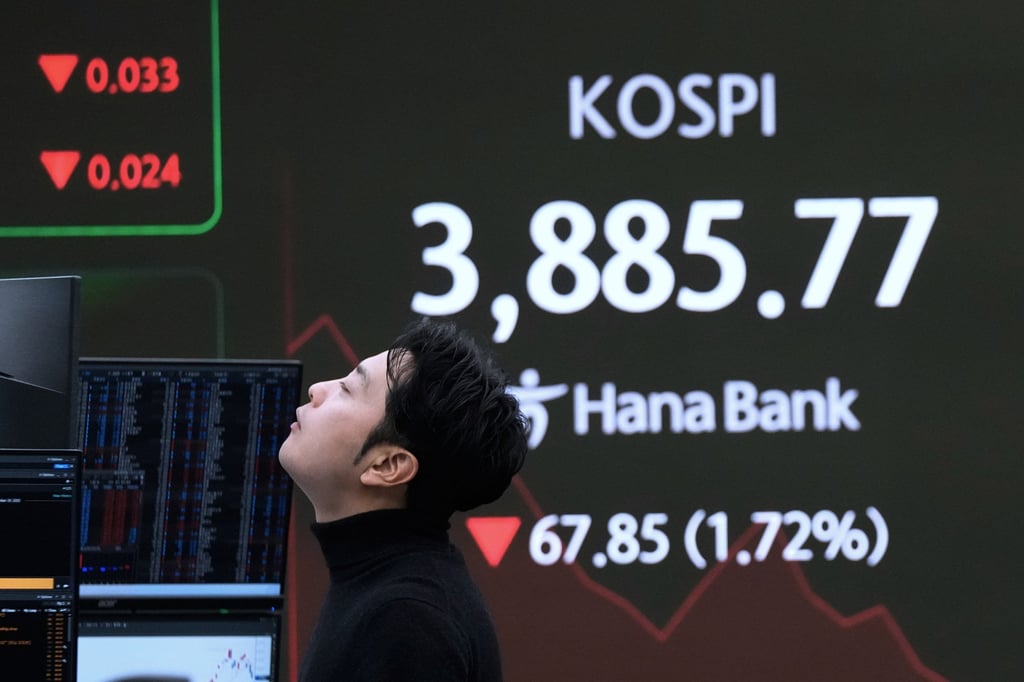
South Korea is experiencing all three trends simultaneously, presenting acute challenges for policymakers and providing a taste of what could be in store for other major economies. One of the most vulnerable economies to the onslaught of protectionism because of its relatively high ratio of exports as a proportion of economic output and its strong reliance on the US market, technology-driven South Korea has been one of the big surprises of 2025.
Advertisement
Select Voice
Select Speed
1.00x