US activists, politicians rally on anniversary of civil rights march
The US Supreme Court is considering a case that could limit the ability of minority voters to elect their chosen candidates, spurring protests

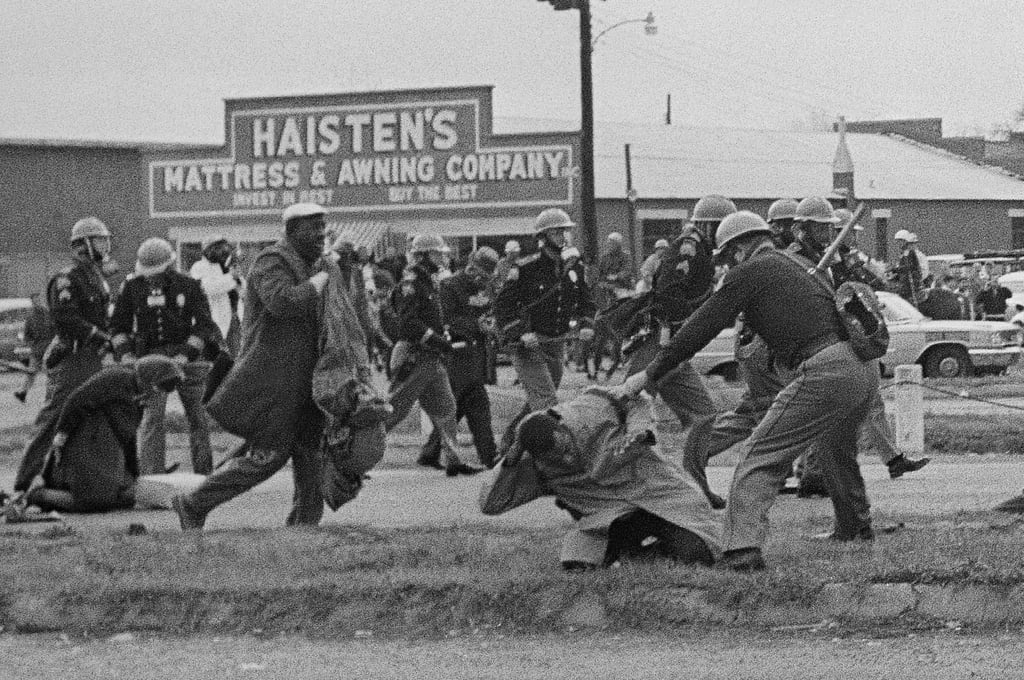
Sixty-one years after state troopers attacked Civil Rights marchers on the Edmund Pettus Bridge in Selma, thousands are gathering in the Alabama city this weekend, amid new concerns about the future of the Voting Rights Act.
The March 7, 1965, violence that became known as Bloody Sunday shocked the nation and helped spur passage of the landmark legislation that dismantled barriers to voting for Black Americans in the Jim Crow South.
But this year’s anniversary celebrations – events run all weekend and end with a commemorative march across the bridge Sunday – come as the US Supreme Court considers a case that could limit a provision of the Voting Rights Act that has helped ensure some congressional and local districts are drawn so minority voters have a chance to elect their candidate of choice.
“I’m concerned that all of the advances that we made for the last 61 years are going to be eradicated,” said Charles Mauldin, 78, one of the marchers who was beaten that day.
Justices are expected to rule soon on a Louisiana case regarding the role of race in drawing congressional districts. A ruling prohibiting or limiting that role could have sweeping consequences, potentially opening the door for Republican-controlled states to redistrict and roll back majority Black and Latino districts that tend to favour Democrats.
Democratic officeholders, civil rights leaders and others have descended on the southern city to pay homage to the pivotal moment of the Civil Rights Movement and to issue calls to action. Like the marchers on Bloody Sunday, they must keep pressing forward, organisers said.