Donald Trump signs Nafta replacement, but hurdles remain in Congress
- The signing, which took place on the sidelines of the G20 summit, shifts the onus onto each country’s legislatures
- The new deal is known as the US-Mexico-Canada Agreement, though the Canadians have avoided calling it that

The US, Canada and Mexico signed a new trade deal championed by US President Donald Trump to replace the quarter-century-old Nafta pact, capping a year of intense negotiations and offering a glimmer of certainty amid rising global tensions over trade.
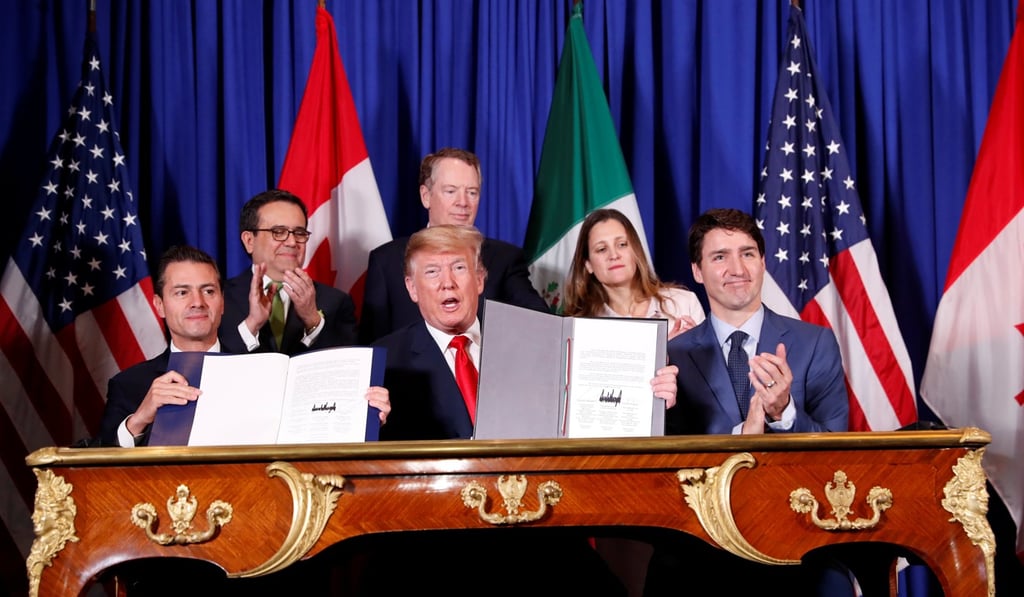
Trump, Canadian Prime Minister Justin Trudeau and outgoing Mexican President Enrique Pena Nieto signed an authorisation for the deal on Friday morning in Buenos Aires on the sidelines of the Group of 20 summit, with their ministers signing it shortly after.
The vast majority of the pact still must be ratified by lawmakers in the three countries, but the signing enacts a handful of immediate protections, such as from auto tariffs.
The deal now heads to ratification, almost certainly by the next US Congress, where Democrats will have a majority in the House starting in January. Uncertainties remain, as the original 1994 pact remains in effect, and tariffs on steel and aluminium continue to be a major irritant.
Still, the signing concluded an arduous process that was marked by repeated threats from Trump to exit the continent’s free-trade zone.