Until a week ago, two things were widely agreed about Britain’s upcoming general election: it was producing the dullest campaign in recent memory and the result was a foregone conclusion. It would be a coronation march for incumbent Conservative Prime Minister Theresa May.
Then a bomb blast killed 22 people at a concert in Manchester, bringing campaigning to a shocked halt. When the debates, ads and stump speeches resumed three days later, they were delivered to a jittery nation on a transformed political landscape.
Security now is the dominant theme in a contest that was supposed to be about Britain’s exit from the European Union, with the main parties battling over which can keep Britain safer.
History suggests the tragedy should further bolster May. Violent attacks usually produce a “rally-round-the-flag effect” that boosts support for government and state institutions, Manchester University political science Professor Rob Ford said.
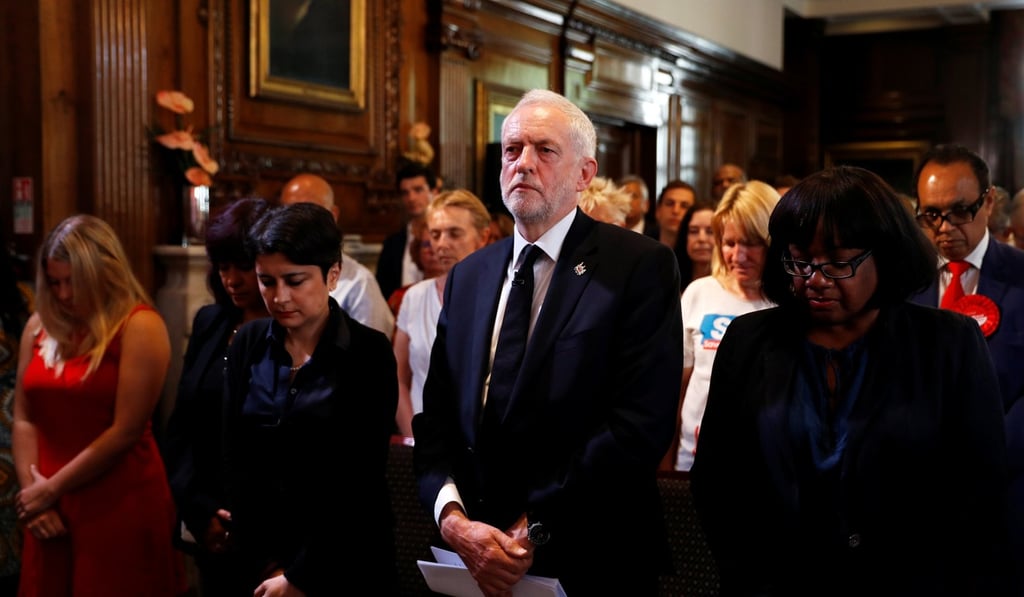
Jeremy Corbyn, the leader of Britain's opposition Labour party, observes a minute's silence for the victims of the attack on the Manchester Arena before making a speech as his party restarts its election campaign in London on May 26,. Photo: Reuters
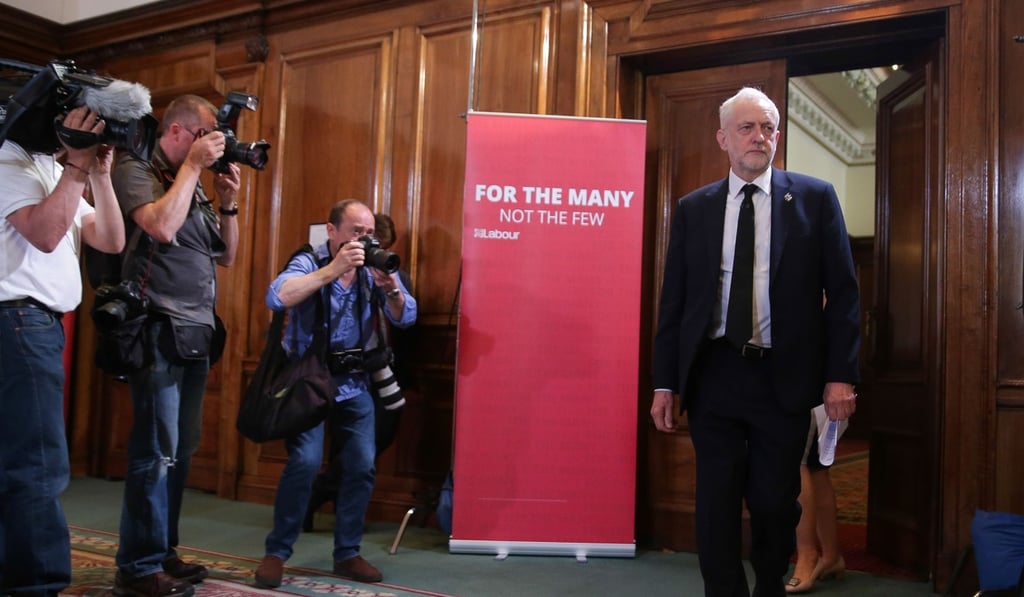
Jeremy Corbyn arrives at the hall for a general election campaign speech in central London on May 26. Photo: AFP
While campaigning was suspended, May remained highly visible in her role as head of government, making several televised statements that were praised as sombre and steadying.