Advertisement
Trending in China
People & Culture

Ancient Chinese people sentenced to flogging could hire substitutes to endure punishment for a fee

Brutal centuries-old penal system saw lawbreakers beaten to death with iron-wrapped hammer fitted with barbs

2-MIN READ2-MIN
Listen
During the Ming dynasty, individuals sentenced to flogging could hire substitutes, known as Qingshou, to endure the punishment for a fee. Photo: SCMP composite/Sohu
Yating Yangin Beijing

In ancient China there was a unique and quirky profession: if someone committed a crime and was sentenced to flogging, they could hire another person to take the punishment on their behalf.

During the Ming dynasty (1368–1644), flogging was a form of punishment in which court officials were publicly beaten with heavy rods.

The striking end of the rod was carved into a hammer-like shape and wrapped in iron and sometimes even fitted with barbs, making the punishment extremely brutal.
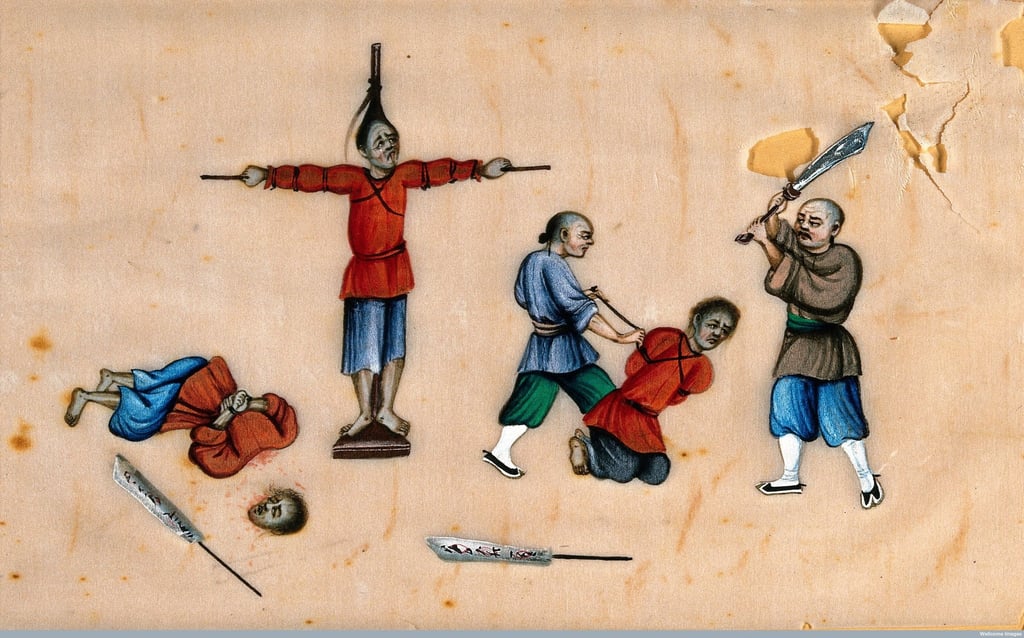
The above depiction of punishment in ancient times illustrates just how brutal it could be. Photo: Wellcome Collection

There were two types of flogging: “attentive beating” and “real beating”.

Advertisement

The former meant the victim would almost certainly die, while the latter meant the punishment was intended to spare the person’s life while still delivering a harsh lesson.

The method used depended on the secret instructions of the emperor, conveyed through the supervising official.

Advertisement

He would signal the intended severity of the punishment through subtle gestures, such as the positioning of his toes or through coded verbal commands to the executioners.

This image shows just how humiliating and savage the thrashings were. Photo: Wikipedia
Advertisement
Select Voice
Select Speed
1.00x