2,500-year-old Taiwan human skeletons indicate indigenous tribes on island chewed betel nuts
- Chewing betel nuts creates a high for users, features bright red juice that stains teeth

With its brilliant red juice and distinctive colouration of the teeth and gums, betel nuts are a well-known oral stimulant drug in Asia.
Chewing betel quids is deeply integrated into various cultures in the region, and a recent discovery in Taiwan offers evidence that the habit has persisted in Asia for thousands of years.
A June update from a long-term excavation project in Taiwan said that two skeletons, estimated to be between 2,500 and 2,700 years old, exhibited signs of betel seed consumption.
These two skeletons were found in tombs discovered in 2021 during the construction of a railway project in Chiayi City in southwestern Taiwan. The tombs of 13 individuals have been found during the excavation so far, and five of them contained near complete skeletons. The archaeology project is expected to be completed in 2026.
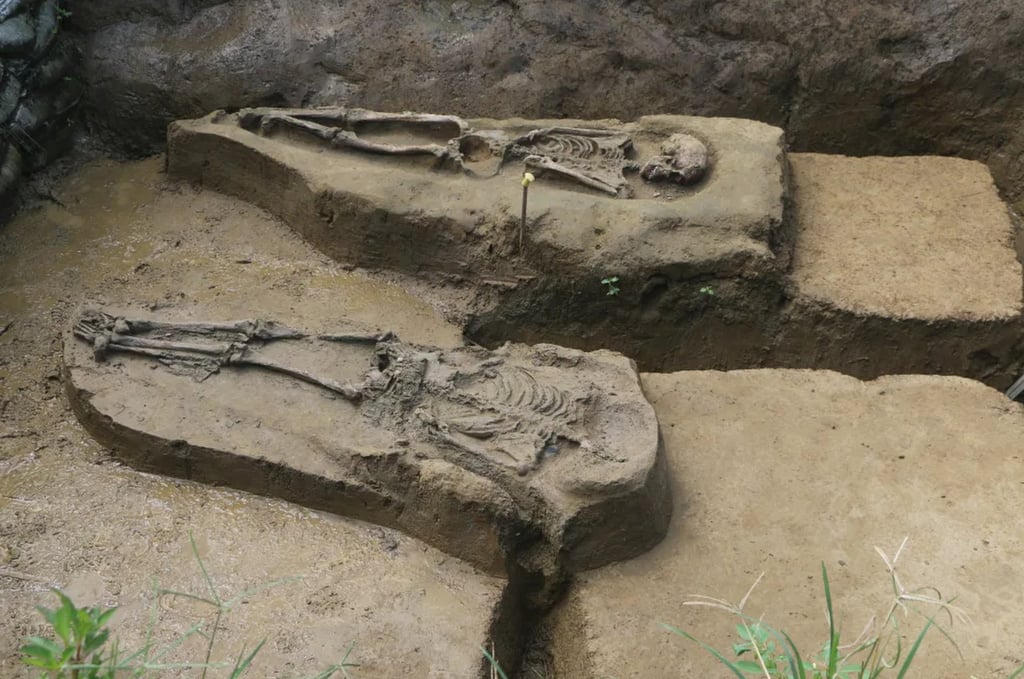
According to the paper Taiwan News, the teeth of these two human skeletons featured red mineral stains, which researchers believe are remnants of betel seed juice. The researchers said it is evidence that chewing betel nuts was common on the island thousands of years ago.