How AI model predicts heavy rainstorms 4 hours in advance
Hong Kong and mainland Chinese researchers have developed a pioneering AI model

Hong Kong and mainland Chinese scholars have developed a pioneering AI model that uses satellite data to forecast heavy rainstorms up to four hours before they strike, much earlier than current predictions allow.
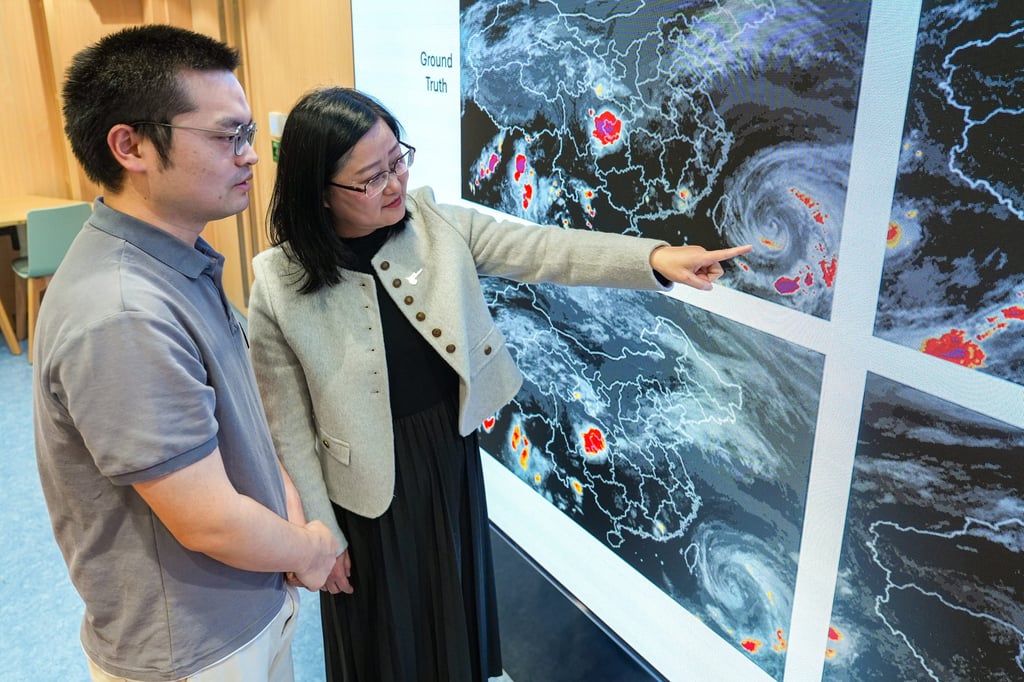
Researchers from the university and mainland institutions, including national meteorological agencies, published a paper online last month on the “deep diffusion model of satellite data”. It is the world’s first weather forecasting artificial intelligence (AI) model using satellite data for thunderstorm “nowcasting” and predicting rainstorms up to four hours in advance.
Precise forecasts of small-scale, rapidly developing thunderstorms or rainstorms at present are typically limited to between 20 minutes and two hours in advance.
The model is trained with data from a Chinese satellite to capture the evolution of convective cloud structures. It can spot early signs of convection developments to predict rainfall and enable more timely severe weather warnings.
Atmospheric convection refers to the movement of air molecules and cloud particles caused by temperature differences. Strong upwards motion of air produces condensation, forming liquid or solid cloud particles.