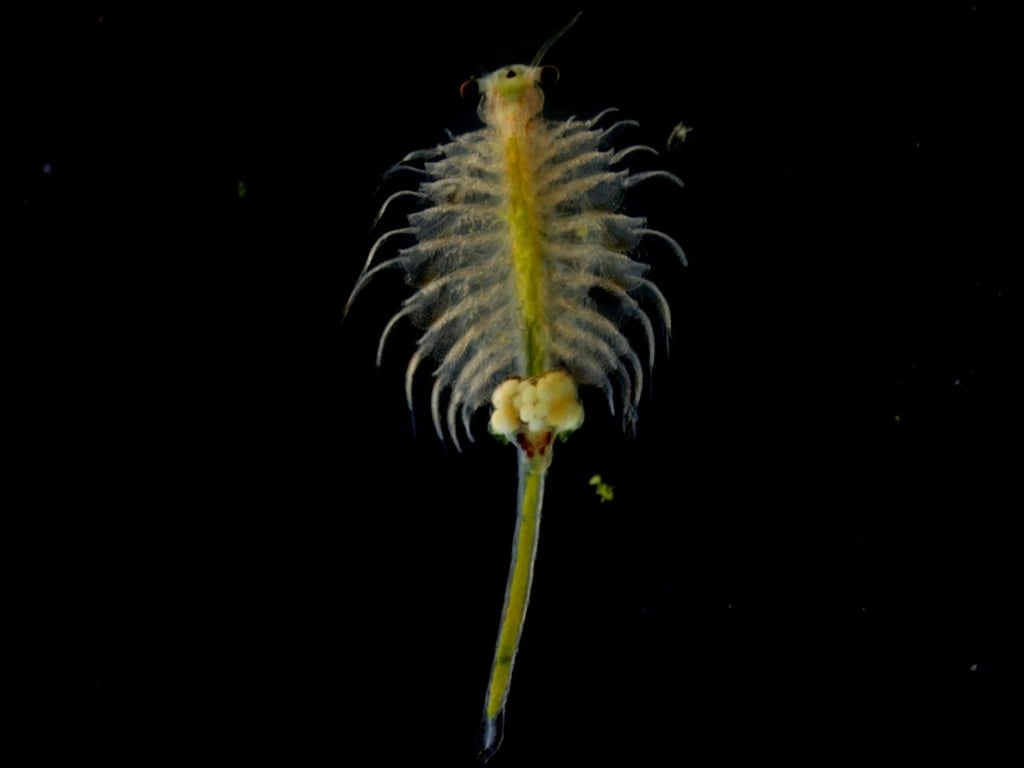
Could this small ancient shrimp be the next big thing in Xinjiang aquaculture?
The tiny animal has been spotted in extremely saline conditions, and might be an option for China’s food security menu

Brine shrimp, also known as Artemia, are among the oldest surviving species on Earth, going back about 400 million years. They are widely used as aquaculture feed, and also have medicinal and cosmetic value.
And now scientists have spotted them in the far reaches of the Taklamakan Desert in Xinjiang Uygur autonomous region.
The shrimp are extremely tolerant of salt and were detected in a wildlife water source in the city of Aral, also known as Alar, by life science researchers from Tarim University, according to a report from the Alar Integrated Media Centre.
The water source was much more saline than seawater, suggesting that the city had the natural conditions for cultivating salt-tolerant organisms, the report said.
Laboratory studies would determine if the shrimp was a new species, and further research could identify the scientific and technical support needed to develop commercial aquaculture in the region, it said.