Chinese academic warns there are legal risks to normalising Covid-19 testing
- In opinion piece, Zhao Hong, a law professor, also points to financial and labour costs and inadequate transparency and supervision
- She says penalties announced by local authorities for not complying with testing orders are not supported by Chinese laws

Zhao Hong, a professor at the China University of Political Science and Law in Beijing, also said penalties recently announced by local authorities for not complying with testing orders were not supported by Chinese laws and could infringe on individual rights.
“‘Detention for not taking a nucleic acid test’ is not applicable under Article 50 of the Public Security Administration Punishment Law,” Zhao wrote in an opinion piece published on news website The Paper on Sunday.
The law professor said local governments did not have the right to declare a state of emergency in their area without permission, according to the Emergency Response Law and the Emergency Regulations for Public Health Emergencies.
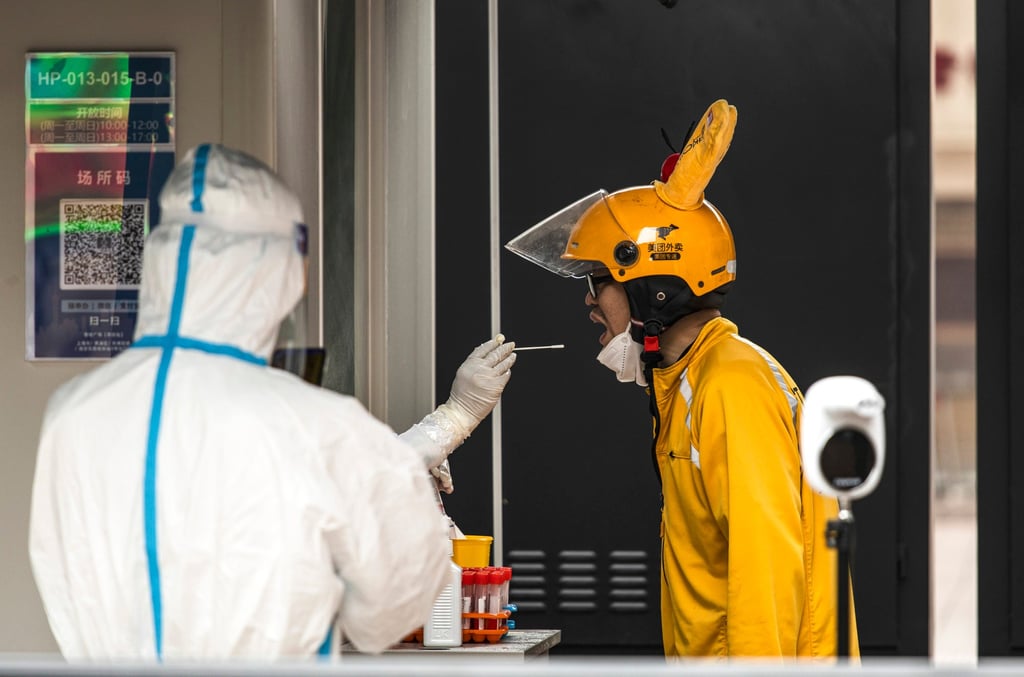
Zhao also said there was no legal basis – and substantial legal risks – for normalising PCR testing, that it had huge financial and labour costs, and lacked transparency and adequate supervision.