Opinion | Europe-China political unity still far off despite Xi Jinping’s nimble diplomacy on tour
- Mathieu Duchatel writes that Chinese diplomacy worked in Rome with a divided Italy and in Paris with a Franco-German-EU coalition, but the problem of a lack of a political engine for Europe-China cooperation remained unsolved

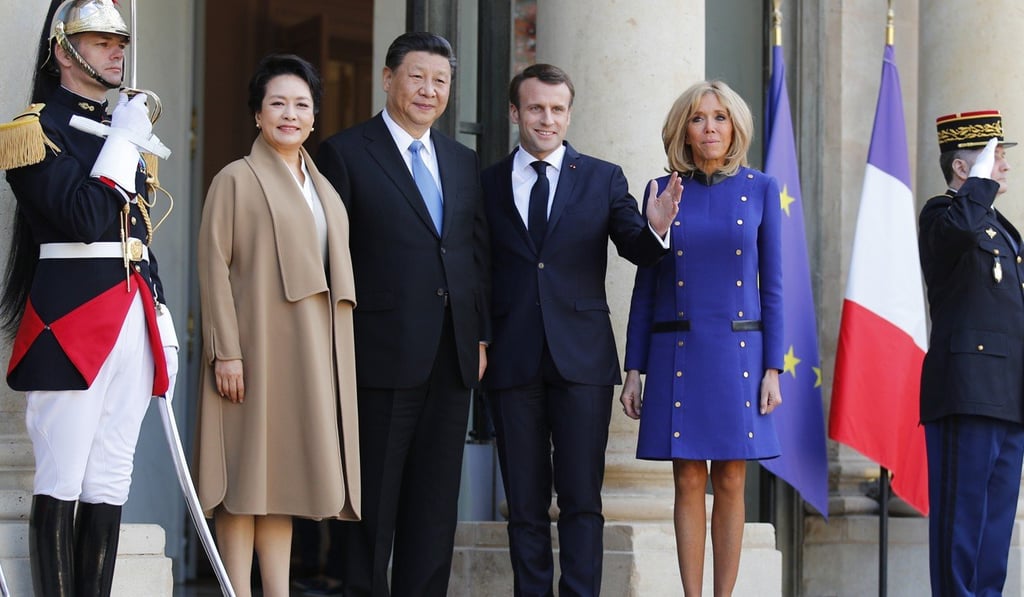
Business is business, and politics set the stage for deals to be concluded – or not. The politics around Chinese President Xi Jinping’s state visit to France were far from auspicious. Beijing has several reasons to dislike the China policy of Emmanuel Macron:
- the French president’s endorsement of the Indo-Pacific narrative
- his reluctance to sign a Silk Road memorandum of understanding
- his constant insistence on the need for the “Belt and Road Initiative” to be a “two-way street”
- his strong push for European unity in dealing with China
- his restrictive approach to high technology transfers
- his support for European mergers in the industrial sector to compete with Chinese state-owned giants
This, in the language of Chinese foreign policy, amounts to a lack of “strategic trust”.
But distrust had zero impact on the conclusion of 15 major commercial deals in aeronautics, shipping, wind energy, waste treatment and banking. The two sides plan for the next chapter of their space cooperation, and China’s 2015 embargo on imports of French poultry was lifted.
China’s decision to order 300 Airbus planes is clearly driven by the growth needs of China’s domestic airlines, but the timing of the announcement of these mega contracts is always highly political. Clearly there was an intention to create a positive atmosphere in Paris and it worked to some extent. It could have been otherwise.
These commercial deals reflect mutual corporate interests but also a Chinese effort to build trust on this state visit to France.
But the attention they have received in the media is proportional to the lack of concrete deliverables on the political front.