Advertisement
Worried about China, US takes aim at Malaysia, Thailand in new AI chip crackdown
The Trump administration is targeting the two Southeast Asian nations to block a suspected back door into China for advanced Nvidia chips
Reading Time:3 minutes
Why you can trust SCMP
1

US President Donald Trump’s administration plans to restrict shipments of artificial intelligence (AI) chips from the likes of Nvidia to Malaysia and Thailand, part of an effort to crack down on suspected semiconductor smuggling into China.
A draft rule from the Commerce Department seeks to prevent China – to which the United States has effectively banned sales of Nvidia’s advanced AI processors – from obtaining those components through intermediaries in the two Southeast Asian nations, according to people familiar with the matter. The rule is not yet finalised and could still change, said the people, who requested anonymity to discuss private conversations.
Officials plan to pair the Malaysia and Thailand controls with a formal rescission of global curbs from the so-called AI diffusion rule, the people said. That framework from the end of president Joe Biden’s term drew objections from US allies and tech companies, including Nvidia. Washington would maintain semiconductor restrictions targeting China – imposed in 2022 and ramped up several times since – as well as more than 40 other countries covered by a 2023 measure, which Biden officials designed to address smuggling concerns and increase visibility into key markets.
Advertisement
All told, the regulation would mark the first formal step in Trump’s promised overhaul of his predecessor’s AI diffusion approach – after the Commerce Department said in May that it would supplant that Biden rule with its own “bold, inclusive strategy”. But the draft measure is far from a comprehensive replacement, the people said. It does not answer, for example, questions about security conditions for the use of US chips in overseas data centres – a debate with particularly high stakes for the Middle East. It is unclear whether Trump officials may ultimately regulate AI chip shipments to a wider swathe of countries, beyond the Malaysia and Thailand additions.
The Commerce Department did not respond to a request for comment. The agency has offered few specifics about its regulatory vision beyond what Secretary Howard Lutnick told lawmakers last month: The US will “allow our allies to buy AI chips, provided they’re run by an approved American data centre operator, and the cloud that touches that data centre is an approved American operator”, he said during congressional testimony.
02:17
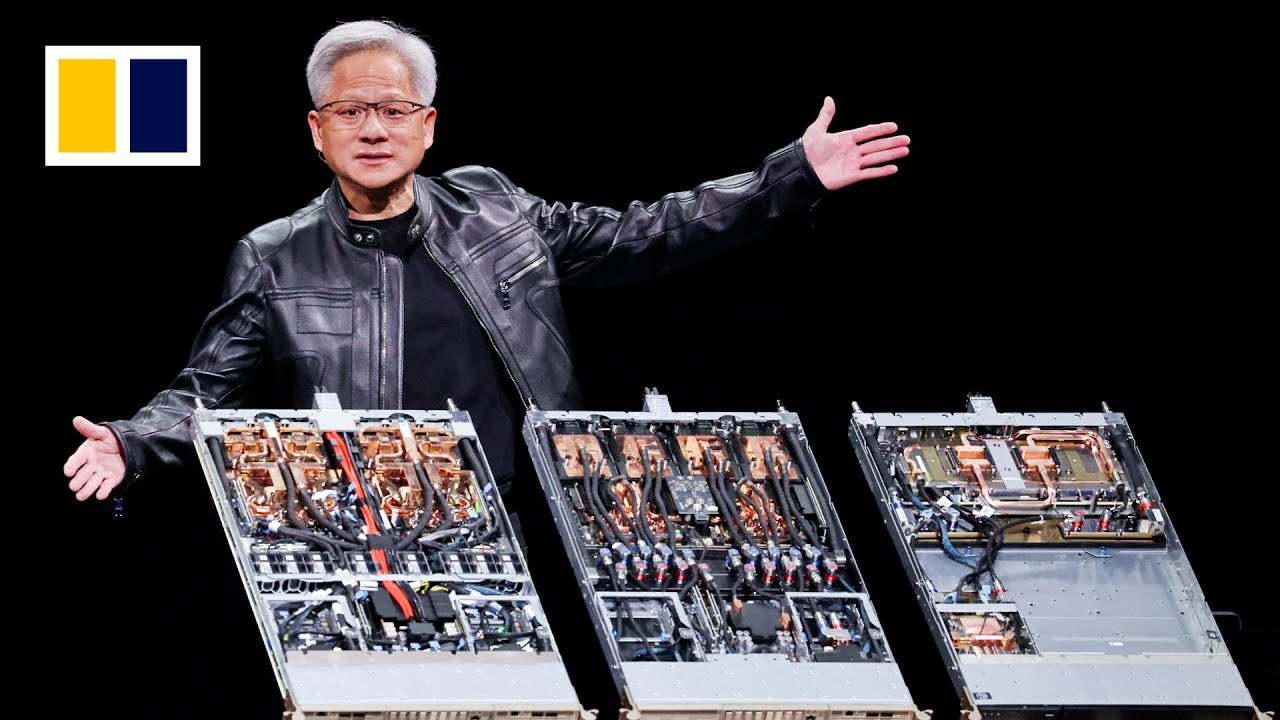
Nvidia CEO Jensen Huang unveils plan to build ‘AI supercomputer’ in Taiwan
Nvidia CEO Jensen Huang unveils plan to build ‘AI supercomputer’ in Taiwan
Nvidia, the dominant maker of AI chips, declined to comment, while the Thai and Malaysian governments did not respond. Nvidia Chief Executive Officer Jensen Huang has previously said there is “no evidence” of AI chip diversion, in general remarks that did not touch on any particular country. In response to earlier queries about curbs focused on smuggling risks, Thailand said it was awaiting details, while Malaysia’s Ministry of Investment, Trade and Industry said clear and consistent policies were essential for the tech sector.
Advertisement
Select Voice
Choose your listening speed
Get through articles 2x faster
1.25x
250 WPM
Slow
Average
Fast
1.25x