Sabarimala temple protests: what does Indian PM Modi have to fear from menstruating women?
- One of the world’s largest Hindu pilgrimage sites has allowed women of menstruating age to enter its grounds after a Supreme Court decision
- But fierce protests have broken out and the ruling BJP party has spotted an opportunity to win favour before next year’s elections

Indian Prime Minister Narendra Modi’s Bharatiya Janata Party (BJP) is wading into troubled waters in Kerala, where conservative protesters are blocking women of menstruating age from entering Sabarimala temple, one of the world’s largest Hindu pilgrimage sites, as it prepares to open for the season on Friday.
The BJP, which failed to win even a single one of the state’s 20 parliamentary seats in the 2014 election, hopes to do better in next year’s polls by supporting the agitators, thousands of whom have been detained by the Kerala state government.
“Today in Kerala a struggle is going on between religious beliefs and state government’s cruelty. More than 2,000 activists and workers from BJP, RSS [BJP parent organisation Rashtriya Swayamsevak Sangh] and other organisations have been arrested. BJP is standing like a rock with devotees, Left government be warned,” BJP president Amit Shah said at a rally last month, according to a report from local news site NDTV.
The BJP is not alone, as even the opposition Indian National Congress – which was defeated in the 2014 elections – is supporting the orthodox Brahmins who are determined to oppose women’s entry into the shrine, whatever the cost. Other opposition parties are also hoping to profit from the agitation.
Women between the ages of 10 and 50 have been denied entry into the temple for years. The informal ban became law in 1972, and the Kerala High Court confirmed it, until it was struck down by India’s Supreme Court in September.
Chief Justice Dipak Misra said the selective ban on women was not an “essential part” of Hinduism, and instead a form of “religious patriarchy”.
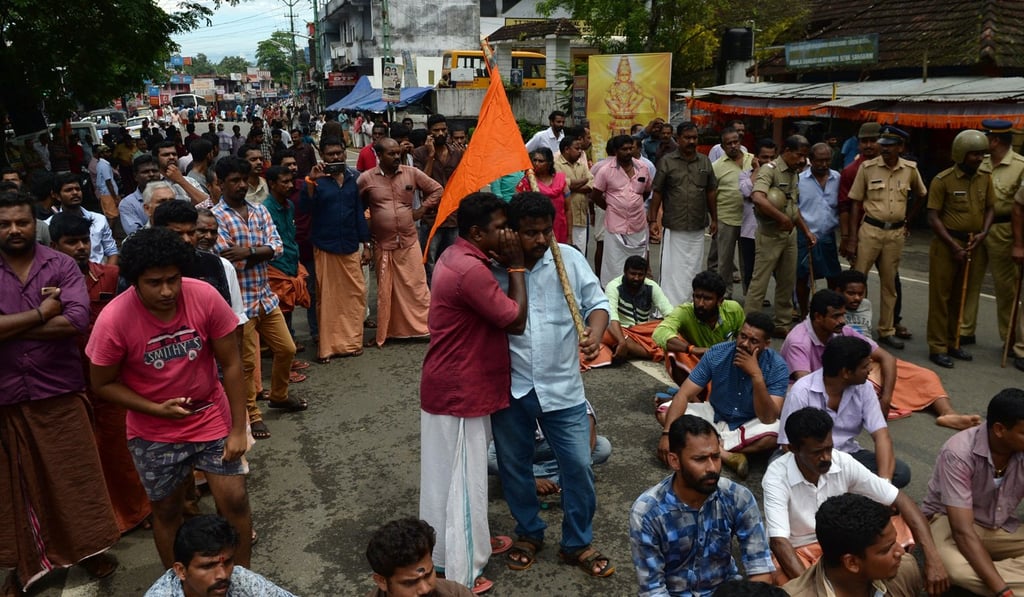
The decision sparked anger from protesters, who claim the allowing women to enter the grounds would offend with the celibate nature of the temple’s presiding deity, Ayyappan.