Advertisement
South Korea sets record US$600 billion budget, backed by chip windfall
The spending plan represents a 12.8 per cent rise from 2026, marking the largest year-on-year increase in the country’s history
3-MIN READ3-MIN
Listen


South Korea on Tuesday unveiled its most aggressive financial spending plan on record, setting total government expenditure for 2027 at 821 trillion won (US$600 billion) to strengthen the country’s technological edge amid the global AI race.
In its annual budget proposal, the budget ministry said the spending plan represented a 12.8 per cent rise from 2026, marking the largest year-on-year increase in the country’s history.
The proposal signals a shift in Asia’s fourth-largest economy under President Lee Jae Myung, who has championed an expansionary financial policy since taking office in June last year, pivoting away from three years of austerity under his predecessor.
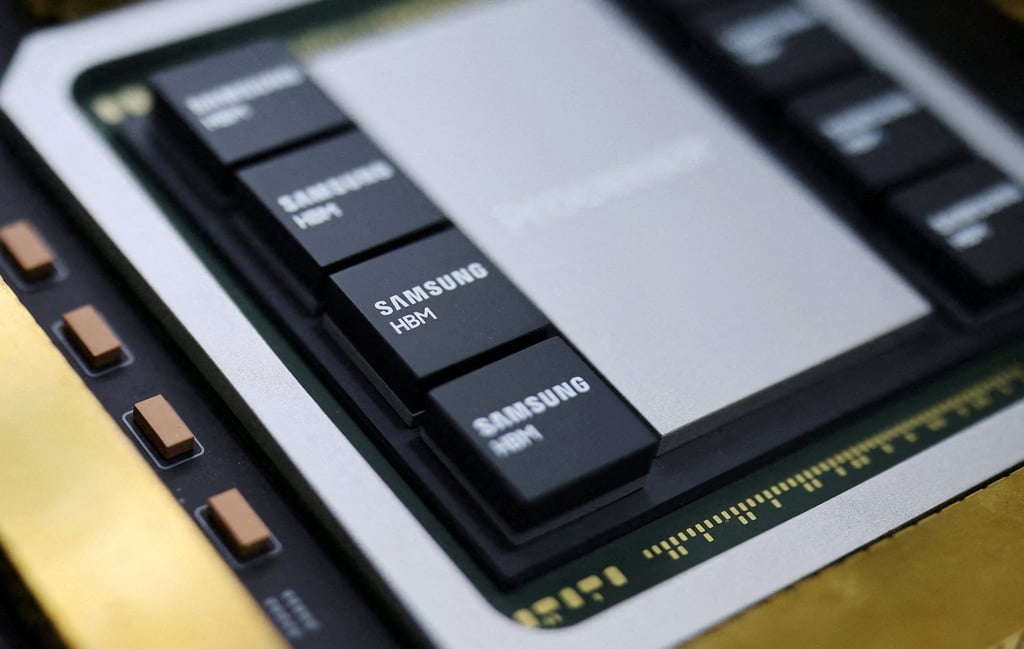
The historic spending increase is possible thanks to a windfall from the country’s semiconductor industry. Chipmakers Samsung Electronics and SK Hynix are generating unprecedented profits driven by global demand for high-bandwidth memory used in the AI boom.
Total tax revenue is seen increasing 40.7 per cent next year to 584.4 trillion won, with corporate tax receipts alone projected to more than double to 216.7 trillion won. That revenue will help reduce South Korea’s debt-to-GDP ratio by 3.3 percentage points to 48.3 per cent, down from 51.6 per cent estimated for this year.
Advertisement
Select Voice
Select Speed
1.00x