Sparks of discovery: Life Science & Medicine dialogue with Shaw Laureates inspires next generation of scientists
Students gain first-hand inspiration from Shaw Laureates 2025, exploring how passion and imagination fuel breakthroughs in Life Science & Medicine

The air was thick with curiosity and the rustle of notebooks as selected secondary students delved into a rare moment of inspiration. As participants in the moderated dialogue, “Innovating for Tomorrow: A Conversation with The Shaw Laureates 2025,” these young thinkers were challenged to look beyond textbooks and envision the future of scientific innovation.
In this intimate setting, the students received wisdom first-hand from world-renowned scientists: Professor John Richard Bond and Professor George Efstathiou, co-recipients of the Shaw Prize in Astronomy; Professor Wolfgang Baumeister, recipient of the Shaw Prize in Life Science & Medicine; and Professor Kenji Fukaya, recipient of the Shaw Prize in Mathematical Sciences. The scientists offered students a glimpse into the dedication and imagination that drive discovery.
Organised by SCMP Learn and presented by the Shaw Prize Foundation, the event was held in October 2025 at the iconic Shaw Studios.
The conversation with Professor Wolfgang Baumeister served as a catalyst for a new perspective on the biological sciences. Howard Wan, Chapman Lau and Markus Cheung reflected on how the laureate’s journey through the challenges of research proved that true success in Life Science & Medicine is rooted in an unwavering pulse of passion.
Students’ reflections
Vital Lesson in Science: Passion, Perseverance and Innovation
By Howard Wan (Hoi Ping Chamber of Commerce Secondary School)
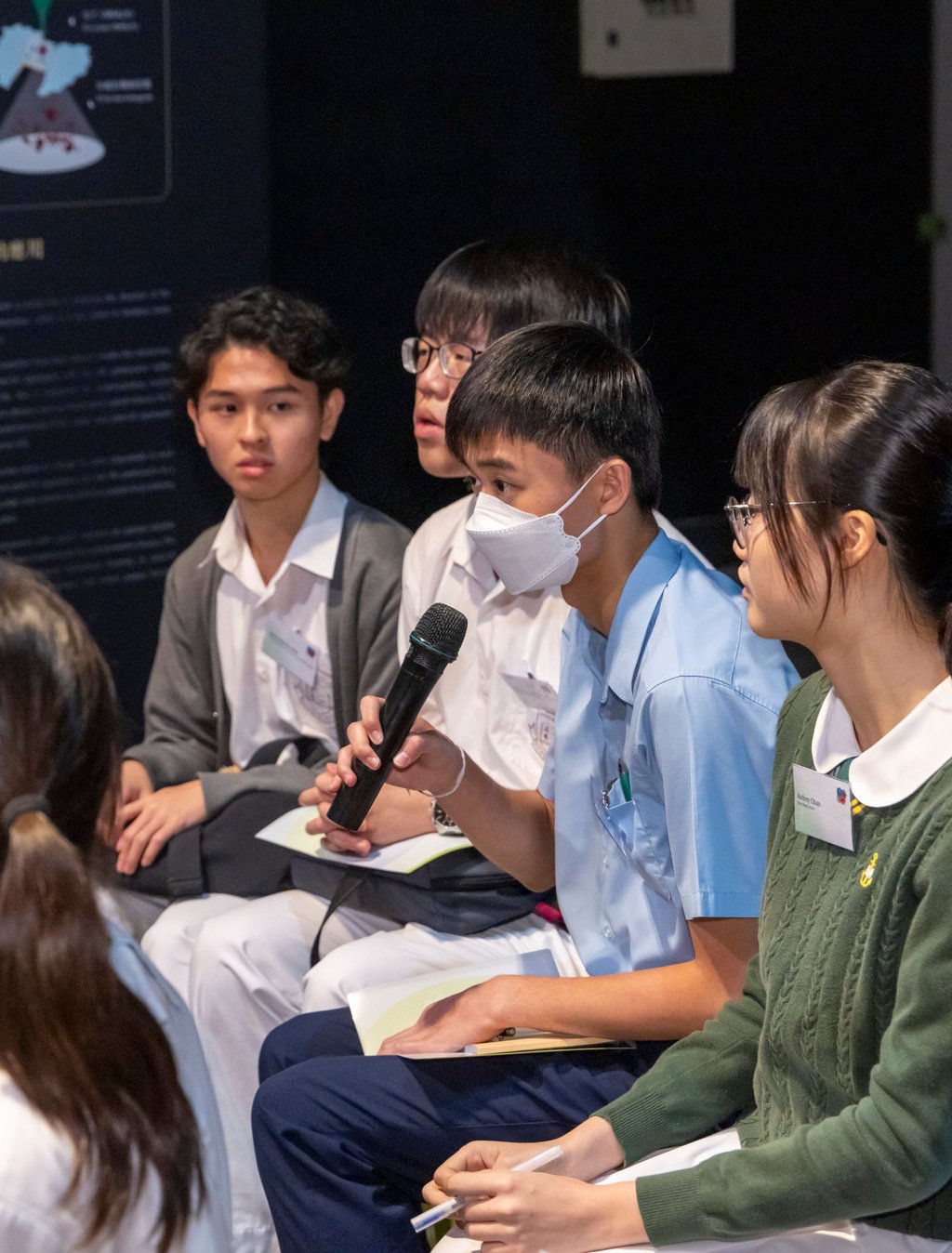
During Professor Wolfgang Baumeister’s engaging talk, he shared that his previous research, though having yielded results, was largely unrecognised, with scant citations. I learned how even revolutionary ideas can be neglected by the scientific community until they materialise completely. He also emphasised the vitality of true passion in his projects, which kept him unwavering for decades as he developed cryo-ET.
I have been avoiding delving into my true passion, psychopathology, thinking that I can save it for the future after contributing to “less important” neuroscientific matters. Following the insightful sharing by Professor Baumeister, I have now moved forward in researching what brought me to neuroscience in the first place, for without true passion, it would be impossible to persevere through the merciless storm of vicissitudes.
I had a private chat with Professor Baumeister afterwards and learnt the differences in our approach. He stressed his preference for experimentation, a contrast to my tendency to formulate theories after theories. Due to my lack of access to hi-tech equipment, I have often neglected the need to experiment and verify my ideas before expanding them.
From my reflection on our conversation, I have learned that a lack of equipment is common among scientists, and this drives innovation, novel approaches to problems and humanity’s advancement. I have thus taken a more patient approach to validating my ideas without hi-tech equipment.
To all aspiring young scientists, science requires patience, passion and perseverance, even when recognition is delayed. I’m happy to have been selected by SCMP Learn to participate in this dialogue and even more grateful to have given myself the opportunity!
Redefining Success: A Life Shaped by Curiosity and Meaningful Impact
By Chapman Lau (King’s College)
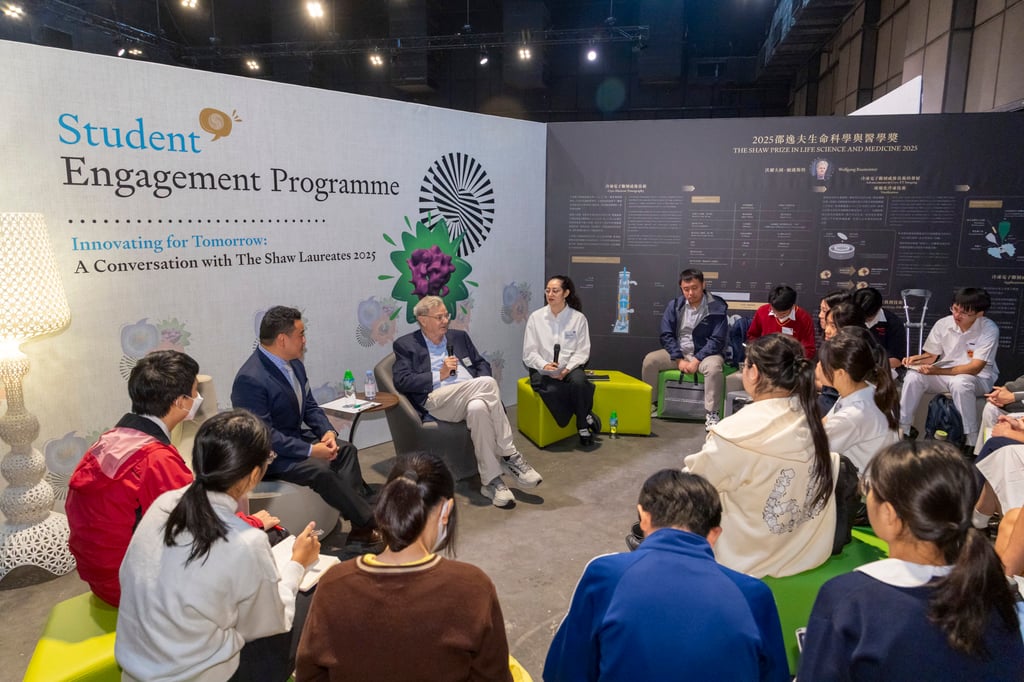
Success is often portrayed as a summit: a trophy raised, a title earned, a number hit. But being successful is less a single peak than a landscape – an ongoing, lived shape of choices, habits and values. It isn’t only what you get, it’s who you become while getting it. When we frame success this way, it becomes a practice rather than a prize, and it becomes available to more of us, more often.
During the talk, Professor Wolfgang Baumeister shared different anecdotes from his life, from how he first discovered his interest in ecology to the tribulations he faced in his research, not to mention his pioneering development and application of cryo-electron tomography.
Throughout the conversation with Professor Baumeister, what most inspired me was his thoughts on success. He mentioned that while working on his PhD project, his accomplishments were overlooked, despite his pride in them. At first, he was a bit frustrated. Finally, he realised that publishing many papers was not the sole measure of success. “For me, [being] successful is bringing positive impacts to the world through my discoveries,” he said.
He also shared valuable tips for achieving success. He said we should cultivate curiosity and passion in everything we do. This mindset empowers us to face obstacles with resilience, transform challenges into opportunities, and sustain the motivation needed to continue our journey towards growth and success. In the end, success is not a finish line but a way of living.
Professor Baumeister’s journey reminds us that recognition and accolades, while gratifying, are secondary to the deeper impact of our work. True success lies in the curiosity that drives us forward, the passion that sustains us through challenges, and the contributions we make that ripple beyond ourselves.
If we embrace success as a shape we continuously form – through choices, values and perseverance – then every step of the journey becomes meaningful, and every obstacle becomes part of the landscape of becoming who we aim to be.
A Talk That Strengthened Resolve to Become an Innovator of Tomorrow
By Markus Cheung Hin Pok (Tai Kwong Hilary College)
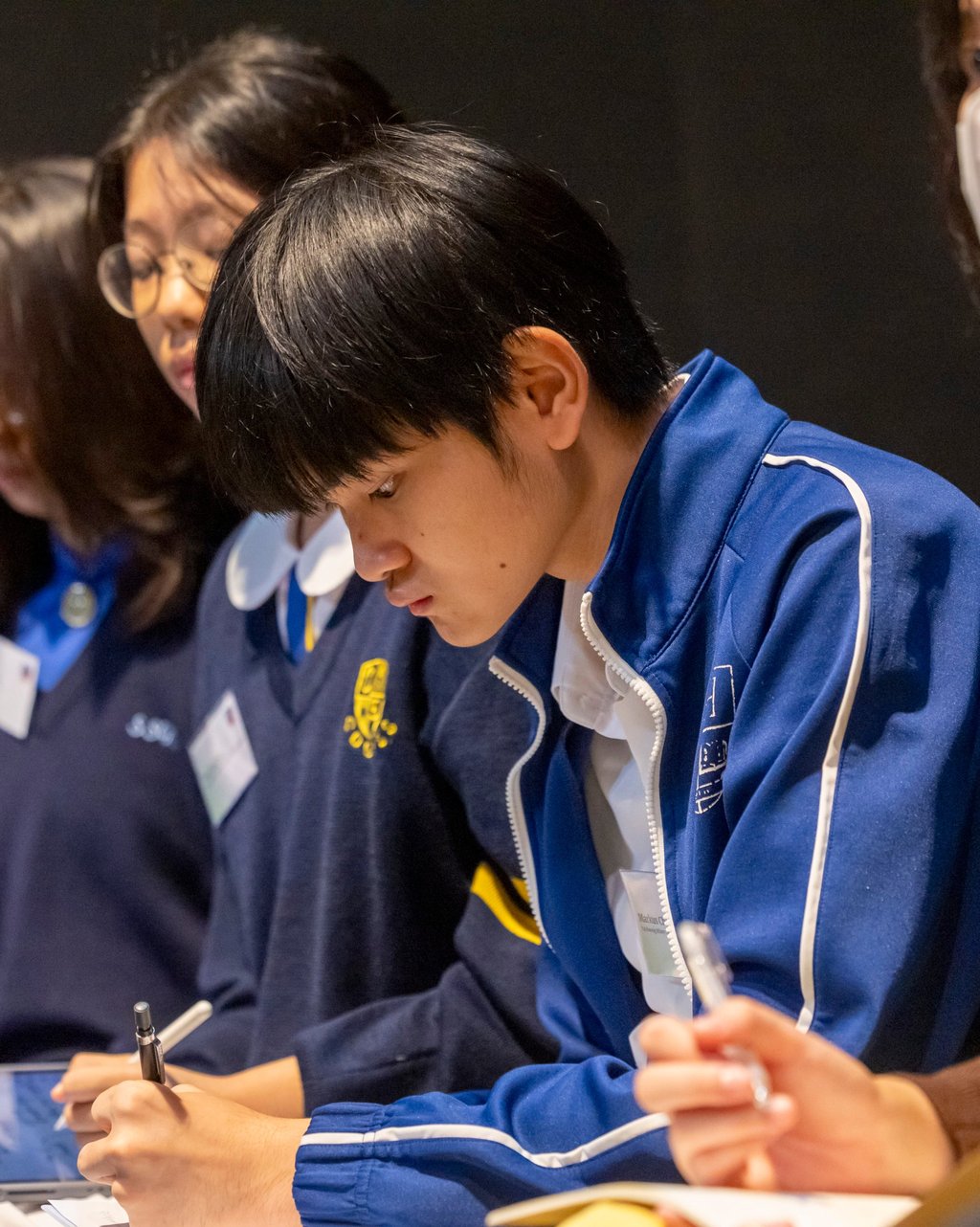
For me, this dialogue was transformative. It was also profound: the sharing of scientific insights through real-world applications in Life Science and Medicine. Alongside a small group of peers interacting with the Shaw Laureates, this inspiring dialogue allowed me to expand my intellectual curiosity.
One of the most memorable statements from Professor Wolfgang Baumeister – “All proteins in our body are actually functioning” – inspired me. I look forward to conducting research in the future, as an innovator of tomorrow, to explore whether this is true. I also understand that research and hypothesis do not guarantee success on the first attempt. This creates a valuable learning environment in which I can reflect on and learn from failure.
The dialogue has boosted my confidence in striving to thrive in the future by further developing my critical, analytical and problem-solving skills. This will empower me to pursue my innovative ideas. My goal is to continue my passion for science and make it my career.
I cherish this extremely rare opportunity to have the Shaw Laureates 2025 share their insights. I will keep every moment of the dialogue in my mind forever. It has inspired me to pursue excellence. In my future projects, I look forward to making a positive impact on society and humanity worldwide.