How AI advances can help make businesses smarter, faster and more reliable
Huawei Cloud’s upgraded flagship Pangu models accelerate intelligence for more than 30 industries

Smart technologies such as artificial intelligence (AI) are a regular part of our lives, from smartphone digital assistants, internet-connected fridges, home security and vacuum cleaners, to autonomous cars and factories that use robots for precise, repetitive tasks such as material handling, welding and painting.
The growing use of generative AI, where AI can create content such as text, images, videos and music by learning from data, is accelerating the scope of its application in businesses worldwide.
Huawei Cloud, a business unit of Huawei Technologies, a global provider of information and communication technology, unveiled upgrades to its flagship Pangu models at its annual Huawei Developer Conference held in June in Dongguan, southern China.
The upgraded models promise to help businesses become smarter, faster and more reliable, offering significant AI improvements across five foundational capabilities: natural language processing (NLP), computer vision (CV), multimodal (which is able to process and analyse multiple types of data such as video, images, speech, sound and text), prediction and scientific computing, it said.
The Pangu NLP model, for example, offers an improved user experience in areas such as adaptive fast and slow thinking, based on the difficulty of problems. It can provide deft replies to simple problems and perform deep thinking on complex problems, improving overall inference efficiency based on new data by up to eight times.
Its DeepDiver module can tackle complicated web searches and complete a complex 10-step question and answer within five minutes and generate professional survey reports of over 10,000 words, highlighting the company’s push to make AI a practical tool for business and research.
AI’s fast-expanding transformative power
The new Pangu CV model, which Huawei Cloud says has the largest parameters yet, has the ability to recognise and analyse images from a wide range of sources – including photos, infrared, radar and 3D scans. It can be used to spot rare defects and issues in complex industries such as oil, transport and mining, helping companies catch problems earlier and improve safety and efficiency.
Zhang Pingan, executive director of Huawei and CEO of Huawei Cloud, said the latest Pangu models have been used over the past year in over 500 scenarios across 30 industries, including government services, manufacturing, coal mining, steel, autonomous driving and meteorology, to help enhance productivity, accelerate research and development (R&D) and reduce environmental impact.
AI can help prepare for exploration of Mars
Anhui Conch Cement, for example, one of China’s largest building materials manufacturers, has been using the new Pangu prediction model to forecast the strength of cement clinkers, or solid lumps, which enables it to make the best use of the raw material blends in areas such as recycled construction and industrial waste.
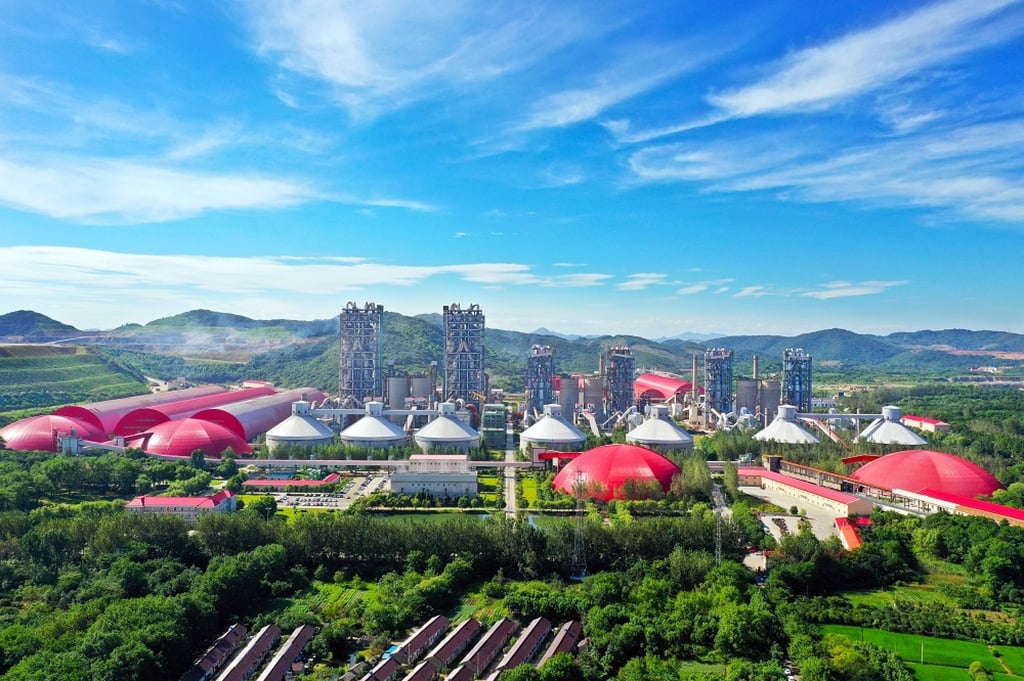
It said using the prediction model has helped it maintain quality standards while reducing costs and supporting China’s push for greener manufacturing.
However, Huawei Cloud has also provided users with the tools and training so they can create their own professional AI models to carry out specific tasks. “We provide infrastructure as a service to help customers’ businesses expand globally,” Zhang said. “We offer leading technologies as cloud services so that customers do not have to reinvent the wheel and accelerate business innovation.”
Companies can use the toolchain and engineering methodology on Huawei Cloud’s ModelArts platform to quickly train, fine-tune and reinforce Pangu foundation and industry-specific models using their own data.
The Beijing-based national research institute, the Chinese Academy of Agricultural Sciences, for example, used Pangu foundation models to create its own Agricultural Scientific Discovery Model, based on a large pool of scientific literature and genetic data.
It has helped to shorten the usual time spent on early R&D and enabled more precise crop breeding to be carried out, and resulted in the creation of a rice strain which has 25 per cent shorter stalks and improved resistance to lodging, a problem where plants break and fall over.
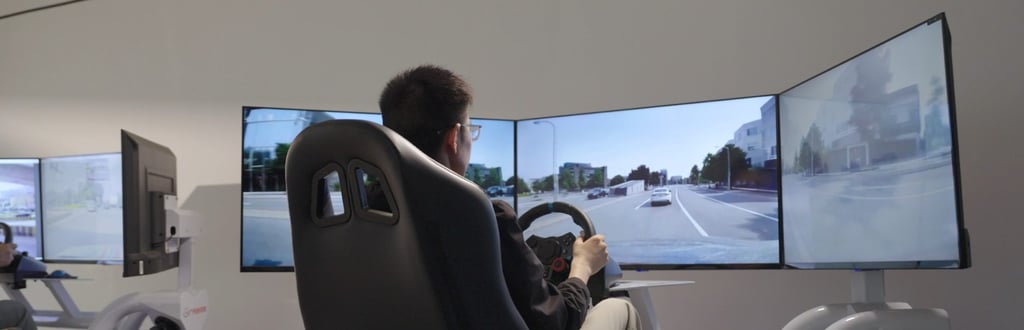
State-owned carmaker Guangzhou Automobile Group has used Pangu’s “world model” – based on the Pangu multimodal model – to simulate complex driving scenarios for autonomous vehicle training.
The system can generate digital physical spaces for training intelligent driving and embodied AI robots, enabling its engineers to recreate rare problem scenarios within minutes and reduce the time spent working on model iteration cycles from weeks to just two days.
Zhang said the technology may one day be used to help space exploration, and asked: “No one can go to Mars to collect three-dimensional data, so how can we train the rover here on the ground for its sample collection tasks?”
He said existing images of the red planet’s surface and depth information had helped Huawei’s laboratory to train the Pangu model to generate a “digital space” which had equipped the rover with the necessary knowledge to navigate the new environment.
“With the angle and distance information, the rover can assess the likelihood of a collision and learn to avoid obstacles,” Zhang said.
Timely and precise warnings boost public safety
Chinese meteorological offices in Shenzhen and Chongqing have been using Pangu’s scientific computing model to deliver closely focused, high-resolution weather forecasts, which have given them the ability to issue earlier warnings about extreme conditions such as storms and heavy rainfall.
Zhang said Shenzhen Energy Group uses the same Pangu model to predict short-term and midterm energy yields from wind and solar power, which has enabled it to make more effective energy output adjustments.
Another state-owned enterprise, China National Petroleum, has used Pangu’s computer vision model to build its own Kunlun Large Model to improve operations in more than 100 professional fields, including exploration and development, oil refining, chemical engineering and equipment manufacturing.
Its model, which is capable of precisely detecting defects of less than one millimetre in size, such as porosity and cracks in oil pipelines, has delivered about 40 per cent higher identification efficiency and reduced manual workload by around 25 per cent.