Monkey King game, animation and dubbing transformed by Huawei Technologies’ cloud solutions
Huawei Cloud offerings let people stream games without hardware upgrade and use AI to generate content, lip-synching and translations

Computer hardware constraints, such as graphic design and gaming, have long posed limitations on people accessing and creating digital media.
Gamers have been subject to low frame rates and poor graphics for years and video editors have had to struggle with slow rendering times, while the latest innovations in these fields have been available only to those people with top-of-the-line hardware. But not any more.
Innovative new cloud computing solutions – offering people online access to data and software stored on a network of servers – mean it is now game on for would-be players the world over!
August saw the release of the award-winning, role-playing video game Black Myth: Wukong, featuring the character, Tian Ming Ren (The Chosen One), based on the classic 500-year old Chinese novel, Journey to the West, as he goes on a quest for six magical relics left behind by Sun Wukong or Monkey King.
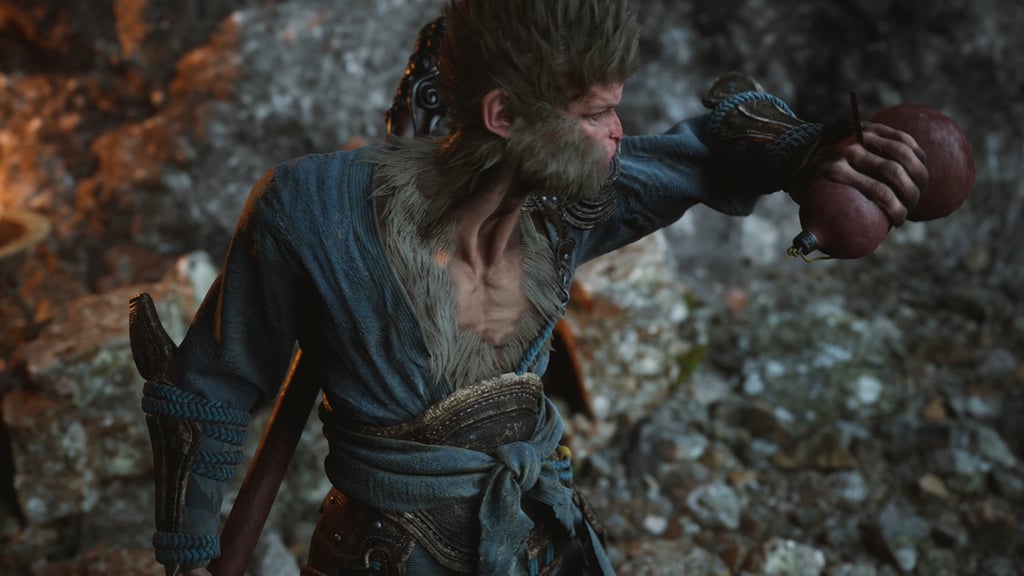
Players can also find “spells” that give them magical powers, including the somersaults cloud – for which the Monkey King is famous – which allows high-speed navigation.
It is China’s first big-budget, or AAA, offering featuring spectacular, high-definition cinematic visuals of natural scenery, historic buildings and breathtaking action.
Like most other AAA games, Black Myth: Wukong was designed for the latest consoles or a high-end computer. Traditionally, those gamers who want to play this offering will have either had to spend money to upgrade their computer hardware or visit a gaming cafe. Both of these options involve incurring additional costs or inconvenience, which often deters people from trying out the game.
However, a third option, cloud gaming, now allows users to stream games from a remote server, where the games are stored and rendered. By using this technology, games can be played on a variety of compatible devices including smartphones, tablets and everyday personal computers.

Telecommunications giant Huawei Technologies, a leading Chinese global provider of information and communications technology infrastructure and smart devices, offers such gaming solutions through its Huawei Cloud Workspace, which enables users to play AAA games on the device of their choice without upgrading their computer hardware.
It allows games to be played in high definition (2K) with smooth animation at speeds of 60 frames per second and transmitted in real time so there is no lag. This solution avoids the need for additional on-device storage space as the games can be stored and accessed directly from the cloud.
Huawei’s cloud gaming solutions are available for as little as US30 cents per hour for the basic edition. They come with the game Black Myth: Wukong pre-installed, which allows users to start playing immediately once they have bought the game from the platform, without waiting for the compressed file of the game to be restored. Cloud gaming significantly reduces the investment needed to enjoy video games, which makes AAA titles just as accessible as mobile apps.

However, the benefits of cloud technology also extend to other forms of digital media, including the creation of animated videos and films. With its artificial intelligence-powered Pangu Model, Huawei Cloud enables users to quickly create animated videos in specific aesthetic styles by training on images and inputting real video.
It can help animation companies to save significant time and costs in both the creation and rendering of films and videos.
The Pangu Model is able to maintain consistency and stability in both motion and character features, even when pictured at different angles. This feature has been missing from earlier versions of such video-generation.
An example of this technology can be seen in action in the AI-animated short film, To Dear Me, which won the Best Film Award in the artificial-intelligence-generated content (AIGC) short film category at April’s 14th Beijing International Film Festival.
The film incorporates scenes with dancing and bold movements, all of which are accurately animated while the characters’ facial and body features remain consistent throughout.
With the use of AI, a video can be quickly and easily transformed into animation, without involving a separate team of specialised producers. Recent advances in the technology made by Huawei have also resolved issues such as movement and facial distortions that were previously commonplace when using AIGC.
The Pangu Model also offers a solution to overcome language barriers through the use of AI multilingual voice dubbing of films.
Video dubbing has previously been a time-consuming and often expensive process, with results depending entirely on the ability of the voice actors. But by using AI technology, films and videos can now be translated while retaining the vocal qualities, including the tone, intonation and emotions, of the original characters. The model also supports lip-synching so that the translated dialogue matches the movement of each character’s mouth.
This method of translation can be used to increase the reach of regional content by allowing global audiences to enjoy films and television shows in more than 15 languages.
The Chinese documentary, To the Summit, is one such example, which is now available to watch in English through the use of AI voice dubbing. It accurately portrays the voice and emotion of 69-year-old Chinese mountaineer Xia Boyu as he takes on the challenge to become the second double amputee to climb Mount Everest.
From cloud gaming to AIGC filming and multilingual dubbing, the innovative uses of cloud computing and AI technology are helping to transform the world of digital media and entertainment for creators and consumers alike. They are not only providing solutions to overcome existing challenges involving real-time and cost limitations, but also opening up a whole new world for imagination and cross-border communication.
Just as Xia’s heroics took him to the summit of Everest, tech innovators are showing similar confidence that, with challenges in life and work, the sky is the limit.