How Alibaba is fuelling e-commerce growth by enhancing shopping experiences
Chinese online retail giant rolls out shopper incentives and support measures for sellers to stay ahead of the market

On November 11, 2009, Alibaba’s first Singles’ Day, also known as Double 11, began as a modest online shopping event with just 27 brands participating on the group’s e-commerce platforms. Fast-forward to today, and it has become the world’s largest annual retail extravaganza that features about 300,000 brands of various sizes, including a multitude of small and medium-sized enterprise merchants.
As the digital retail landscape continues to shift, Taobao and Tmall Group (TTG), Alibaba Group’s domestic e-commerce arm, is determined to remain the industry leader by investing in initiatives that offer users an elevated shopping experience, thereby creating a virtuous cycle that benefits both consumers and merchants.

“We are making unprecedented investments to provide incentives for consumers, support brands and merchants, and drive high-quality growth,” says Bo Liu, vice-president of Alibaba Group and president of Tmall, reaffirming TTG’s commitment to a “user-first” strategy and supporting its merchants.
Winning consumers through improved user experience
Faced with ever-changing consumer demands, Chinese e-commerce platforms must find innovative solutions to navigate the evolving market landscape. For TTG, this means adopting a strategy that prioritises the user experience through quality product offerings, competitive pricing and good services.
For example, TTG has implemented a series of initiatives for this year’s Singles’ Day that offer the more than 42 million members of 88VIP, China’s largest paid e-commerce loyalty programme, many exclusive benefits. These customers – who spend nine times more than non-members and make purchases in five times more product categories – have enjoyed more than 20 billion yuan (US$2.78 billion) worth of coupons, exclusive interest-free instalment payment privileges and premium return services.
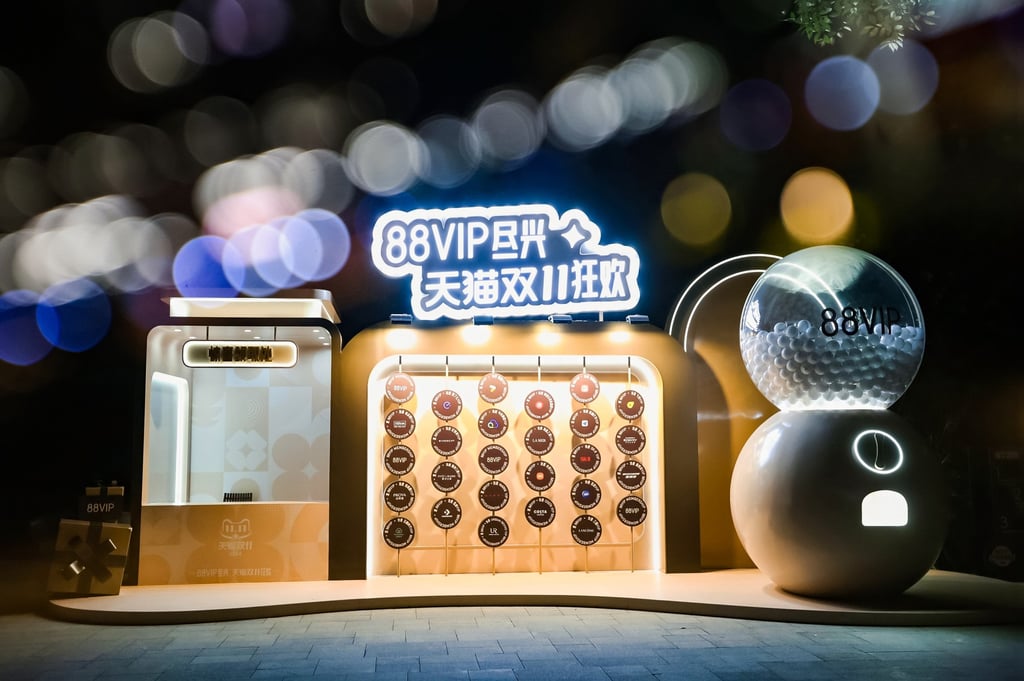
Investments like these are delivering results. The number of 88VIP members who placed orders during the Singles’ Day promotional period, which kicked off on October 14, has seen a year-on-year increase of more than 50 per cent. Moreover, 88VIP has seen double-digit membership growth over the past year, with the number of millennial members increasing by an impressive 67 per cent.
Helping merchants operate efficiently
A “race-to-the-bottom” pricing strategy is not sustainable for any business. Instead, long-term growth requires effective operational tools that can help brands enhance consumer engagement and efficiency, which can then lead to higher margins and healthier bottom lines.
To that end, TTG has made a series of investments to provide merchants with support on post-purchase services, marketing, payment and logistics for this year’s Singles’ Day.
This includes the new Tuihuobao service, which has reduced logistics costs for returned orders by approximately 30 per cent, benefiting about 1 million merchants. Meanwhile, systematic enhancements in intercepting unreasonable “refund-only” transactions and granting merchants greater autonomy to resolve such issues have also improved efficiency and overall service quality.
Since the service launched in September, the results have been positive. One merchant in the lighting product category reported that their cost per return was reduced from 4.7 yuan to 3.52 yuan. Based on about 200,000 orders per year, that could mean annual savings as high as 300,000 yuan.
These initiatives have led to a 70 per cent increase in newly launched brands on Tmall in the third quarter of 2024 compared to the previous quarter. In addition, Tmall Global, China’s leading e-commerce platform for imported products, saw more than 1,700 overseas brands set up their first China stores in the first nine months of this year, signifying real confidence in the platform.
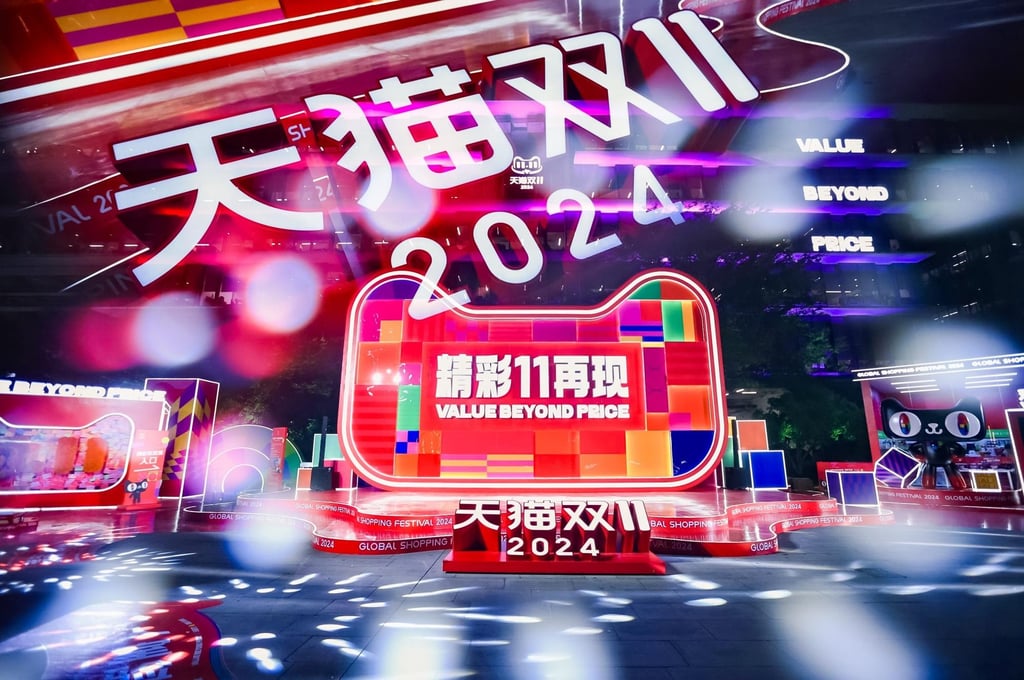
Brands and merchants have also yielded encouraging results throughout this year’s Singles’ Day campaign, with a record-breaking 589 brands generating more than 100 million yuan in gross merchandise value. On the first day of the pre-sale period, more than 12,000 brands saw their sales double, while nearly 6,000 brands experienced sales growth of more than 500 per cent compared to the same day last year.
Strengthening merchant capabilities through AI
In addition to service support, TTG is also leveraging artificial intelligence (AI) to help merchants reduce their operating costs and deliver more personalised shopping experiences.
For this year’s Singles’ Day campaign, more than 4 million merchants used TTG’s AI-powered e-commerce toolkit to generate over 100 million virtual images, videos and text for promotional purposes, thereby saving on design and marketing costs.
This toolkit also helps merchants save time. For instance, premium fitness equipment manufacturer Shua Fitness found that the time it takes to generate a complete set of product images had been reduced from three days to a couple of hours.
In addition, the toolkit allowed more than 800,000 merchants to achieve higher click-through rates by adjusting their content strategies based on over 2 million instances of traffic analysis. Meanwhile, Business Advisor, a smart analytics platform, helped merchants review and plan their offerings based on consumer demand and competitor data.
Virtuous consumer-merchant cycle opens new revenue streams
As TTG’s efforts to elevate the shopping journey with an enhanced user experience and merchant support have delivered promising results and created a virtuous cycle between consumers and merchants, TTG is gradually introducing monetisation measures to increase revenue earned on its platforms.
“Our user-first and AI-driven strategies are starting to bear fruit,” says Eddie Wu, Alibaba Group chief executive, commenting on first-quarter earnings. “Internal and external data concerning e-commerce players and market share dynamics indicate a positive trend as we stabilise [our performance], further validating the effectiveness of our investments.”
One key highlight is Quanzhantui, an AI-driven digital marketing tool that helps merchants optimise marketing campaigns to drive growth at the product level by identifying high-potential products and recommending a plan to turn them into bestsellers. The tool was adopted by about 290,000 merchants and applied to 1.6 million products during this year’s Singles’ Day campaign.
Additionally, Taobao and Tmall have charged merchants a 0.6 per cent software service fee, the standard rate for e-commerce platforms in China, since September. This move, together with Quanzhantui and other monetisation mechanisms in the pipeline, are expected to contribute to TTG’s revenue.
“We will continue to optimise monetisation efficiency while also enhancing platform traffic utilisation and conversion of user traffic to purchases,” Wu adds.
By investing in users and merchants, and also increasing engagement with both groups, TTG believes that this virtuous cycle will lead to higher revenue and profitability, instilling a greater sense of confidence among investors.
Taobao and Tmall Group is the domestic e-commerce arm of Alibaba Group, which also owns the South China Morning Post.