Rolex leads global conversation on how technology can tackle pressing challenges
Experts discuss innovations that help make the Earth a more inclusive and sustainable place at ‘Towards Our Perpetual Planet’ conference
Time is of the essence if we are to protect all the wonders of the world’s natural environment for future generations. Each day brings new signs of the impact of climate change and rising sea levels, deforestation and loss of biodiversity, with stark warnings about the causes and consequences.
Fortunately, though, there are many instances of successful action being taken to understand and avert these challenges. Expert scientists and committed advocates in fields ranging from marine biology and meteorology to innovative technology and data science are coming together to find solutions that are helping to safeguard the Earth and put sustainability at the heart of everything we do.
A prime example of that is Rolex’s Perpetual Planet Initiative, which the Swiss watchmaker launched in 2019 with the aim of supporting research and advancing projects that are farsighted and ambitious.
The broad objective is to build a better future by supporting scientists, explorers and organisations that are working to preserve the oceans, different landscapes and the multiplicity of species and to encourage industries to rethink entrenched practices and policies for the greater good.
The initiative also includes the Rolex Awards, which the watchmaker has presented to those who are spearheading innovative projects since 1976. It now has a portfolio of more than 30 partners and has supported pioneering individuals who are active in three main focus areas: oceans; landscapes; and science, health and technology.
Many notable achievements of the Perpetual Planet Initiative – and today’s most pressing challenges – came under the spotlight at a conference held last month at The St Regis Hong Kong.
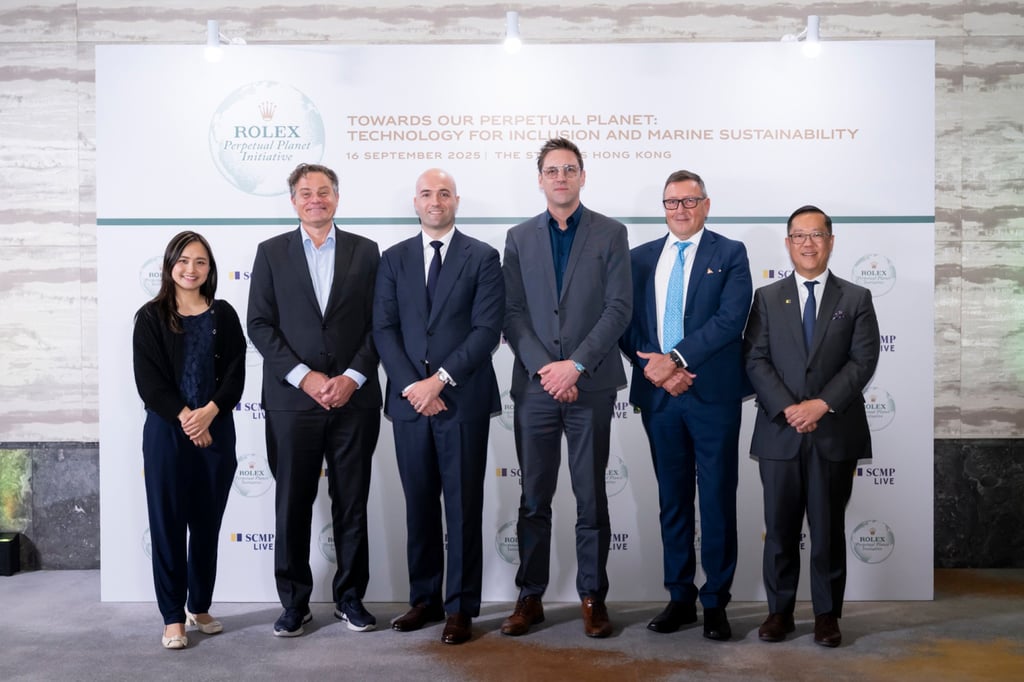
Organised by the South China Morning Post in partnership with Rolex, the “Towards Our Perpetual Planet” conference saw leading figures from the worlds of science, technology and social innovation discuss the potential impact of tech breakthroughs in promoting inclusion and marine sustainability, as well as alternative approaches to our everyday interaction with nature.
In a keynote address, Professor Carlos M Duarte, the Ibn Sina distinguished professor of marine science at Saudi Arabia’s King Abdullah University of Science and Technology, said that, despite progress in certain areas, time is not on our side when it comes to securing the health of our planet.
“Many decades of pressures on our biosphere have led to a triple crisis of climate, biodiversity and pollution,” Duarte, a marine ecologist and oceanographer renowned for his pioneering research, said.
“As a scientist, I find that the concept of a perpetual planet has a healing effect that infuses hope. It recognises the challenges, but shows that through hard work, perseverance and ingenuity, we can achieve positive outcomes with initiatives that maintain delicate mechanisms and support a thriving society.”
He also said a belief that understanding and respecting the attachment between the oceans and humankind is going to determine the future of our species.
“The oceans are complex systems, so we can’t understand them from just one perspective,” Duarte said. “It requires interdisciplinary efforts and connectivity to devise new technology for ocean exploration, learn from adaptations of marine life and solve humanity’s problems.”
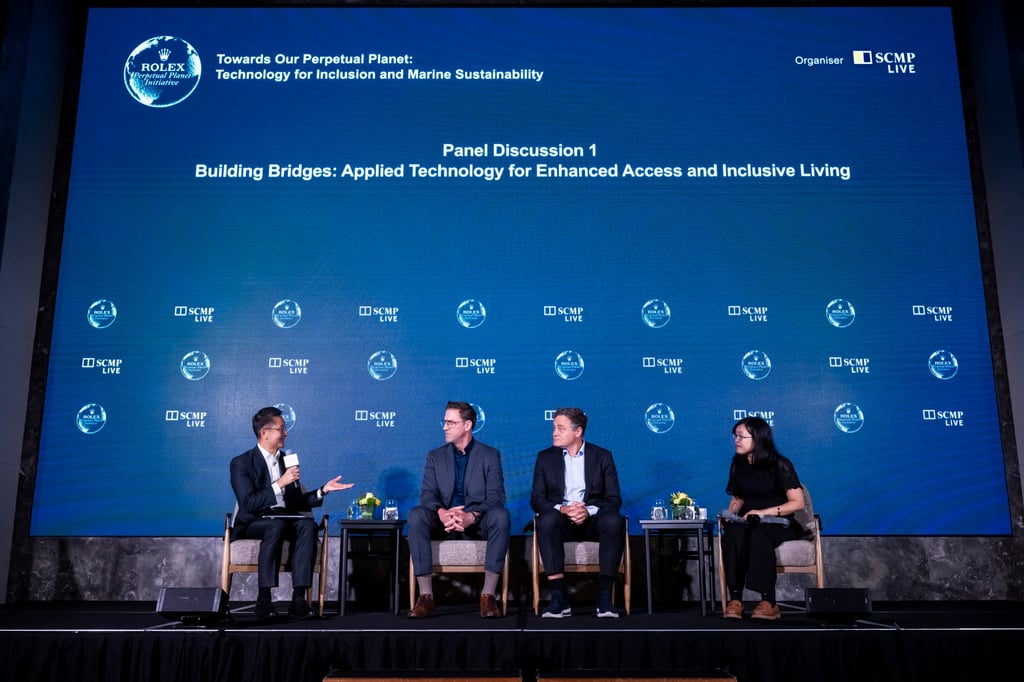
In a panel discussion titled “Building Bridges: Applied Technology for Enhanced Access and Inclusive Living”, the speakers considered how technology can help increase inclusivity around the world.
One of them was Felix Brooks-church, a 2021 Rolex Awards Laureate and co-founder and CEO of Sanku, a social enterprise which aims to eradicate malnutrition by finding ways to overcome micronutrient deficiencies in East Africa.
His team has been adding micronutrients to staple foods in this region, via a simple but life-changing machine known as a dosifier, for a decade.
“We first had to invent a machine, a technology that could address malnutrition and then find a business model that could sustain and scale that solution,” Brooks-church said, adding that support from Rolex has allowed Sanku to expand its operations in the region.
“We now have approximately 1,500 of these machines installed in villages and towns dotted throughout Tanzania, Kenya and Ethiopia, feeding 25 million people every single day and giving them the basic human right of better nutrition.”
Another panellist was biomedical engineer Professor Mark Kendall, founder and CEO of WearOptimo, which makes next-generation wearable sensors to detect the early onset of heart attacks and other critical medical conditions such as dehydration.
Kendall, a 2012 Rolex Awards Laureate, previously invented a low-cost nanopatch to administer vaccinations, which eliminates the need for needles and refrigeration.
“In developing our sensors, we identified that there is a certain location in the skin where we can gain access to signals that today’s other smart wearables are unable to reach,” said Kendall, who has spent more than two decades pioneering non-invasive medical technologies to improve global healthcare.
“Many people will actively avoid some forms of treatment just to avoid the needle. Our devices are minimally invasive and make use of special attributes of the skin.”
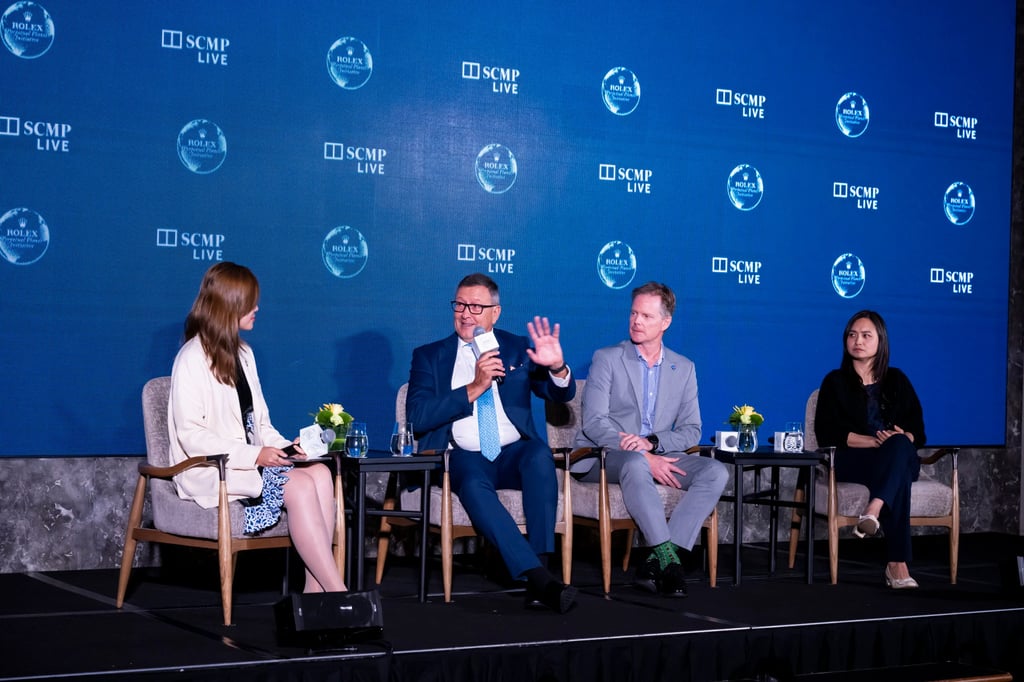
A separate discussion, titled “Tech for the Tide: Engineering a Resilient Marine Future”, focused on technologies that can safeguard our oceans’ health.
Dr Apple Chui, founder of Coral Academy, spoke about her research into reviving the oceans and efforts in raising awareness about the importance of conservation through education.
With support from the Perpetual Plant Initiative, she is rehabilitating degraded ecosystems in Hong Kong’s marginal marine zones and preserving coral reefs with the help of biotechnology, artificial intelligence and ecological engineering.
“My team focuses a lot on coral propagation techniques and effective nurseries to ensure a continuous, sustainable supply for outplanting in Tolo Harbour,” said Chui, who is an assistant professor in the School of Life Sciences at the Chinese University of Hong Kong.
“By enhancing genetic diversity, we want to make the ‘baby’ corals more resilient to future climate change scenarios. Our juveniles are achieving a very high survival rate in the restoration sites, and that really gives us hope.”