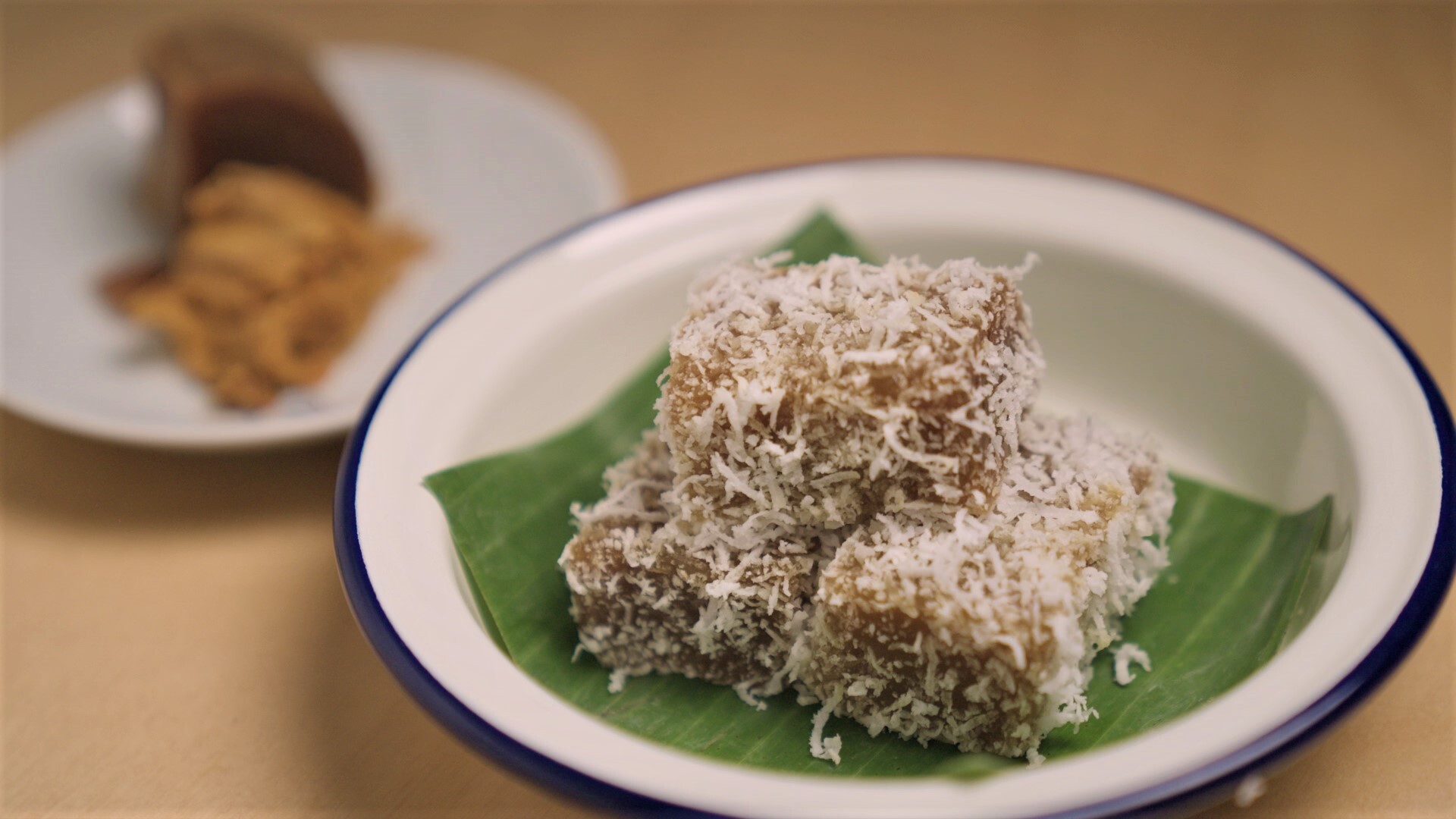
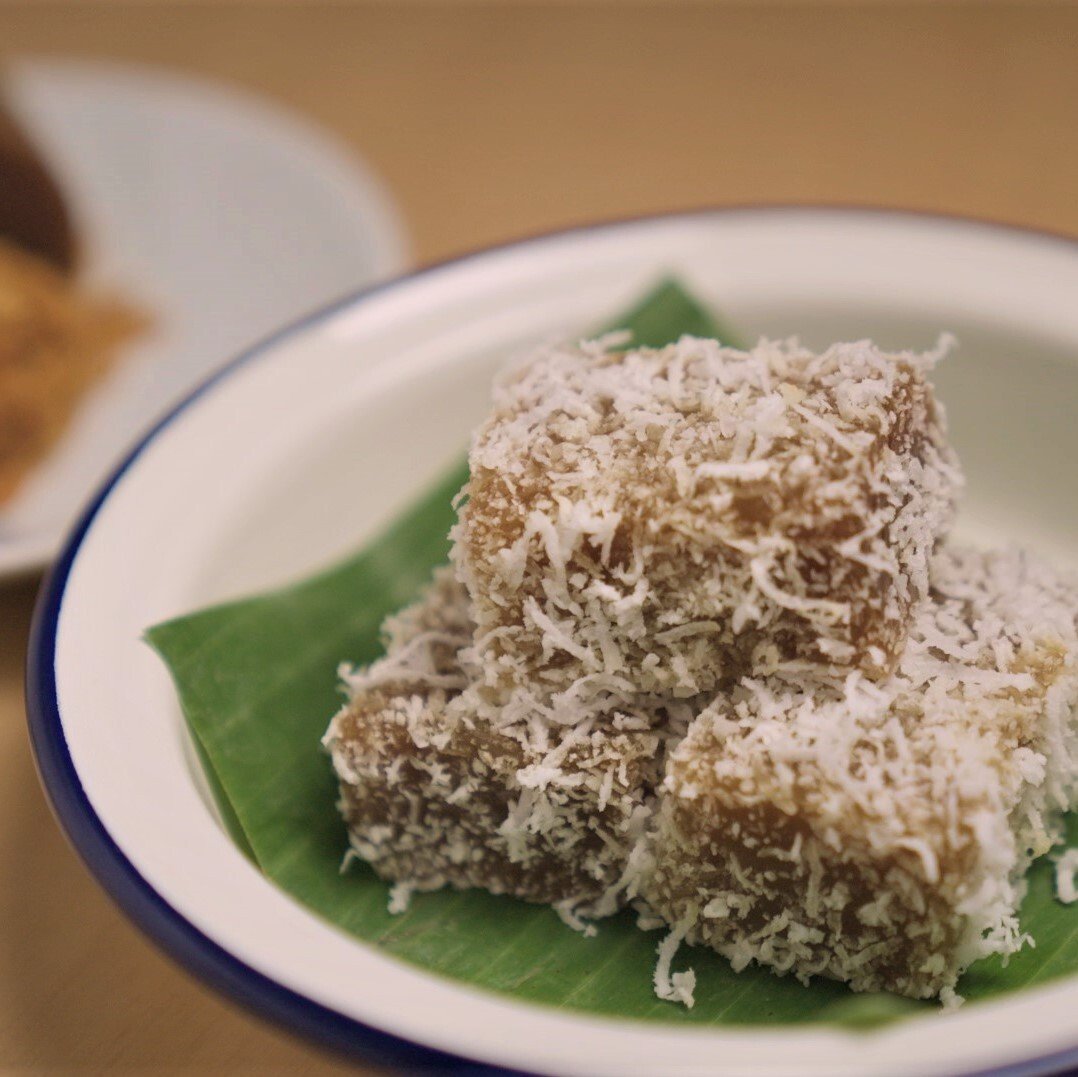
- Wong Guo Hui and his wife Geraldine Guo’s home-based sustainable business offers bite-sized snacks handcrafted from all-natural, locally sourced ingredients
- Their weekend delivery service, which uses banana leaves instead of plastic packaging, aims to make the traditional food relevant to today’s lifestyle

Since he was a little boy, when he took his first bite of kueh – traditional bite-sized snacks commonly found in Southeast Asia, with origins that can be traced back to Malay and Indonesian cuisines – Wong Guo Hui has been “hooked”.
“My grandma gave me my first piece when I was young,” Wong, 40, says. “Since then, even till today, I’m always on the hunt for good kueh.”
Yet finding healthier, lower-sugar versions of these sweet or savoury desserts – made popular by Peranakans, or people of mixed Chinese and Malay or Indonesian heritage – has often proven to be difficult.
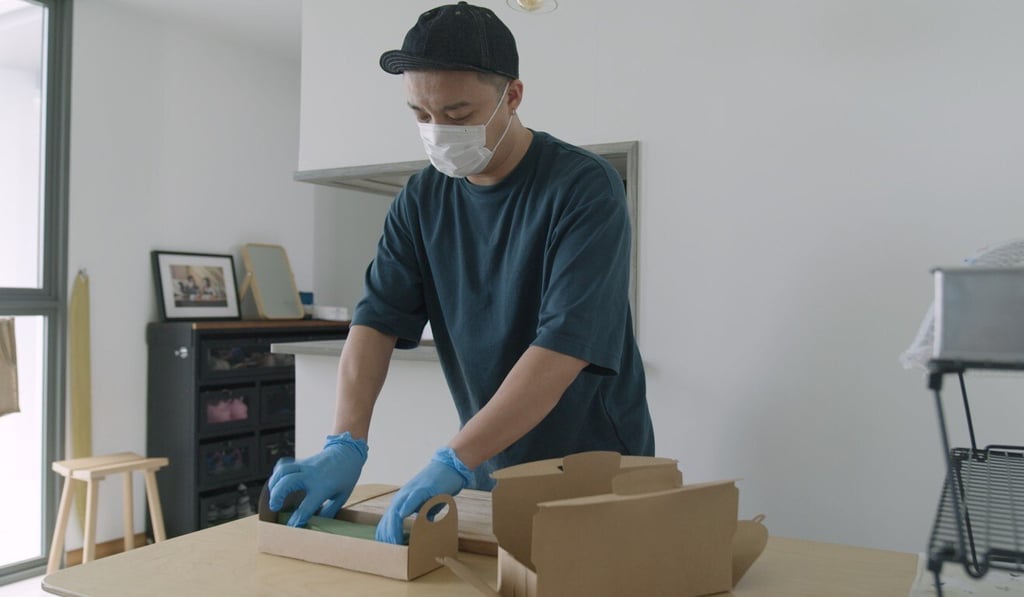
So last year, during the height of the Covid-19 pandemic, when Singapore had introduced its first phase of social-distancing measures, Wong started to experiment with making kueh. Eventually, he and his wife, Geraldine Guo, 38, launched Where’s the kueh, their home-based business offering weekend deliveries of their lovingly created, handmade snacks.
“We started the business as a passion project to offer something healthier for more health-conscious Singaporeans,” says Wong, who studied ceramic design and whose past work with clay means he is skilled in the delicate art of making kueh.
The couple uses only natural ingredients when making kueh. “We don’t use any artificial colourings or essence,” says Wong, who painstakingly extracts all of the colours used in preparing the kueh from fruit and vegetables – a lengthy process that he starts at midnight and completes in time for the next day’s deliveries.
We started the business as a passion project to offer something healthier for more health-conscious Singaporeans
He says the tedious procedure he follows is nothing new. “This was how kueh was done, in fact, before artificial colouring and essence were conveniently introduced in the market,” he says.
Preserving traditions sustainably
Wong and his wife are also determined to use their business to promote “responsible consumption”. So, besides ensuring that all of the ingredients are natural and fresh, they source produce that is grown locally – or, at the very least, regionally – whenever possible to reduce the company’s carbon footprint.
“We try our best to buy from local markets, local farms, and mom-and-pop stores,” says Wong, who buys freshly grated coconut at the local wet market as early as 5am, for example, and the pandan leaves they need for production from a community garden.
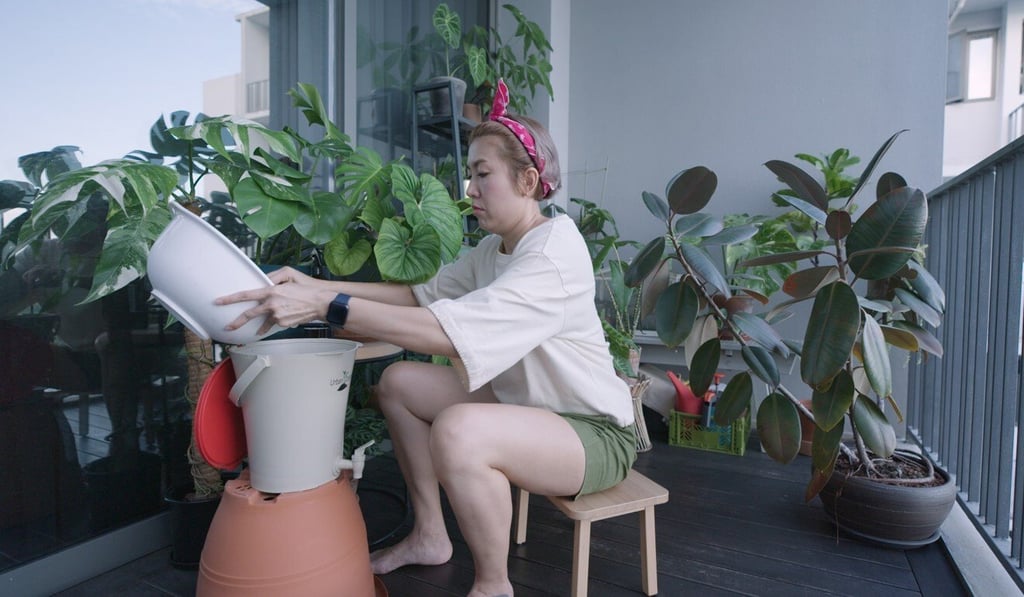
They also avoid using plastic packaging, especially single-use plastics. Any food waste from production, wherever possible, is disposed of in the couple’s home composting system.
“We try to use alternatives like banana leaves for the packaging; the cost goes up that way, but I don’t think we are comfortable doing a business that ends up harming the environment for our future generation,” Wong says, adding that it has not been easy.
Guo, who works full-time in innovation and digital for a multinational company, agrees. “As a home business, operating out of our apartment, it is challenging to be able to provide a whole circular economy from sourcing of food all the way to the disposal of waste, but we try our best and do what we can,” she says. “Every day, we are still learning.”
She and her husband are also keen on preserving the art of making kueh, which is steeped in tradition and nostalgia, as they have noticed there is not a great level of awareness about kueh among their peers and younger people.
I don’t think we are comfortable doing a business that ends up harming the environment for our future generation
“We are always chasing after the latest food fad,” says Guo, citing cruffin (muffin-shaped croissants) and burnt cheesecake as examples of treats that have recently trended.
“The evolution of [the] cafe boom in Singapore in the past decade made many of us more attuned to Western pastries and desserts, while kueh is something your older aunties or grandmother brings home,” she says. “If we don’t keep this tradition or try to learn this craft, it’ll be gone next time.”
Making ‘kueh’ relevant again
Preservation is a key part of Where’s the kueh’s ethos. “We don’t seek to reinvent traditional kueh; we’re making it relevant to today’s lifestyle,” says Guo, who taps into her background in advertising and communication to create branding and content strategies for the business.
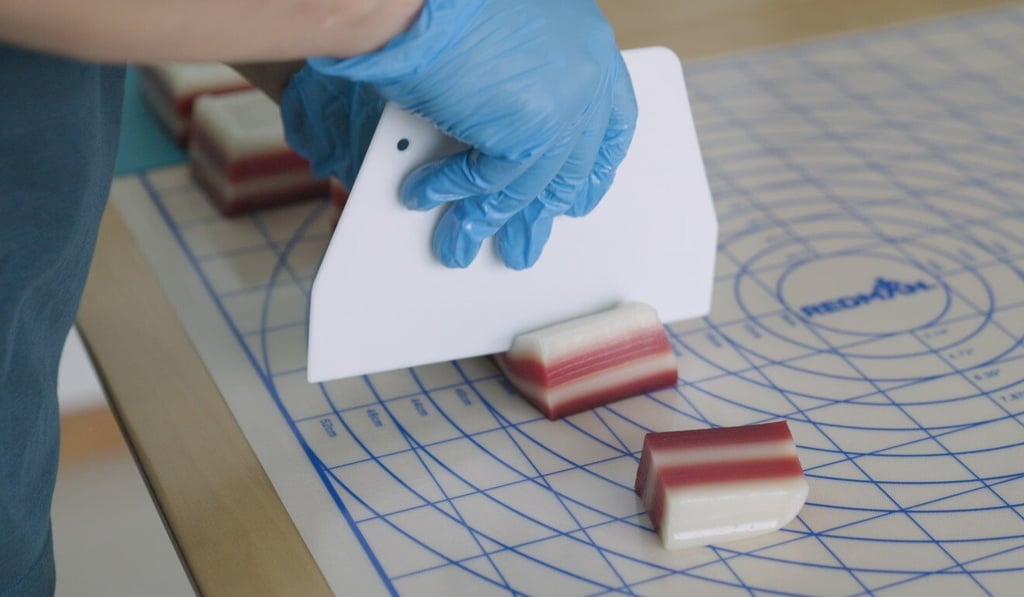
In a bid to adapt what she and her husband offer to modern sensibilities, they've also recommended serving kueh paired with trendy drinks such as cold brew coffee. “Cold brew is quite popular nowadays,” Guo says. “A lot of people drink it and with a deeper understanding of coffee, you can actually pair it with the different kinds of kueh. I’m sure you can actually pair kueh with a lot of other beverages as well.”
Ultimately, they hope their offerings will help more people to learn to appreciate kueh, so it will continue to be available for generations to come.
“If every generation seeks to make it, or to improve upon it, it will definitely be passed on from generation to generation,” Guo says. “Kueh is part of Singapore’s local, rich food culture, and even though we are not Peranakans, we love kueh and hope to be able to continue to do this.
“Perhaps one day, we might do well enough to open a physical store or central kitchen.”
Watch the video and find out how Guo and Wong sustainably create kueh from scratch in their Singapore flat. Interview by Emmeline Ong, who contributed to this report.