China’s ‘Goddess of Dance’ weaves rhythm, drama and theatre into spellbinding art
- Once a top ballerina, Yang Liping returned to her Yunnan roots to modernise folk dance
- Her choreographic works are performed internationally, with the latest ‘Under Siege’ set for Macao performance
Dance has been a constant in Yang Liping’s life. The art form influenced almost every aspect of her life growing up near Dali, a centre for Bai culture in mainland China’s Yunnan province. The renowned Chinese dancer and choreographer says dance is ritual for the Bai minority.
“During weddings and funerals, after harvests and childbirth, people would celebrate or mourn through dancing and singing,” she says. “Dancing gave us spiritual sustenance.”
Traditional dance became the 60-year-old’s preferred form of expression as she continued developing her own style. In 1971, she became a member of the Xishuangbanna Prefecture Song and Dance Troupe, where she quickly rose to the role of lead ballerina.
While performing with the troupe she grew accustomed to other styles of traditional dance. “Yunnan has over 20 ethnic groups,” Yang says. “I learned from all of them, from their people, their cultural experiences, the nature surrounding them. I studied a lot.”

By her early 20s, she had moved to Beijing and was performing with the Central Nationalities Song and Dance Ensemble, a group representing the cultures of dozens of the mainland’s recognised ethnic groups. She found the training too restrictive and quit to rediscover ethnic folk culture, the very thing that had brought her to the art in the first place.
Yang would now go on to fashion a masterpiece.
She created an interpretation of the Peacock Dance, a traditional folk performance by the Dai minority group in Yunnan that mimics the movements of the graceful bird. In 1986, she choreographed and performed Spirit of the Peacock. In a phenomenal performance, she would go on to win a nationwide contest, the Second All China Dance Competition.
During weddings and funerals, after harvests and childbirth, people would celebrate or mourn through dancing and singing. Dancing gave us spiritual sustenance.
The following year, she was invited onto the China Central Television New Year’s Gala that is broadcast to millions of homes throughout the country. People began calling her the “Peacock Princess” and “Goddess of Dance” – affectionate nicknames that have stuck throughout her illustrious career.
“I think the Peacock Dance and the image of me as a peacock are still very instilled in the minds of Chinese people,” Yang says. “To them, I am the embodiment of the peacock.”
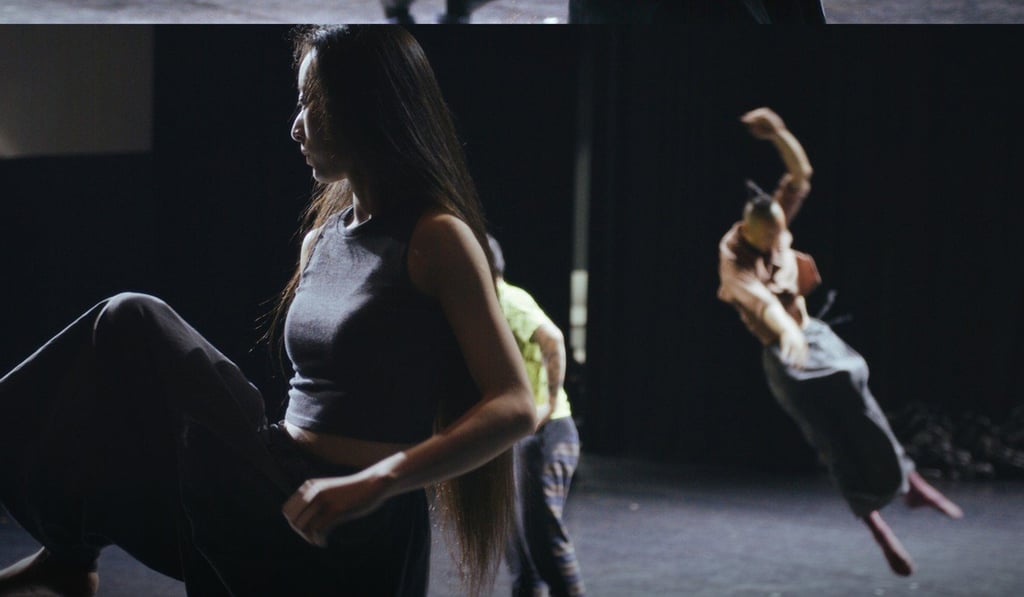
Yang has come to epitomise contemporary Chinese dance. She has performed Spirit of the Peacock countless times – including China, Europe and the US – but perhaps most famously at the closing ceremony of the 11th Asian Games in Beijing in 1990.
She’s also honed her talents as a choreographer. In the early 2000s, she began researching, directing and crafting Dynamic Yunnan. She travelled to remote villages to cast members of minority groups as performers in a piece that melds modern elements with the heritage of 26 ethnicities. The colourful drama debuted in 2005 in Kunming and has since been performed all over the world. The work has won a number of awards and spawned two companion shows called Echoes of Shangri-la and Tibetan Myth.
Yunnan has over 20 ethnic groups. I learned from all of them, from their people, their cultural experiences, the nature surrounding them. I studied a lot
Of her roles as director, choreographer and dancer, Yang says everything is interconnected. “Talent is about absorbing energy from the universe and transforming it into a vision on stage. Dance isn’t necessarily the only art form to do that.”
Indeed, some of her more experimental works blend multiple genres, crossing into the realms of acting, music, performance art and theatre.
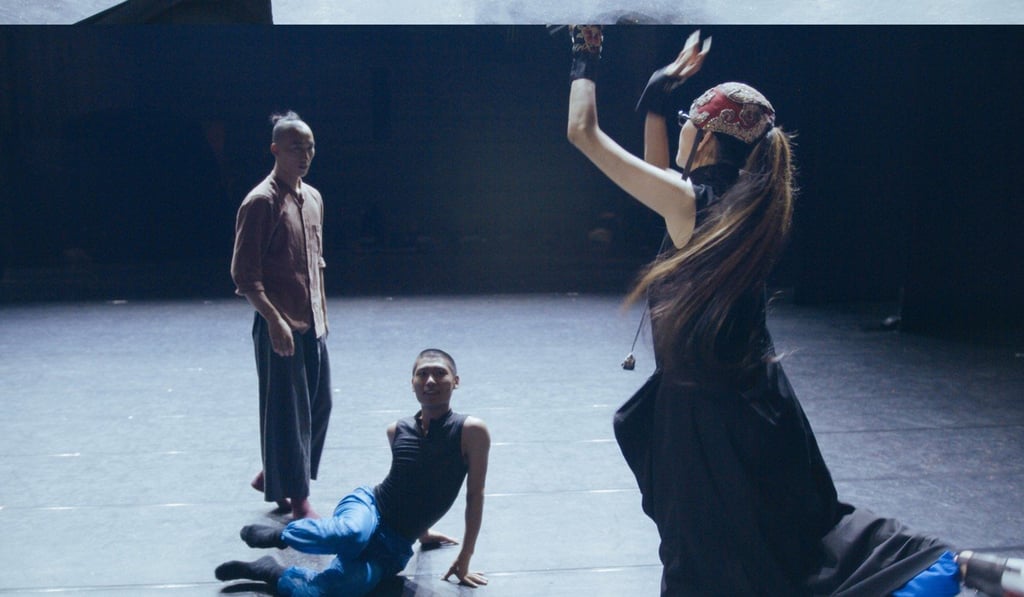
A case in point is Under Siege from 2016, which Yang will bring to Macau in September as part of the Art Macao festival. The work combines contemporary and folk dance, gymnastics, hip hop, elements of Chinese opera and live music.
Under Siege is a portrayal of the Chu-Han Contention, a war that began in 206 BC and ended with the rise of the Han dynasty. It features visually stunning, powerfully dark set pieces by installation artist Liu Beili that includes thousands of scissors hanging over the stage above delicate red feathers to symbolise blood. The elaborate costumes are designed by Oscar-winning artist and designer Timmy Yip Kam-tim.
I am obsessed with my own cultural roots and their attributes. I need to pass that on through my work
“Under Siege is the first show where I didn’t just include folk dances, but Han, too, and Peking Opera,” Yang says. “It’s dance theatre.”
The recently debuted Rite of Spring is another radical remake. The dance piece uses a score from Russian-born composer Igor Stravinsky alongside compositions inspired by Tibetan-Buddhist music.
Throughout her experiments in dance, Yang’s approach has been to illuminate Chinese folk culture while incorporating imaginative, boundary-breaking scenes and symbolism. “I am obsessed with my own cultural roots and their attributes,” she says. “I need to pass that on through my work.”
Her passion for the art has inspired a show honouring her family’s Bai heritage and that is preparing for a debut. “Regardless of scale, a dance piece can’t just be an empty framework,” she says. “It has to have a deeper meaning; a soul, a spirit. What I ask myself when I create is ‘What am I dancing for?’ I think that’s key to make a performance an enriching experience.”