Can a robot love? Inspired lovesick-android romance aims to click with family audiences
- DJ Kid Koala’s Nufonia Must Fall – a show mixing film, theatre and music focused on an automaton obsessed with female roboticist – among children’s productions
- Quirky bird hunt, ‘glimpse’ of musical notes and giant puppet show also feature in Hong Kong’s Cheers! Series of performances in December and new year

United States congresswoman Gabrielle Giffords was left unable to speak with severe brain injuries after being shot in the head by a would-be assassin in 2011.
Her slow recovery included music therapy, which trained her to engage the undamaged right side of her brain and pair words with melody and rhythm.
She was able to sing a word before she could speak it, as the music helped her to bypass the damaged parts of her brain and restore her speech.
Brain imaging has shown how music lights up the left and right lobes, and research has found that enjoyable music increases dopamine, the neurotransmitter responsible for governing attention, working memory, and motivation.

Today music therapy helps not only those with severe brain trauma, but Alzheimer’s disease, autism and children with attention deficit disorders. Music is also known to have sparked movement in paralysed Parkinson’s patients and reduce the tics of Tourette’s syndrome.
Colour is another sensory stimulation, which has been shown to evoke emotional responses, aesthetic judgments and associations to objects and concepts.
Tests have found men and women react differently to colours, which can affect the outer layer of the brain along with the entire central nervous system.
A study in the academic journal, British Journal of Educational Psychology found that, just as in earlier studies on adults, colour can affect cognitive performance in children.
Red was found to have a detrimental effect, particularly in tests involving creative thinking and attention to detail.
Four forthcoming Hong Kong children’s shows, which form part of the Cheers! Series, presented by the Leisure and Cultural Services Department, aim to make use of the emotional, uplifting power of colour and music to captivate family audiences.
Black-and-white robot romance
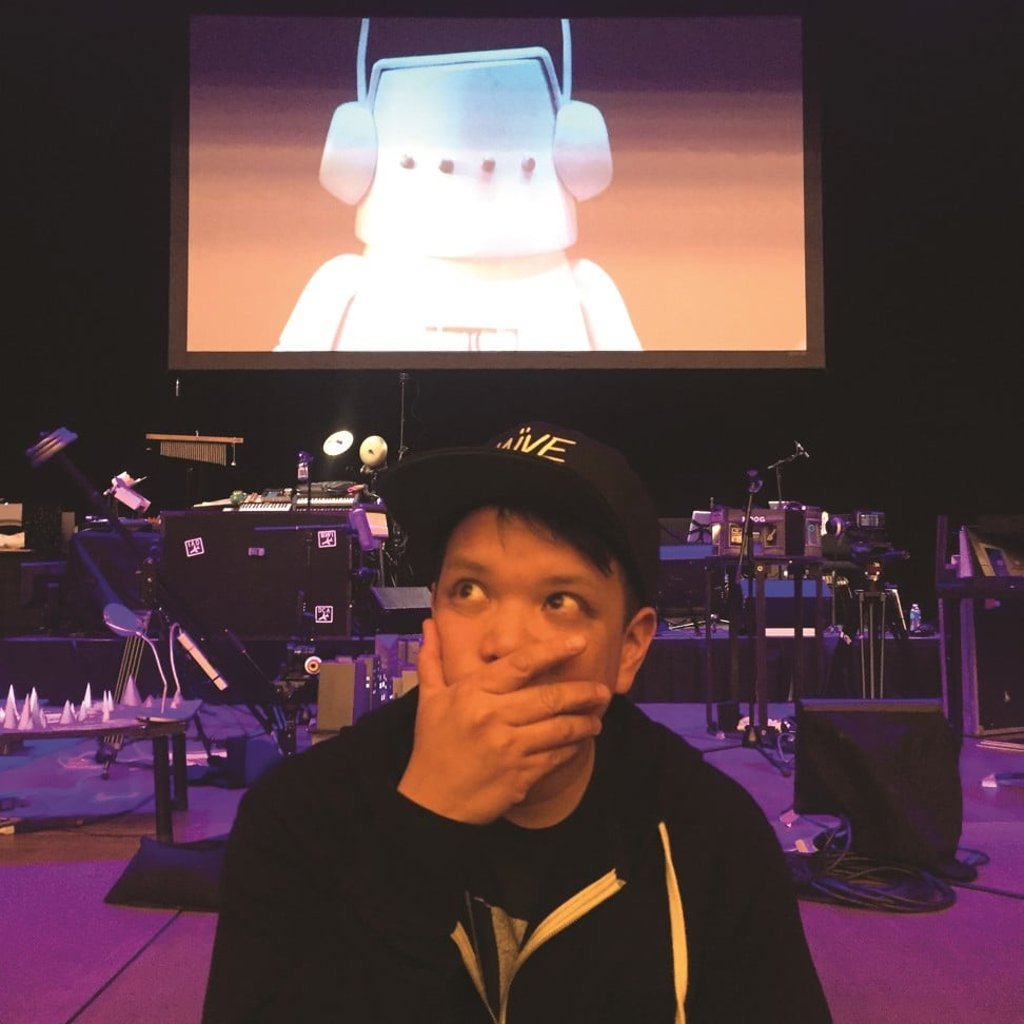
Music has long helped to define the moods of Eric San, the influential Canadian DJ, musician and producer better known by his stage name, Kid Koala.
“When I was four or five years old, my mum would play us read-along storybook records, with voice actors providing a dialogue while we [looked] through books filled with words and colourful illustrations,” he says.
“For me, music and visuals have always been a conjoined experience.”
The link between pictures and sound saw him draw the cover for the release of his first official album in 2000, Carpal Tunnel Syndrome, which also included a mini-comic in the liner notes. A publishing company later offered him a book deal.
“I was very surprised,” San says. “They said I could write on a topic of my choice – 100 pages, 10,000 words: that was the contract stipulation. But I was in my 20s and didn’t have anything to say.
“Instead I started drawing. I’ve always been meditative. Three years later I gave them the ‘manuscript’ for Nufonia Must Fall, a romance story about a robot. All pictures, no words. I thought they would want their advance back, but they loved it.”
The publishers encouraged San to record music as a companion disc to the graphic novel. He created 10 pieces of music for 10 scenes in the book.
Nineteen years on from the original book deal, the stage production, DJ Kid Koala’s Nufonia Must Fall, has evolved into a full-scale performance of cinema, theatre and music – featuring live musicians, five cameras, 70 puppets, 20 sets and a film directed in real-time by American production designer K.K. Barrett, known for his work on feature films directed by Spike Jonze and Sofia Coppola.
There’s lots of chaos on stage. The team is multitasking all the time … [In] one scene I’m playing piano, then I jump to the turntables and scratch furiously in a chase scene. It’s the most elaborate production I’ve worked on
“There’s lots of chaos on stage,” San says. “The team is multitasking all the time, with total focus required at each moment.
“[In] one scene I’m playing piano, then I jump to the turntables and scratch furiously in a chase scene. It’s by far the most elaborate production I’ve ever worked on.”
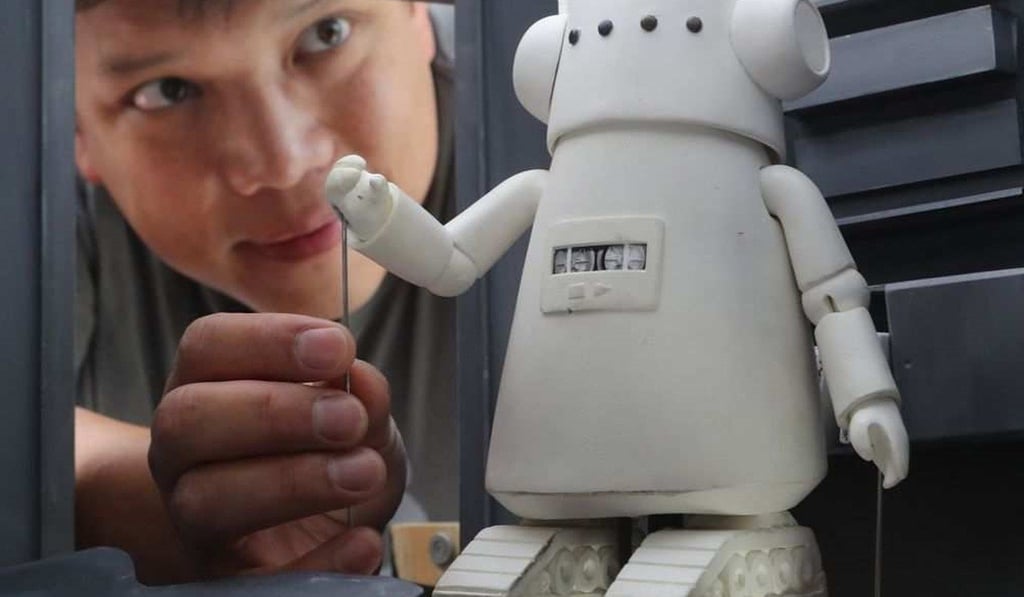
“The audience can watch the magic of the finished film and each time they can look down and see how effects are made.”
DJ Kid Koala’s Nufonia Must Fall, performed in a greyscale set, follows the black and white scenes of the graphic novel and tells the story of a music-loving T4 robot, who falls in love with a female roboticist, Malorie.
A newer, more efficient T5 robot keeps taking away his jobs, threatening him with obsolescence.
The live music – provided by San and the Afiara Quartet, an award-winning ensemble formerly the graduate resident string quartet at New York’s The Juilliard School – helps create the emotional atmosphere of the story, as well as some comedic moments.
The members of Afiara Quartet are incredibly talented; they can bring an audience to tears with how beautiful their playing is … [then create] jackhammer sounds and construction sounds [by] tapping on their violin bows
“The members of the quartet are incredibly talented; they can bring an audience to tears with how beautiful their playing is,” San says.
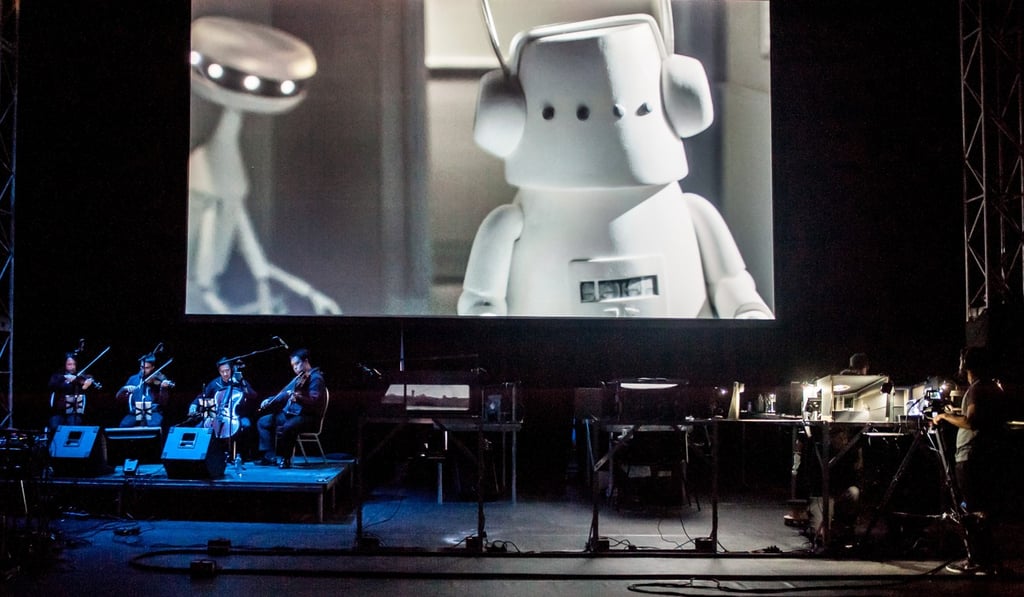
“But they not only uplift the emotion of the scenes: in one scene we needed traffic noises, so we threw it at the quartet and they started making jackhammer sounds and construction sounds tapping on their violin bows.
“They also play ambulance tones, literally the most beautiful ambulance sound you’ve ever heard and get moments of laughter because of the sounds on the strings.”
DJ Kid Koala’s Nufonia Must Fall will be performed at Hong Kong City Hall’s Concert Hall on January 31 and February 1.
Quirky bird hunt takes flight
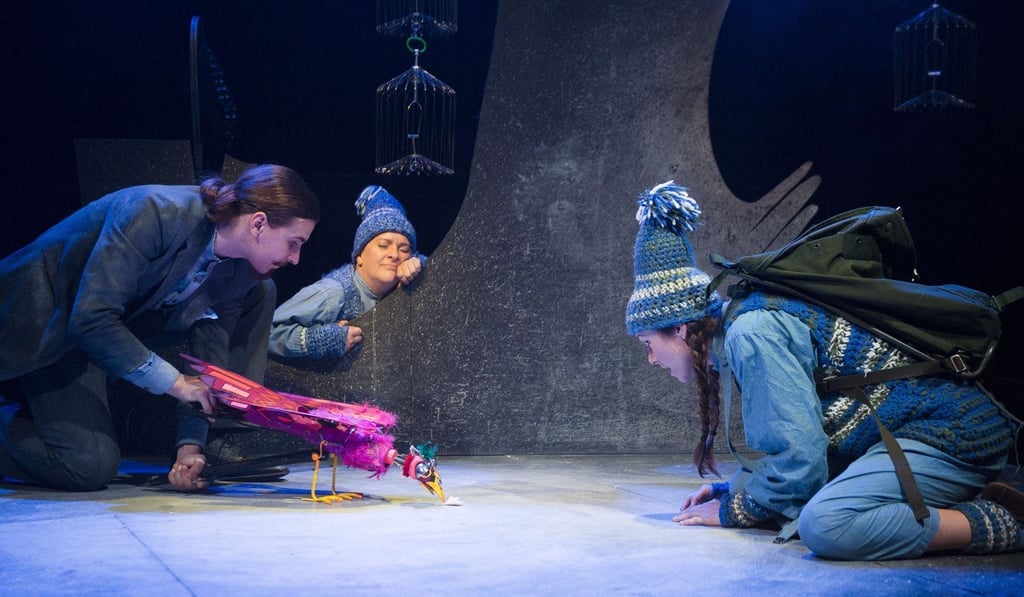
The 2014 children’s picture book Shh! We have a Plan, by Chris Haughton, has also been adapted for the stage.
The performance follows a family of three who go into the depths of the forest tracking a colourful bird perched high in a tree.
With playful music and dancing – and use of bold coloured lighting – the madcap characters plan to capture the bird, but their plans turn to obsession, and the quest becomes absurd.
The actors, from Cahoots NI, a theatre company based in Belfast, Northern Ireland, use non-verbal movements, funny props and lifelike puppets to suggest that treating nature with respect, and honouring freedom and kindness, is more important than getting what you want at all costs.
Shh! We have a Plan, suitable for children aged three and above, will be performed at Hong Kong Cultural Centre’s Studio Theatre on January 3, 4 and 5.
Chance for a ‘glimpse’ of music
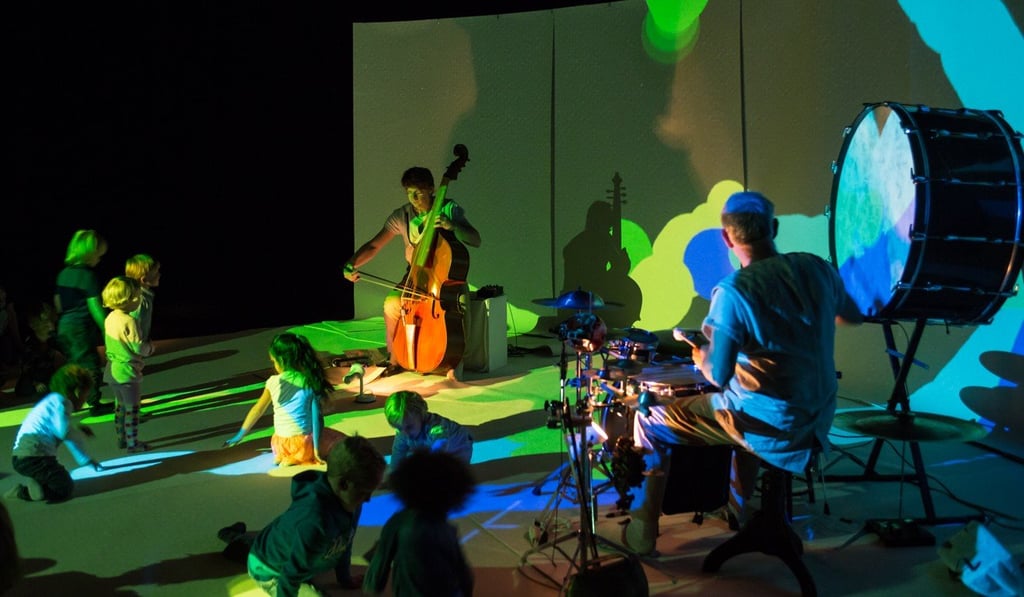
Oorkaan, The Netherlands’ only ensemble to dedicate itself exclusively to concerts for young audiences, plays with colours and music in its interactive performance, Glimpse, for children aged two and above.
Shapes in different colours projected onto the stage respond to the playing of two musicians – Tony Overwater on violone – an early form of double bass – and Joshua Samson on percussion.
The show playfully imagines what music might look like if we could see it, or what a tree might sound like if we could sing it.
“In Glimpse, the projected figures and colours are connected to the music,” Bram de Goeij, director of Oorkaan, says.
“The analogue music from the instruments is directly used in a digital drawing tool. So the drawings react in real-time to the music, and together blend into a musical moving image experience.
The power of music for children is that it’s a way for them to connect with the here and now – not the life projected onto a screen but the real live presence of the performers, the music and the rest of the audience
“Colour can invoke different feelings in people. It’s a tool to create different atmospheres, which resonate with the different instruments and musical compositions.”
Although Glimpse conjures up a magical world on stage, de Goeij says the power of music lies very much in the real world.
“The power of music for children is that it’s a way for them to connect with the here and now – not the life projected onto a screen but the real live presence of the performers, the music and the rest of the audience,” he says.
Glimpse will be performed on February 6, 7, 8 and 9 at the Kwai Tsing Theatre’s Black Box Theatre.
Giant puppets brought to life
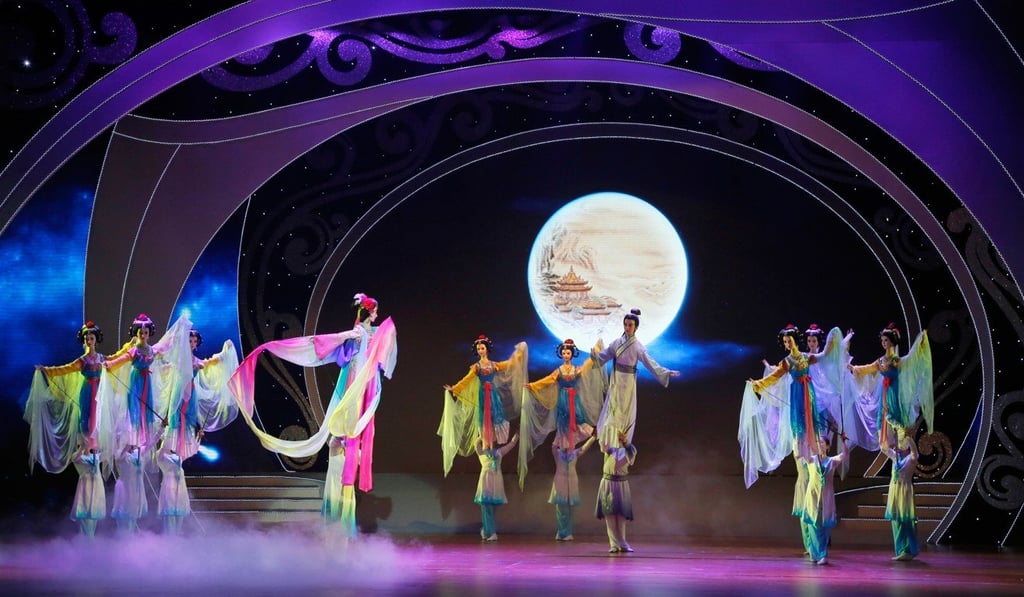
Sichuan province’s theatrical genre of giant rod puppets manipulated by dancers on stage – which originated as a form of folk art more than 300 years ago – was inscribed on China’s National List of Intangible Cultural Heritage in 2006.
This rare form of theatre will be featured in The Fabulous Giant Puppet Show, performed by Sichuan Huge Puppet Troupe and backed by live music.
The award-winning show, combining treasured tales of mythology, history and folklore, is brought to life using life-size puppets dressed in glittering, vibrant red and pink capes or blouses with elongated sleeves, which hold aloft red lanterns on flower-patterned umbrellas.
The puppets perform stunts, including drinking tea and flicking their sleeves with lifelike agility.
The production also includes bian lian, the dramatic art of Sichuan opera featuring magical acts of face changing.
The shows, suitable for children aged three and above, will take place on December 28 at Tai Po Civic Centre – with a puppet master workshop held before the performance – and December 29 at Yuen Long Theatre, followed a post-performance talk in Mandarin.