How one commercial real estate player has continued to grow alongside Hong Kong’s skyline for 50 years and counting
- Celebrating its 50th anniversary in Hong Kong, global commercial real estate services firm JLL looks back on its role in the city’s business evolution
- Executives from the company also discuss how to address new trends and challenges facing the industry, such as sustainability and the rise of hybrid work

[Sponsored article]
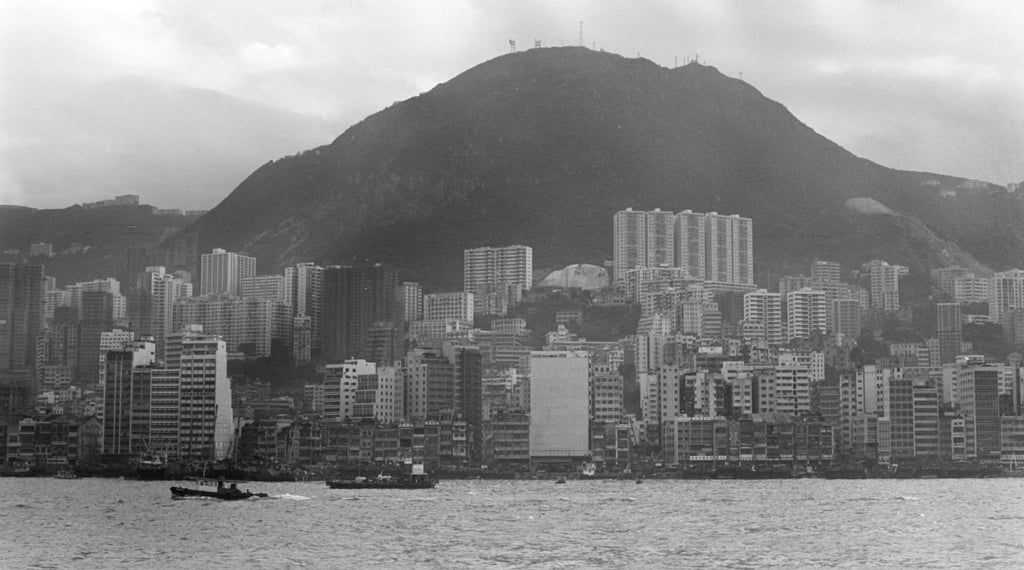
Hong Kong is known worldwide for its iconic skyline of gleaming skyscrapers that flank Victoria Harbour against a lush backdrop of undulating mountains. This dynamic architectural landscape has evolved over the decades as the city transformed into an international financial hub.
Witnessing this remarkable progress over half a century is global commercial real estate services firm JLL, which established its presence in Hong Kong in 1973. During its 50 years in the city, the company has grown in tandem with Hong Kong’s meteoric economic development.
Today, Hong Kong has buildings tightly packed into about 25 per cent of its total land area of 1,110 sq km (430 square miles). The remaining areas are country parks and protected areas, or are too mountainous for building construction.
Joseph Tsang, chairman of JLL Hong Kong, regards this collection of slender and compact high-rises as a distinctive characteristic of the city, just like its “can-do” spirit and high efficiency. “Our skyscrapers represent how business is done here. As we do not have much land space, things have to be run very efficiently,” he says. “This is also how our economy has always operated.”

As a pioneer in real estate advisory services, JLL has played a pivotal part in the internationalisation of Hong Kong. “Over the years, we have brought many multinational companies to set up offices here, and provided valuable advice and insights to developers on the commercial real estate landscape,” Tsang explains.
JLL’s real estate expertise dates all the way back to 1783, starting with a London-based business called Jones Lang Wootton that eventually expanded across the Asia-Pacific region, Europe and North America. In 1999, that company merged with US-based LaSalle Partners to become what is now one of the largest global players in the commercial real estate industry, with revenue of US$20.9 billion and over 103,000 employees working across more than 80 countries.
Woven into the fabric of Hong Kong
JLL’s start in Hong Kong during the 1970s coincided with an era of rapid economic growth. Throughout the city’s financial evolution, the company has been a driving force in the advancement of the commercial property scene.
“Our roots in Hong Kong run very deep,” Tsang says. “We have cultivated strong ties with businesses over the years – some of them have been working with us for three generations. They rely on our expertise and will continue to do so.”
He adds that at the same time, JLL is focused on adapting to the latest trends in the real estate industry, such as the rising use of technology in property management and the growing importance of environmental, social and corporate governance (ESG) practices.
Sustainability at the forefront
Sustainable development has become a prime concern across many industries, with companies looking for ways to reduce their environmental footprint.
The real estate industry faces a particularly pressing challenge in this area, as 39 per cent of carbon emissions worldwide are attributed to buildings. In Hong Kong, there are 42,000 private buildings – about one-fifth of which are high-rises – that contribute to 60 per cent of the city’s greenhouse gas emissions.
According to Helen Amos, head of sustainability consulting for JLL in Hong Kong, being environmentally sustainable in the real estate industry calls for considering the entire life cycle of a building. This includes looking at how materials can be reused, recycled and repurposed during the construction phase, optimising the operations of the finished building and, at the end of its life, examining whether it can be repurposed or rebuilt.

Amos points to the changing climate as another key consideration. “In Hong Kong, a lot of prime real estate is near the sea. With rising sea levels and typhoons, and increasing temperatures, these buildings will face greater exposure,” she explains. “We need to future-proof our buildings to face the impact of climate change.”
To that end, JLL has introduced sustainable practices for its commercial property operations globally, such as carrying out energy audits and climate risk assessments, as well as developing net-zero carbon plans for assets.
In Hong Kong, Amos believes an essential step is to conduct retrofitting work on older buildings to enhance operational efficiency, thereby reducing their environmental impact.
“In 2050, when Hong Kong has its climate goal of carbon neutrality, 65 to 80 per cent of the buildings we have today will still be here,” she says. “Therefore, we cannot just focus on developing better and smarter new buildings – we need to enhance and improve the performance of the existing ones.”
Amos adds: “JLL research highlighted that the rate of retrofitting existing buildings needs to be around 3 per cent year on year to meet the net-zero commitments made globally. In Hong Kong, we are currently seeing less than 1 per cent. JLL is committed to driving this agenda in Hong Kong to develop the impact required.”
People at the heart of operations
The rise of remote work during the Covid-19 pandemic has made hybrid working the new norm, with people splitting time between their homes and offices. But that balance of time varies from place to place – for example, in Hong Kong, employees are less likely to work from home because of the smaller living spaces in the city.
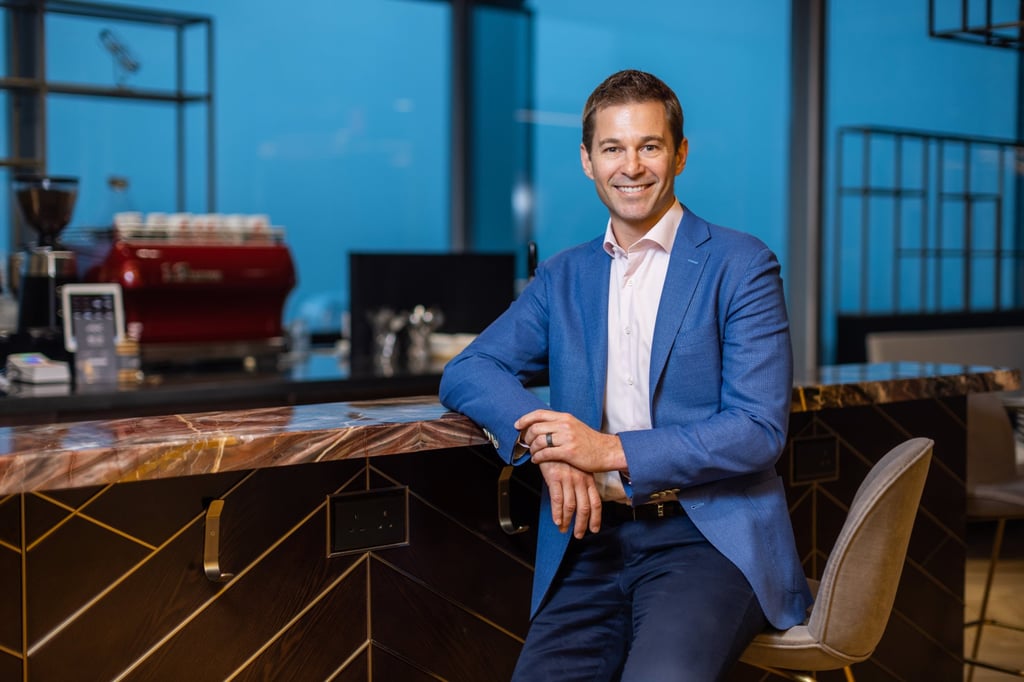
Alex Barnes, JLL’s managing director for Hong Kong and Macau, says: “Pre-2020 office spaces are increasingly redundant against employee needs. Businesses are looking to invest in improved environments that cater to employee needs.”
JLL is addressing this shift in workplace practices through its consulting services, which help companies determine what their ideal work environment looks like in the new normal. “This ensures companies are able to attract and retain the best talent, alongside improving efficiencies,” Barnes adds.
Within its own work environment, JLL has focused on incorporating diversity, equity and inclusion (DEI) into its workplace policies over the past decade, as well as adopting initiatives that support mental health and wellness.
“It is important to create an environment that not only leads to our people being successful for our clients, but to ensure that our workplace culture enables everybody to thrive and perform at their highest potential,” Barnes says.
Meanwhile, amid all the changing trends in the real estate industry, JLL strives to be a thought leader by applying its extensive data to help its clients navigate business decisions for both their present and future operations. In Hong Kong, this includes converting the tremendous opportunity for seamless connections to other cities in the Greater Bay Area, according to Barnes.
“Hong Kong has a big opportunity to look forward, differentiate and play a leading part in the future of the Greater Bay Area,” he says.
Hong Kong has a big opportunity to look forward, differentiate and play a leading part in the future of the Greater Bay Area
Barnes notes that another challenge for the city’s commercial real estate scene is to find a way for the private and public sectors to work together to ensure the success of development schemes like Northern Metropolis, Lantau Tomorrow Vision and Harbour Metropolis.
Looking back on the company’s time in Hong Kong, Barnes says: “JLL has had the privilege to stand side by side with our clients for 50 years and help shape this fantastic city.”
He adds: “We hope to continue providing the insights, data and thought leadership to help our clients make decisions that positively impact the future of this city.”
Tsang says JLL has been like a “Shaolin Temple of real estate” during its 50 years in Hong Kong. “We have trained a lot of kung fu masters – a number of real estate leaders have worked at JLL at one point in their careers,” he notes.
“People are our most important asset. We have to cultivate talent and give them the best training so that they can continue our heritage for the next 50 years.”