How 3 Hong Kong health and biotech start-ups aim to help improve the lives of millions
Allegrow Biotech, Editact Therapeutics and Syngular Technology are finalists in the start-up pitch competition, 2025 EQT Impact Challenge

What makes a business idea stand out? The answer to this perennial question may be found in the 2025 EQT Impact Challenge – a start-up pitch competition in Hong Kong which was previously held in Japan, South Korea and Singapore.
One feature of the current edition has been the impressive quality of submissions by many early-stage companies: start-ups operating at the intersection of cutting-edge science and scalable impact.
Some of them benefit from the backing of university departments, research institutes, accelerators, incubators, or prominent mentors. Others have already established preliminary links with major companies to help them take the next crucial steps.
However, all are committed to steering breakthrough innovations from the laboratory to the commercial market. In many cases, the projects they are working on have the potential to improve the lives of millions of people in the long term.
Three excellent examples related to health and biotechnology have made it through to the top five of this year’s competition, which is organised by EQT, one of the world’s largest investment firms, with its philanthropic arm, EQT Foundation, providing the winning start-up capital to fuel growth, and access to a global network of industry partners and potential investors. The event is being held in partnership with the South China Morning Post.
The next stage will involve public voting, with the four that gain the most votes reaching the grand finale. These remaining contenders will have the opportunity to raise their profile, expand their contacts with industry experts and interested investors, and further benefit from the support offered by Hong Kong’s dynamic start-up ecosystem.
Allegrow Biotech, based at Hong Kong Science Park in Pak Shek Kok, in the New Territories, was set up in 2022 as a spin-off start-up at the biomaterials lab at Hong Kong University of Science and Technology (HKUST).
It has been developing a revolutionary treatment designed to transform patients’ own immune cells into living drugs that are able to cure the world’s most challenging diseases.

This kind of cell therapy is based on the principle that the best treatment possible is to have a patient’s own immune cells combating a disease such as cancer.
Until now, growing these additional therapeutic cells outside the human body has been possible but prohibitively expensive, at about HK$1 million (US$130,000) per dose. The cost is high because of the complexity of the manufacturing process.
However, as Fariza Zhorabek, Allegrow’s research and development lead, explained during her presentation to the five-person panel of EQT Impact Challenge jurors, the company has found a way to build artificial cells using a proprietary hydrogel-based technology called AimGel.
This biological tool simplifies the process, reducing the previous six complex steps to just three, while also enhancing the quality and quantity of cells produced.
“We improved T-cell [immune response T lymphocyte blood cell] growth by 60 per cent and NK [natural killer]-cell growth by 500 per cent compared to current industry standards,” said Zhorabek, who is from Kazakhstan and has worked in Hong Kong for almost 10 years to pursue her passion for bioengineering.
“As a company, we are upstream, providing the tools behind the breakthroughs – something like an Nvidia [chip systems supplier] for cell therapy. We are, though, targeting a US$5 billion market and are currently providing research-grade products for users worldwide and aim to develop clinical-grade products within two years.”
In response to questions from the competition’s jury panel, Zhorabek explained that the product is customisable, and could be adapted for current and future cell therapies and clinical settings. New investment of about US$2 million would help Allegrow reach the next milestones for official approvals and enable it to recruit extra staff to handle sales, marketing and regulatory matters.

“Our goal is to reduce the cost of cell therapy by 10 times, which is a demand from patients and the industry,” she said. “By simplifying the process and scaling production, we believe we can make cell therapies significantly more accessible to a broader patient population.”
The key objective for Editact Therapeutics, another of the competition’s finalists, is to address the unmet medical needs of familial Alzheimer’s disease (FAD). This is an inherited and particularly aggressive form of Alzheimer’s that is caused by mutations in three genes – APP, PSEN1 and PSEN2.
These three genes were discovered in the 1990s, but there is still no specialised treatment for the disease. Traditional gene therapy involves developing one drug for one mutation, but that is not feasible for FAD because more than 400 mutations across these genes can independently cause the disease.
“Editact is developing first-in-class therapeutics that modulate the expression and function of mutated genes using CRISPR [clustered regularly interspaced short palindromic repeats] gene editing,” Chantelle Sullivan, a company representative, said.
“Instead of a one-drug-for-one-mutation approach, we are innovating with a one-for-many approach by targeting common genetic features shared between patients with different mutations of the same gene, known as SNPs [single nucleotide polymorphisms].”
The technology also has potential applications for treating about 370 other inherited diseases.
Editact’s research work is being conducted mainly at HKUST, with support from an advisory board with extensive pharmaceutical industry experience. One current target is to start clinical trials for a drug for the APP gene in 2029.
“We hope to achieve personalised medicine for inherited diseases and offer patients a new lease of life,” Sullivan said.
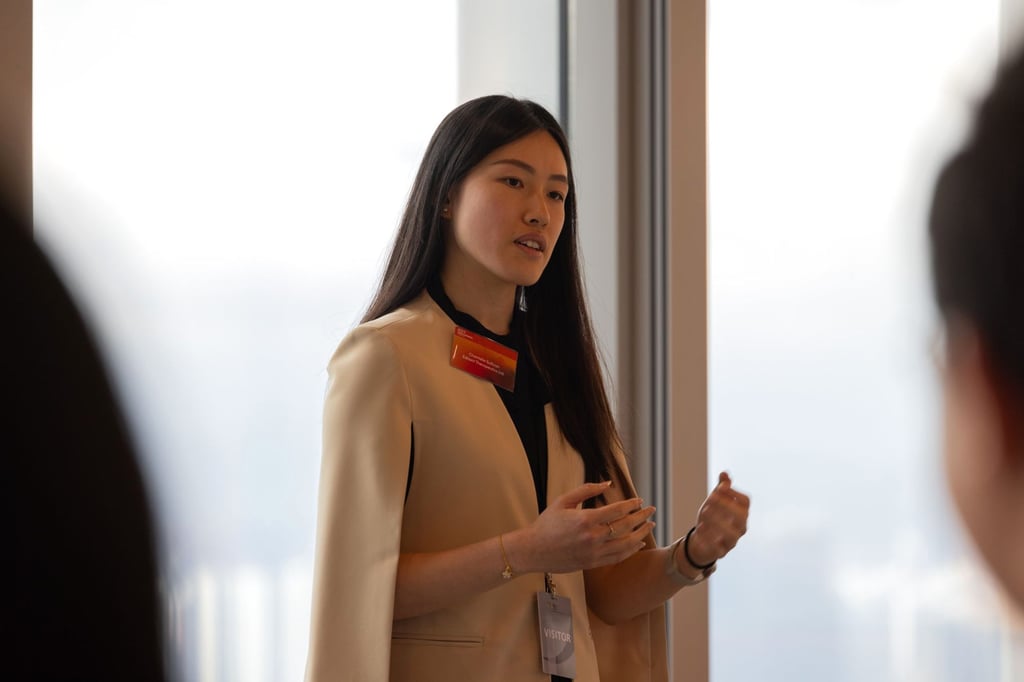
In the subsequent question and answer session, the EQT Impact Challenge jurors asked about the possible market size – initially estimated at 2 to 3 million people – the status of IP (intellectual property) filings and protection, prospective licensing agreements, the competitive landscape, and in-lab testing.
“We will start preclinical animal studies later this year,” Sullivan said. “We will measure the reduction of abnormal protein aggregates caused by mutated proteins and evaluate safety, toxicity, and bio-distribution in the body.”
Another finalist, Syngular Technology, based at Hong Kong Science Park, describes itself as a mixed-reality surgical navigation company. Its aim is to make complex surgical operations, such as the removal of tumours, safer, more precise and easier to perform.
This is done by converting medical scans into holographic visualisations, which make it possible for doctors to see a digital twin of the affected area inside the patient’s body.
Louis Sze, the company’s founder and chief executive, says the ultra high-definition visualisation usually found in video games comes into play.
“Surgeons care about visuals and graphics,” he said. “This is why we are able to differentiate: we are the first team incorporating game technology into medtech. When doctors use our product, they see a different level of visualisation and performance, such as low latency and immersive interaction.”
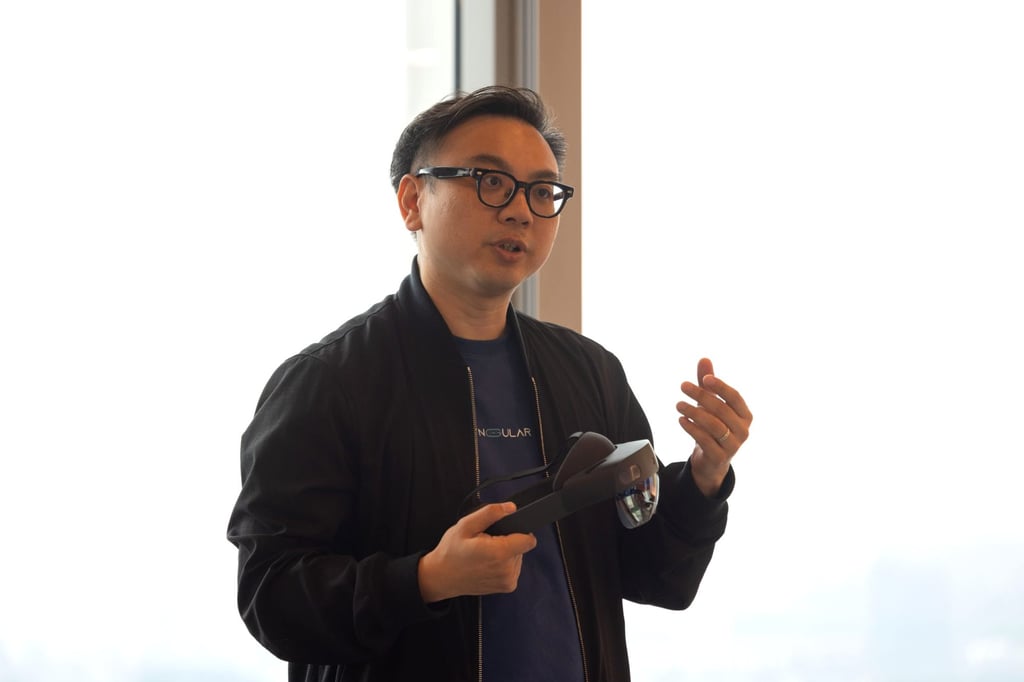
For hospitals and clinics in underserved or rural areas, without access to robotic technology or specialist surgeons for complex operations, this image-guided system brings immediate benefits. With the aid of tailor-made goggles, a surgeon can easily see all the information necessary, from patient images and surgical plans to implant mock-ups and installation procedures, while also interacting with remote experts.
Syngular launched an early version of the product with the Hong Kong Hospital Authority in 2024 and is now collecting additional medical data and videos of operations to build specialised AI agents to help with surgical decision-making and training and reduce processing time.
“At present, our most important partner is Prince of Wales Hospital, orthopaedic department,” Sze said in an answer to questions from the panel of EQT Impact Challenge jurors. “They have already used our product in treating more than 50 bone cancer patients. Surgeons can visualise exactly where the tumour is, avoid cutting into the positive margins, and perform faster.”
He explained that Syngular makes the software for the system, not the hardware such as goggles, which come from Microsoft or Apple.
“My CTO [chief technology officer] and technical team came from game development, so we bring a lot of esports gaming performance into this product,” Sze said. “So, when a doctor uses it, the experience is triple-A grade.”
The grand finale takes place in July, where the winner will receive €100,000 (about US$117,000) from the EQT Foundation. In addition, the winning start-up gets access to funding and EQT’s global network of industry experts and portfolio companies, as well as strategic guidance and introductions to potential investors.
The first and second runners-up will each receive €50,000 from Central Cove Group, the private investment office of Jean Eric Salata, a jury member and chairman of EQT Asia. Salata, recognising the strength of this year’s entries and eager to champion Hong Kong’s emerging talent, has opted to support the initiative directly.