Young tech entrepreneurs enticed by southern China’s innovation hub in Qianhai
Special economic district provides comprehensive support to help facilitate global expansion of start-ups Inspro and E3A Healthcare

Start-ups that offer solutions to global problems involving organic waste disposal, protein food shortages and health problems affecting babies and pregnant women are heading to southern China to achieve their goals.
They are setting up in the special economic district of Qianhai, within the Greater Bay Area (GBA), which comprises Hong Kong, Macau, Shenzhen and eight other mainland Chinese cities.
Qianhai, or Qianhai Shenzhen-Hong Kong Modern Service Industry Cooperation Zone, was created in 2010 to deepen the collaboration between Hong Kong and Shenzhen and foster modern services innovation in areas such as finance, legal, technology and logistics under the Greater Bay Area development strategy. Since then, its total area has expanded to cover 120.56 sq km.
It is also planned to serve as a hub for enhancing China’s reform and innovation efforts and to facilitate greater international trade and economic integration. In 2024, the area recorded a gross domestic product of 300.88 billion yuan (US$42.26 billion).
Qianhai’s integrated platform offering supportive government policies, infrastructure and talent is driving a new era of cross-border innovation where companies can leverage what Hong Kong’s Chief Secretary for Administration Eric Chan has called the “dual engines of the GBA” to help them expand.

In August 2024, Qianhai introduced its groundbreaking “1510” unique development model with a range of incentives to entice Hong Kong’s youth-led tech enterprises.
Its offerings include monthly office rent at just 1 yuan (US$14 cents) per square metre, a 500 million yuan (US$70.4 million) innovation fund and 100,000 square metres of subsidised industrial space.
One of these companies is Inspro, a Hong Kong hi-tech start-up, which has pioneered the use of insect-based protein solutions for pet food and animal feed by upcycling municipal organic waste.
It uses the larvae of the black soldier fly – an edible insect protein that the Food and Agriculture Organization of the United Nations has started to promote globally – not only to rapidly decompose a variety of organic waste, but also serve as a source of nutrition for animals.
After early collaboration with Hong Kong’s Environmental Protection Department to process chicken manure, co-founder Elvis Yu realised that scaling the business would require more than local R&D resources – it demanded a complete system combining biotechnology, automation and engineering.
That led Inspro to move to Qianhai Shenzhen-Hong Kong Youth Innovation and Entrepreneur Hub (Ehub), a cross-border innovation platform for young entrepreneurs, which opened in December 2014 and was designed for precisely this kind of expansion.
Up to the end of October, Ehub had incubated 1,606 start-ups, including 1,176 from Hong Kong, Macau, Taiwan and other regions abroad.
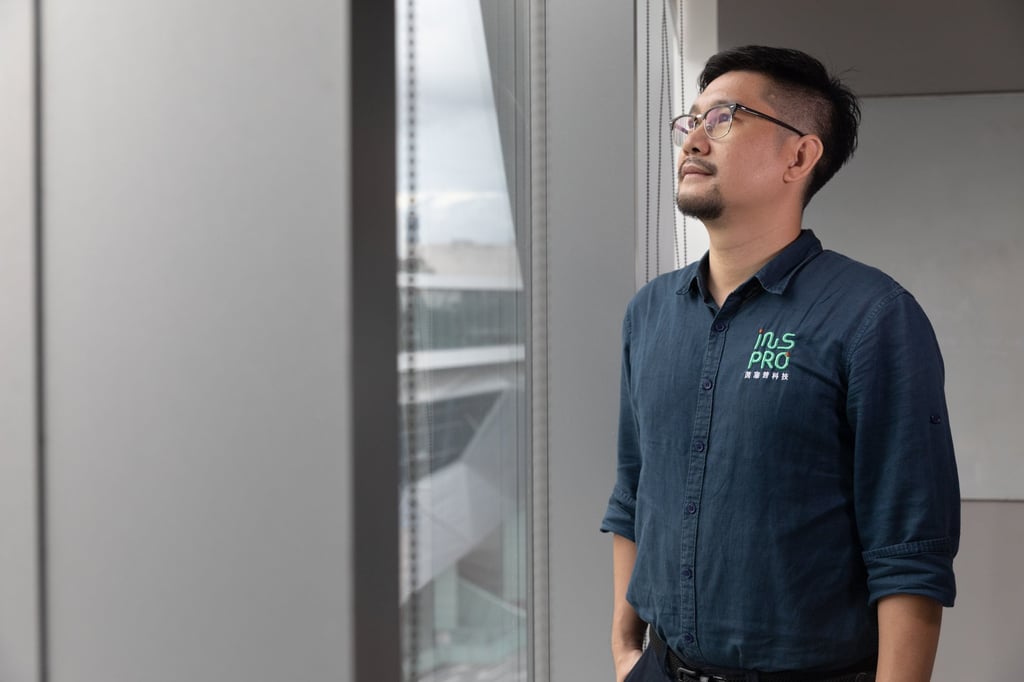
Yu says Qianhai’s practical, execution-focused policy environment is really efficient: “They know that practical implementation of policy is crucial … It’s truly a Hong Kong mindset, with services tailored for Hong Kong people. Everything is practical, simple and clear. With a single application, you can obtain all the subsidies.”
With Ehub’s support, Inspro set up a 40,000 square metre smart factory capable of processing 30 metric tons (33 US tons) of organic waste daily. The platform has also facilitated strategic partnerships and investment, including funding from the Clearwater Bay Fund and a technical collaboration with Googoltech, a leading robotics automation company founded by professors at Hong Kong University of Science and Technology (HKUST), which recently listed on the Shenzhen Stock Exchange’s ChiNext Board.
“It’s really about technical cooperation and business partnerships between start-ups and larger or more established companies,” Yu says. “For a start-up like us, it would be very difficult to connect with them directly. Ehub built the platform that made it possible.”
Inspro operates within the rapidly growing alternative protein market, which Indian market research company Future Market Insights predicts will reach a value of US$589.9 billion by 2035, driven by global demand for sustainable, climate-resilient food sources.
Today, Inspro’s product footprint spans Hong Kong, mainland China, North America and Europe, but it aims to expand into Japan and countries in Southeast Asia and Africa that have signed up to the Belt and Road Initiative.
In the future, Inspro plans to launch the sale of its shares with a Hong Kong initial public offering, potentially under Chapter 18A listing rules, which allows pre-revenue biotech firms to list on Hong Kong’s stock exchange.
Since its launch in 2018, Chapter 18A has enabled 73 biotech firms to launch, contributing to a total market capital of US$121 billion.
E3A Healthcare, a medtech start-up founded in Singapore in 2019, develops innovative non-invasive medical devices and AI-powered solutions for women’s and newborn health, including fertility and jaundice monitors.
That same year, it opened an office in Hong Kong and also set up operations in Qianhai’s Ehub to better support its hardware manufacturing needs.
“We came to Qianhai in November 2019 because Shenzhen had what we needed: a solid supply chain, engineers and space,” co-founder Harry Chen says. “But the real benefit is the synergy between both cities.”
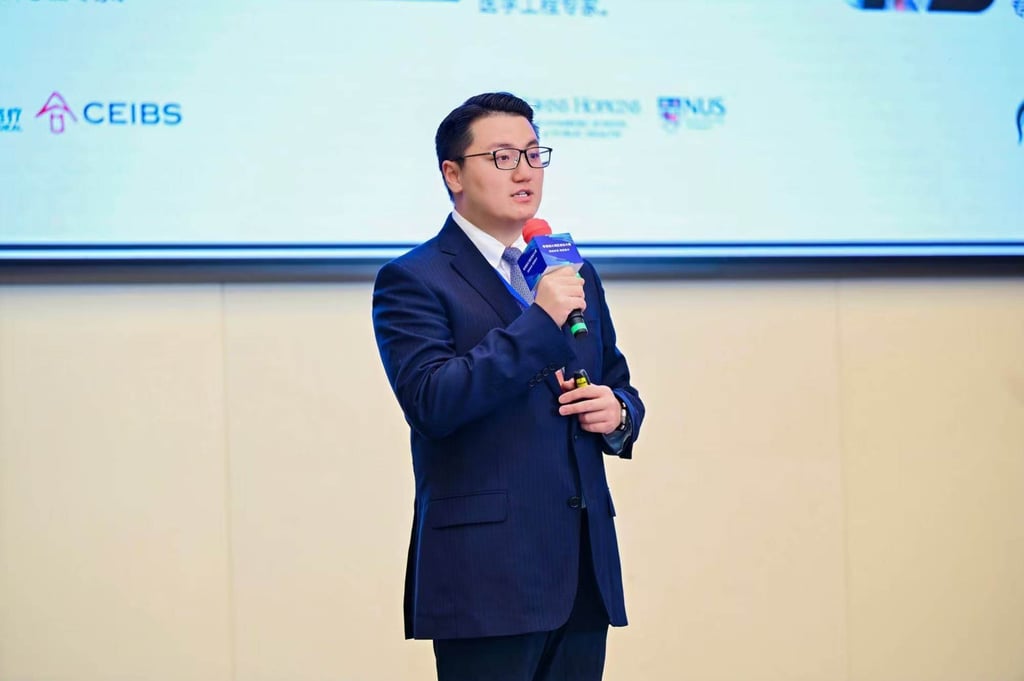
Today its cross-border operations involve its software research and development, clinical trials and fundraising carried out at its base at Hong Kong Science Park, while manufacturing is done at its factory in Baoan district, Shenzhen, and other production activities at Qianhai’s Ehub.
The company regularly collaborates with City University of Hong Kong, the Chinese University of Hong Kong, and HKUST, which is also considering an equity investment.
E3A’s flagship products include Bilimonitor, a home-based jaundice screening device for newborns, and Modoo, the world’s first non-ultrasound fetal monitor. The monitors are used in over 100 hospitals in Asia, including St Paul’s Hospital, in Causeway Bay, on Hong Kong Island.
Since expanding its presence in southern China in Qianhai, E3A has grown from a start-up of just six people to a team of more than 60. Its medical devices are now certified under the international ISO 13485 quality standard and it is preparing to launch its sales in Hong Kong via Mannings stores and the HKTVmall online platform, while also registering its products with the United States Food and Drug Administration before launching its products in the country.
“Foreign executives or investor groups come and visit our company,” Chen says. “They visit us, instead of us trying to visit them.”
Qianhai also backs Hong Kong-linked start-ups with matching grants and capital access. Those start-ups that raise overseas funding receive a cash rebate when transferring capital into Qianhai.
It also offers tax incentives for qualified businesses and individuals. These include a reduced corporate income tax rate for eligible companies and individual income tax exemption measures for Hong Kong residents working in Qianhai.
Additionally, Hong Kong and Macau residents who are working or setting up businesses in Qianhai are eligible to apply for a range of subsidies to reward them for their entrepreneurial endeavours or to assist them with their housing, living and office rental costs.
Qianhai serves not only as a launch pad for start-ups, but also taps into the strengths of its two neighbouring cities as a platform supporting Hong Kong’s global connectivity and academic prowess, and Shenzhen’s industrial agility and rapid rate of innovation.
Recent initiatives between the cities, such as the plans for the Northern Metropolis economic hub near the border with mainland China and the cross-boundary data validation platform pilot scheme, using blockchain technology and data coding for document verification, point to a future where Hong Kong and Shenzhen act not as competitors, but as co-creators.
“It’s an era where you can consider them together,” Yu says. “It’s not like before when people felt they had to choose one side. The two now form a combined package.”