A fine balance: how to align practice and ethics in the finance sector
CFA Institute steers finance professionals towards AI integration and sustainability, equipping them with skills for a rapidly evolving world

The use of artificial intelligence (AI) is growing exponentially in the financial services industry, driven by demand in areas such as workflow automation and sustainable investment. While AI has the potential to offer significant analytical capacity and productivity gains, practitioners should establish a framework for proper technology governance, according to CFA Institute.
CFA Institute, a global, non-profit professional organisation for chartered financial analysts (CFAs) that promotes ethical conduct, education and professional excellence within the investment industry, notes that many financial professionals are concerned with issues such as data privacy, algorithmic bias, transparency, accountability and the potential for misinterpretation of information.
To harness the potential of AI while managing these risks, CFA Institute believes a combination of AI and human intelligence is key to delivering better results in the investment sector.
“There’s nothing like human oversight,” says Mary Leung, CFA and senior adviser, research and advocacy for Asia-Pacific at CFA Institute. “Ultimately, that’s how we build trust. It is important to maintain relationships with clients and regulators. Having a human in the loop for all high-impact and subjective decisions is key.”

A recent report by the Hong Kong Monetary Authority found that 75 per cent of the 55 financial institutions surveyed had implemented at least one generative AI use case, or were currently piloting and designing use cases and exploring potential investment areas. This ratio is expected to increase to 87 per cent within the next three to five years, according to the report.
“I believe that the usage of AI is very broadly applied in the financial industry,” says Brenda Hou, CFA and senior head, Asia-Pacific global partnership and client solutions at CFA Institute. “The uptake is very rapid, but it also varies across the industry. At CFA Institute, we fully recognise how AI and big data are revolutionising the investment professions, from analysing vast data sets to uncovering insights that were previously out of reach.”
CFA Institute, Hou points out, adopts a strategic approach to the development of ethical AI guidelines that is closely aligned with the financial industry’s evolving needs. Evaluating the potential value before rushing to adopt new technologies helps ensure that implementations are practical, beneficial and follow best practices.
“It is important that we create frameworks and apply standards to keep pace with the evolution of technology,” Hou says.

In 2022, CFA Institute launched an ethical framework for AI-driven design, development and deployment to ensure that applications serve the best interests of clients. The research paper, titled “Ethics and Artificial Intelligence in Investment Management”, examines a range of issues related to the adoption of AI and big-data technologies in investment management and sets a framework for ethical decision-making and good governance.
The framework is a useful tool to build ethical awareness and guide finance professionals during the decision-making process. By conducting regular model testing and reviews, users can make better decisions, increase accountability and allay the concerns of clients and regulators, Leung says.
“An AI model is only as good as the data that is used to train it. If the data had biases, then the model could perpetuate and amplify those biases. That might mean the decisions or recommendations they make are inaccurate,” she says, adding that, “if people cannot trust the model or you can’t see how it’s arrived at some of the decisions, it’s going to hinder its usefulness.”

To build trust in AI systems and solutions, investment companies should avoid promoting products and services that overstate or falsely claim the use of the technology. Leung says companies that make AI claims should be prepared to disclose the type of algorithms and data they use to come to specific conclusions. “If you’re marketing an AI model for superior stock picks or ingenious market strategies, then you need to be prepared to answer questions,” she adds.
While AI is particularly useful in ESG (Environmental, Social, and Governance) analysis and sustainable investing, growing demand for the technology is accelerating the construction of new data centres. Accommodating the demands of power-intensive AI poses significant environmental challenges, including stress on power grids and water resources. High consumption levels, says Leung, can undermine sustainability goals and expose operators to ESG risk.
To ensure relevance in this regard, CFA Institute has made significant changes to its CFA Programme to better equip practitioners with the skills and knowledge in AI-driven areas such as data science and sustainable investment, says Hou. The new Practical Skills Module (PSM) is embedded throughout all three levels of the CFA Programme. Using videos, multiple-choice questions, guided practice and case studies, it provides candidates with a practical and comprehensive understanding of AI, data science and advanced machine learning techniques using Python, a programming language known for its readability and versatility.
“We want CFA Programme candidates to have this information and knowledge before they enter the financial industry. Hopefully, the PSM can allow them to have that experience, but also equip individuals with key skills that are essential to get a job and thrive in the industry,” Hou says.
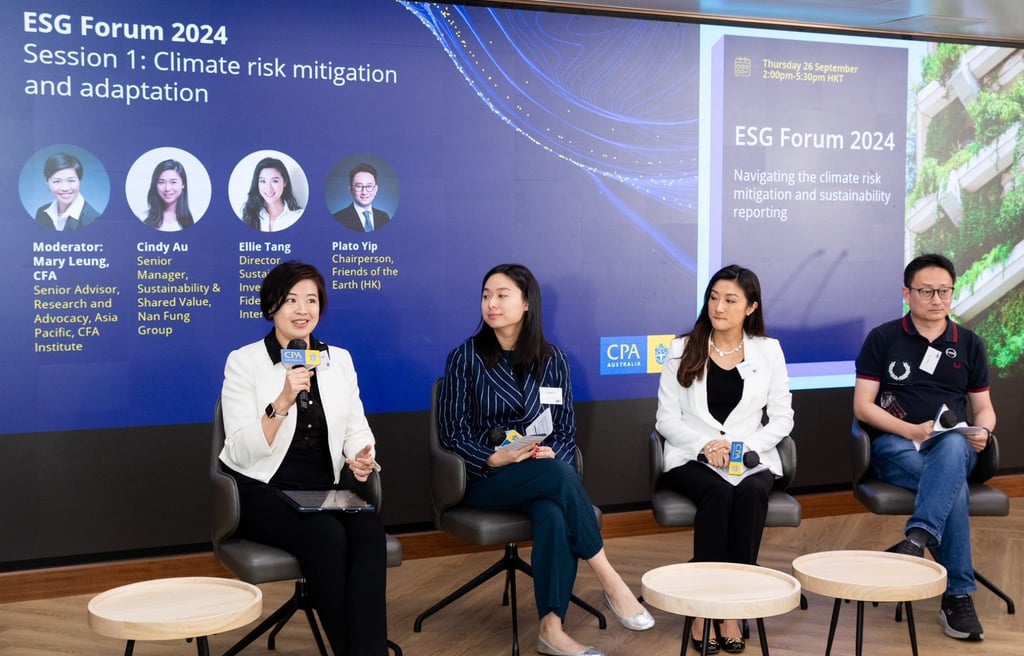
To navigate the complexities of technological transformation, AI fluency is increasingly indispensable to unlock new opportunities and stay ahead of the curve.
For a better understanding of how AI is shaping the future of the industry, and how current and aspiring finance professionals can best prepare for what is to come, CFA Institute encourages collaboration between finance professionals, data scientists and developers on its open-source platform, RPC Labs. Via a series of reports and webinars called “The Automation Ahead”, the research and policy platform leads discussions with investment professionals on the rise of generative AI and its tools and applications, as well as deployment challenges and solutions.
When it comes to education standards, the CFA Institute sets the bar high. In addition to its flagship CFA Programme, the organisation offers globally recognised certificates in sustainable investing and climate investing, which are eligible for subsidies from the Pilot Green and Sustainable Finance Capacity Building Support Scheme provided by the Hong Kong government.
“To fully leverage opportunities presented by both AI and sustainable investing,” says Hou, “finance professionals – including CFA charterholders, CFA candidates and learning and development teams – need to enhance their expertise in data science, AI, machine learning and sustainability. Our certificates are designed to meet these needs and promote best practices across the industry.”
To stay on top of AI development, financial professionals need to have a curious mindset, think critically and keep their knowledge up to date, adds Leung. “AI is not always right. And if you can develop a critical thinking and continuous learning mindset, then you’ll be better positioned to leverage AI for better outcomes.”