How design thinking’s user-centric approach helps Hong Kong embrace a cashless future
- While many Hong Kong residents prefer paying in cash, multinational bank HSBC has been leading the change with PayMe, a popular mobile payment app
- Experts say the app’s success is rooted in its design thinking approach, which places user-centricity at the heart of product development
The world is rapidly moving towards a cash-lite society with the continuing global spread of the coronavirus disease, Covid-19, helping to accelerate the demand for digital payment services.
Many people have been not only adopting social distancing measures during the pandemic, but also trying to avoid contact with people through the use of bank notes and coins by choosing digital payment methods or shopping online.
The growing popularity of e-commerce, mobile payments, and cloud computing systems is at the heart of the cashless transformation. As digital payments become readily available, consumers have been able to buy things without having to carry cash.

The relatively slow adoption of digital payments was an issue noticed by HSBC, the city’s largest retail bank.
“Hong Kong is a very modern society, but cash was still a very prominent part of daily life and it still is today,” Nico Guiridlian, customer experience lead at HSBC, says. “So we really wanted to try and solve that problem.”
One particular problem the bank identified was the difficulty of friends paying one another back after spending time together.
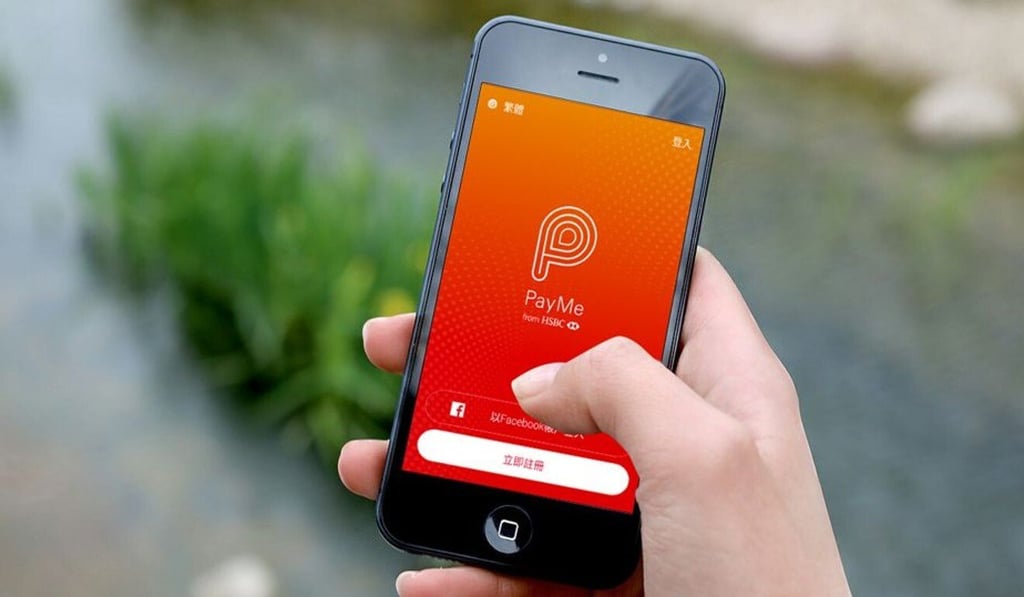
Guiridlian says the solution is PayMe – a mobile payment app that allows users to transfer money to one another by typing in their phone numbers. “We wanted to be part of those social gatherings and provide an easier way for people to pay each other back,” he says.
Since the app was released in 2017 it has become one of the most popular payment apps in Hong Kong, especially among the young generation. To date, it has gained two million users, or a quarter of the city’s population.

Designing with empathy for users
PayMe is simple to use. Users can register their mobile phone numbers in the app, and link their profiles to a bank account and a credit card, regardless of which local bank they use. Users can top up their balance and transfer money to another user instantaneously by typing in their mobile numbers or searching the contact list, all without an extra charge.
Users can also make a payment request after a social gathering, allowing them to split the costs at ease. Since March last year, the app has also expanded its services to business clients, allowing customers to make purchases at a number of brands.
Behind the app’s success is an emerging business strategy called design thinking, which places the needs of its users at the heart of product design.
Inaki Amate, head of design for Asia-Pacific at Ernst & Young, the professional services network, says the concept is centred around a user-centric approach that helps businesses validate whether their innovations can adequately solve a problem they have identified.
“Design thinking is all about understanding for whom you want to design,” he says.
To do this, businesses place customer feedback at the centre of product design, continuously listen to the needs of their target group while checking whether a solution works at every stage of product development.
Guiridlian says that for PayMe, his team has recruited thousands of people to a large customer panel with whom they regularly connect for feedback.
“One of the key things we've done is break assumptions that some of our own staff and product teams had,” he says.

Listening to - and acting on – customer feedback has been integral to the success of PayMe for Business, a feature that enables businesses to collect payments from customers using the app. Initially, the team believed they had to quickly sign up merchants to ensure the process remained convenient. But after receiving feedback, they realised merchants were not comfortable about rushing through the process and thus extended this onboarding journey.
“They’re looking for reassurance,” Guiridlian says. “They want to have enough information, potentially some help if needed, but certainly not [to be] rushed through that process.”
In response, the product team changed their approach when reaching out to potential customers, and decided to spend more time guiding businesses through the process to enhance customer satisfaction.
“The PayMe team has done exceptionally well because they have integrated design thinking in the whole process,” Amate says. “They had a design team that was responsible for making sure that that product was consistent from the beginning to the end, while following the needs of the users.”
Guiridlian says building empathy with customers has been central to PayMe’s design.
In one instance, the team received feedback from its panel that it is often culturally difficult to request money from friends after a social gathering. To resolve the problem, the app introduced a PayLink feature, which allows users to set up a unique link with a customised username for requesting payments.
“We didn’t want to make that process too difficult,” he says. “To make it a bit more personal, we actually allow people to customise that PayLink with their name or their favourite artist.”
Collaborate to elevate performance
At its core, design thinking is highly collaborative, involving people from varied backgrounds to co-create user-centric, commercially viable and technically feasible solutions. That’s exactly how the PayMe team, according to Guiridlian, was formed and continues to run.
“Initially, we had a small core team of HSBC employees, cherry picked from different parts of the bank to bring their individual expertise to such a project – from payment specialists to product owners, risk and legal, technology and design,” Guiridlian says.
The team, like its product, has since evolved and grown to include even more experts with varied and diverse work experience all working together.
“We comprise numerous disciplines and we are set up with cross-functional teams on the product and technology side. To continue improving functionality and drive more engagement, we leverage the expertise and collaborate very closely with other HSBC teams from sales to servicing, through to compliance and the bank management itself,” he says.
Besides greater customer satisfaction, research shows that design thinking can also be effective in elevating a company’s performance.
Amate says design thinking has become more popular in recent years as companies have increasingly seen the advantages of adopting this approach. “I haven’t encountered any business or organisation that would not benefit from the use of design thinking,” he says.

Overcoming obstacles
Guiridlian says a common challenge for big corporations in applying design thinking has been to show why it is worth embedding it into the development process.
“The way we've done it was to actually prove by doing, and bring those people the value that they didn't think they could get,” he says.
He suggests companies seeking to adopt this approach should start step by step and ensure they are tackling a manageable problem.
“Don’t try and tackle a very large challenge at once,” he says. “Try and break it down as much as possible and work with people through that.
Amate says organisations can also start by understanding the needs of their users and promote the value of design thinking among their members.
“You need to start thinking about building a small design community, and how they are going to be connected with the rest of the organisation to impact [on] the creation of new products,” he says.
“It helps the organisation to be sure that a product to be launched is going to succeed, because you've been trying to ensure that, in the end, customers are willing to use it.”