Why was a sustainable playground built on a Chinese mountain out of old bicycle tyres?
- American materials science firm Dow, Chinese e-commerce platform Meituan and charity Yao Foundation team up to create more than 10 sports areas in rural communities
- Cradle-to-Cradle initiative produces elastic, water-resistant material by upcycling unwanted polyurethane tyres as innovators also develop air-free foam alternative
[Sponsored article]
It takes an arduous eight-hour bus ride along winding, undulating roads from Chengdu, capital of China’s southwestern province of Sichuan, to reach the remote Yilong County Yinshan Primary School, where a sports playground has been built in the mountains.
Yet this sports area created for the use of the 120 children and wider community in the city of Nanchong, is not an ordinary playground; instead of its surface made of the usual hardwood and rubber, it has been layered with a material made from upcycled old polyurethane tyres sourced from discarded electric and shared-use bicycles.
It is one of more than 10 sports areas that have been refurbished across China’s rural areas by using the upcycled tyres as part of a sustainability initiative by Dow, the leading materials science company.

The Cradle-to-Cradle programme is a collaboration between the American multinational, Yao Foundation – a charity initiated by renowned Chinese former NBA basketball player Yao Ming, which supports the well-being and development of Chinese youth – and Meituan, one of China’s largest e-commerce platforms, which owns the station-free, bike-sharing company, Meituan Bikes.
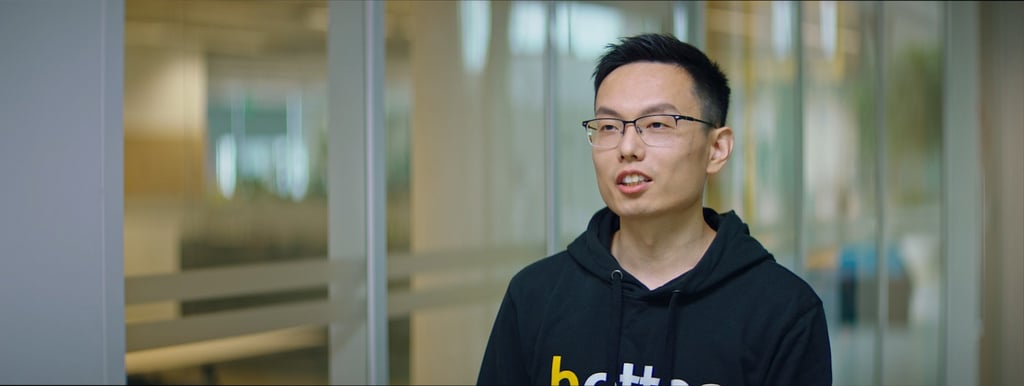
The initiative is the brainchild of Qin Hao, Meituan’s sustainability leader for transport. “One of the most touching memories from this campaign was watching children play basketball on the court on the mountainside,” he says.
“At another of the projects, we saw how the kids cheered, threw their backpacks on the ground and then rushed onto the new sports area’s basketball court at their school. I could feel their happiness, which makes this project meaningful.”
Over the past six years, Dow has been supplying the raw materials to produce bike tyres for Meituan, which has seen the demand for bike-sharing surge across China.
They have also developed an air-free polyurethane foam tyre, which meant that the first batch of bicycle tyres needed to be replaced.
However, they came up with a long-lasting sustainable solution that not only ensures the old, difficult-to-upcycle polyurethane tyres have a new lease of life, but also has a positive impact on some of China’s underprivileged communities.
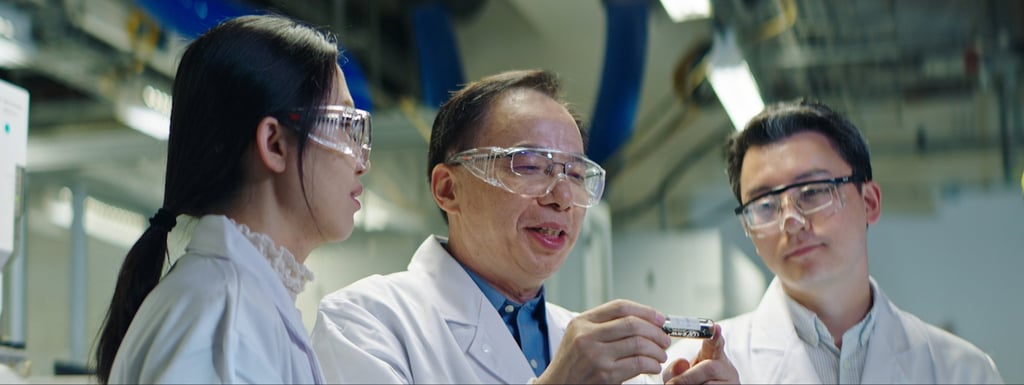
Dr Yao Weiguang, Dow’s chief technology officer for Asia-Pacific, led the research and development (R&D) of the polyurethane granules recycled from the old tyres.
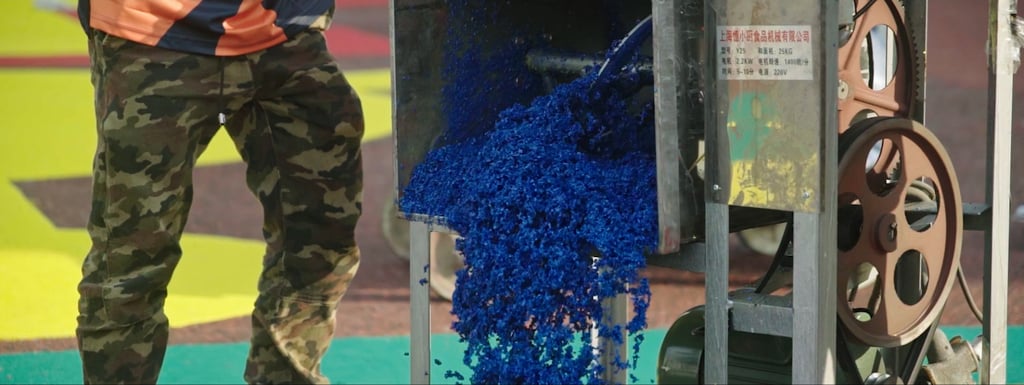
He says the old tyres are cleaned, crushed into small pieces and then mixed with rubber and Dow’s adhesives to create a sustainable material that is also elastic and weather-resistant.
Upcycling polyurethane materials is just one of the ways to help protect the environment, which has seen the devastating effects of global warming in recent years.
Yao describes waste as “a resource that is not put in the right place” – such as the more than eight million tonnes of plastic waste mankind generates annually – much of which ends up being discharged into the ocean.
He says one way consumers can contribute towards environmental conservation is by having a greater awareness of the life cycle of the different products they use in their daily lives. “The life cycle of a product is usually linear, from production to usage, to getting discarded,” he says.
However, the idea of a circular economy – which eliminates waste and recirculates products and materials – means raw materials from discarded items can be upcycled to give them a second or third “life”, and much greater value, Yao says.
He compares his job – overseeing the work of more than 700 R&D scientists at Dow, who are focused on creating innovative sustainable solutions – to “looking at the stars in the sky on a clear night”.
Yao says: “Each star represents the wisdom of our outstanding scientific research personnel: it’s a wonderful feeling to work with a group of such talented scientists and technicians.
“We are working at the forefront of materials innovation to create things that can help people lead better lives, which is something that fills me with great pride.”
Qin is equally proud to be part of the Cradle-to-Cradle programme, which combines environmental conservation with public welfare and education. “It is very rewarding to be able to participate in a sustainable development campaign which enables me to give back to the community,” he says.
Yao says more sports areas featuring recycled materials will be built in China’s rural areas as part of the programme in future, and there are also plans to expand the initiative abroad. “Sports areas, such as basketball courts, are more than just for playing on – they can serve as a bridge that connects children to the world,” he says.