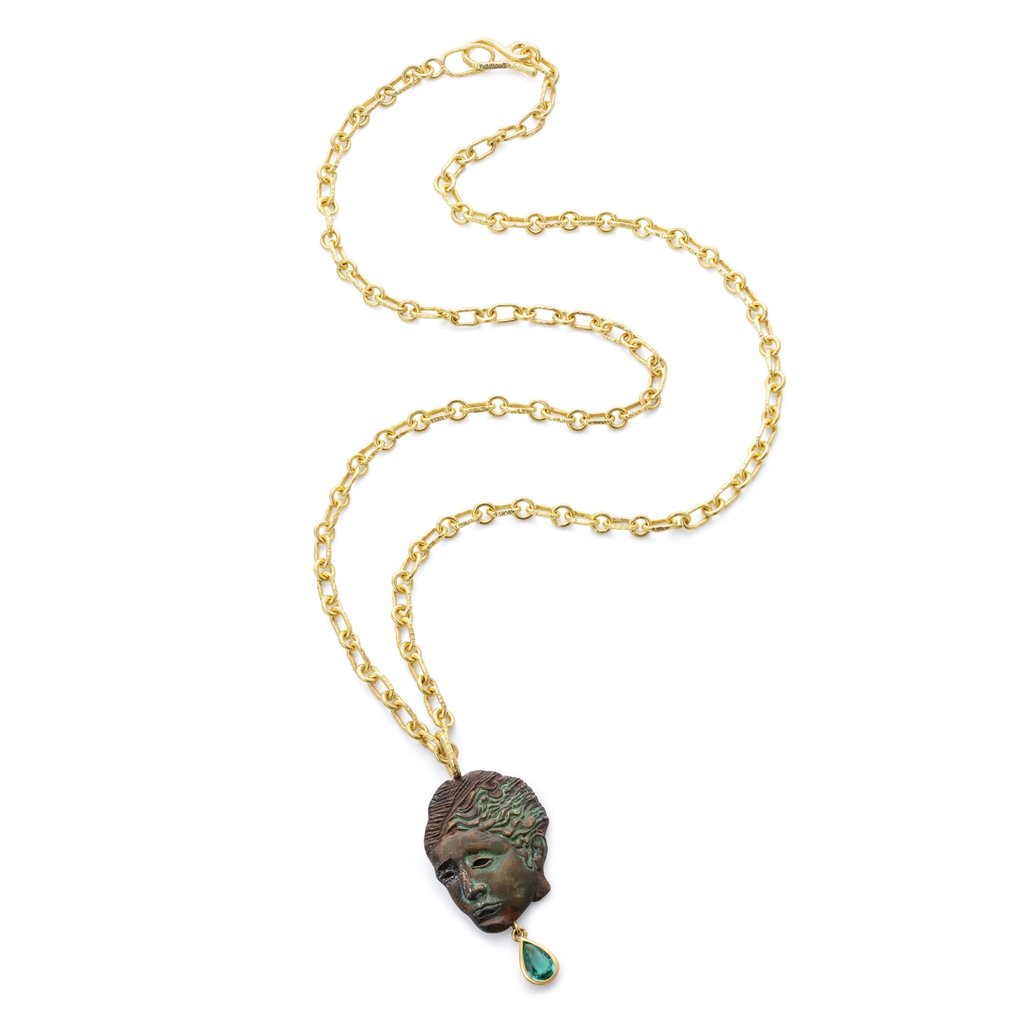
Why Vhernier and Hemmerle are turning from gold to bronze, copper and aluminium

Designers like Cora Sheibani, Joy Bonfield-Colombara and Inesa Kovalova are exploring the properties and potential of various metals
“Gold has gone astronomically expensive and thus it shifts again in its perception and wearability,” says British goldsmith Joy Bonfield-Colombara, founder of Joy BC, who is one of a number of makers exploring the potential of non-precious metals.
Independent jeweller Cora Sheibani has been working with bronze since the founding of her eponymous fine jewellery label in 2002. Her Circle ring, one of the first she ever designed, was inspired by an antique Roman ring she wore through her teens. “I wanted to make it in bronze and patinate it in different colours,” she says. The result fell short of what she had hoped as modern bronze, as she discovered, contains a small amount of silica to slow its chemical reactions, with the consequence that patinas remain largely superficial and wear away faster than they do on antique pieces.
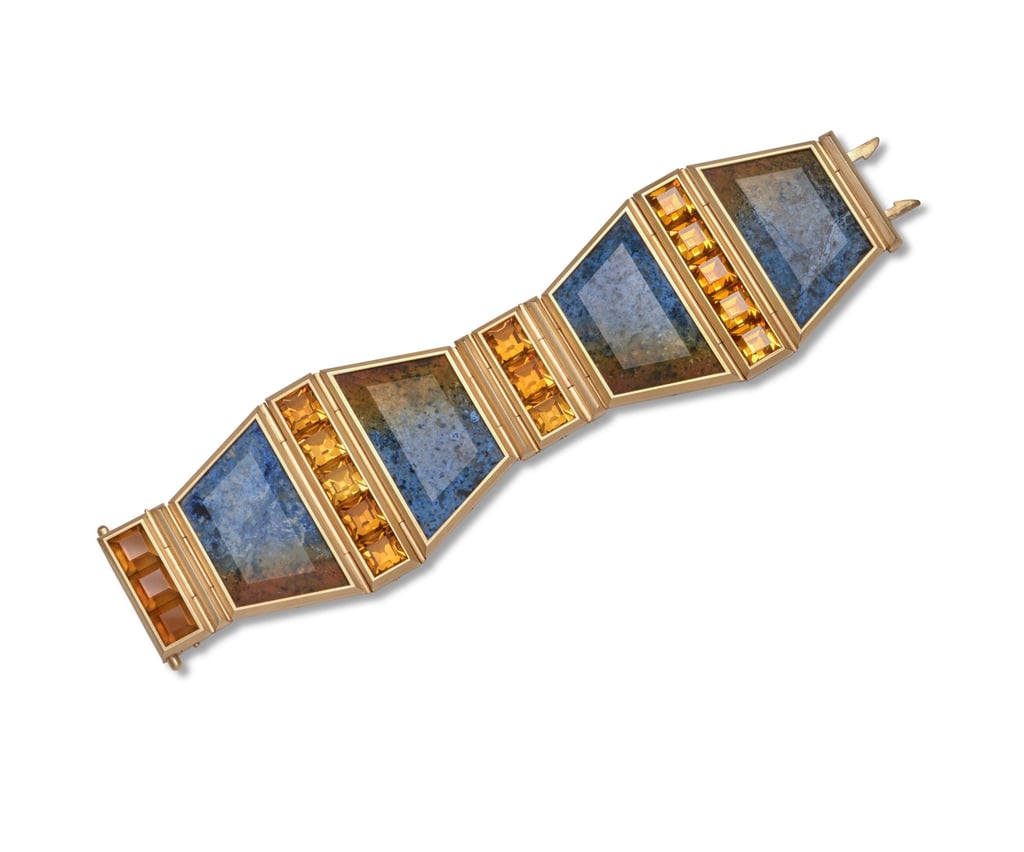
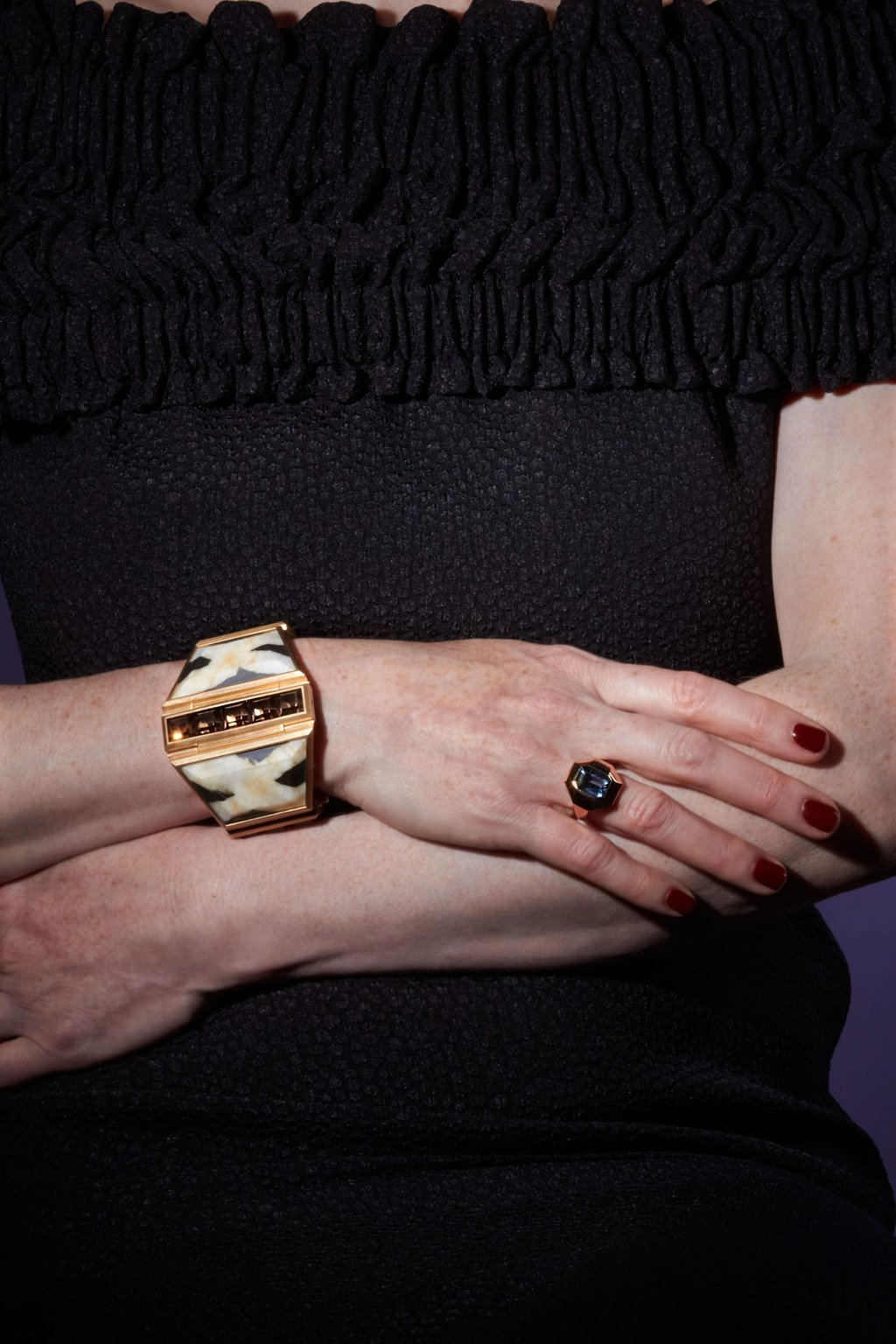
Her Double Pot bracelets, meanwhile, were cast in bronze with mechanisms and screws in red gold, using bronze’s lightness to allow larger, sculptural forms that would be too heavy in solid gold. Unlike her experiments with rings, the bronze on the bracelets does not discolour the skin or react with the elements. “It made me realise how intelligently the Romans understood this material centuries ago, and how much more bronze deserves a place in contemporary jewellery today,” she says.
For Bonfield-Colombara, bronze is the medium through which Japanese and European craft traditions meet. She first encountered Japanese metal patination as a student at the Glasgow School of Art, on a 2012 placement in the country under a master who taught her to make a Damascus steel knife. He showed her an Edo-period katana decorated with insects in bone, wood, coral and bronze.
“There was a smaller knife concealed in the sheath, with an intricate centipede made of bronze and copper that had a deep brown and red tone,” she says. “That was where I first asked about this technique of metal coloration.”
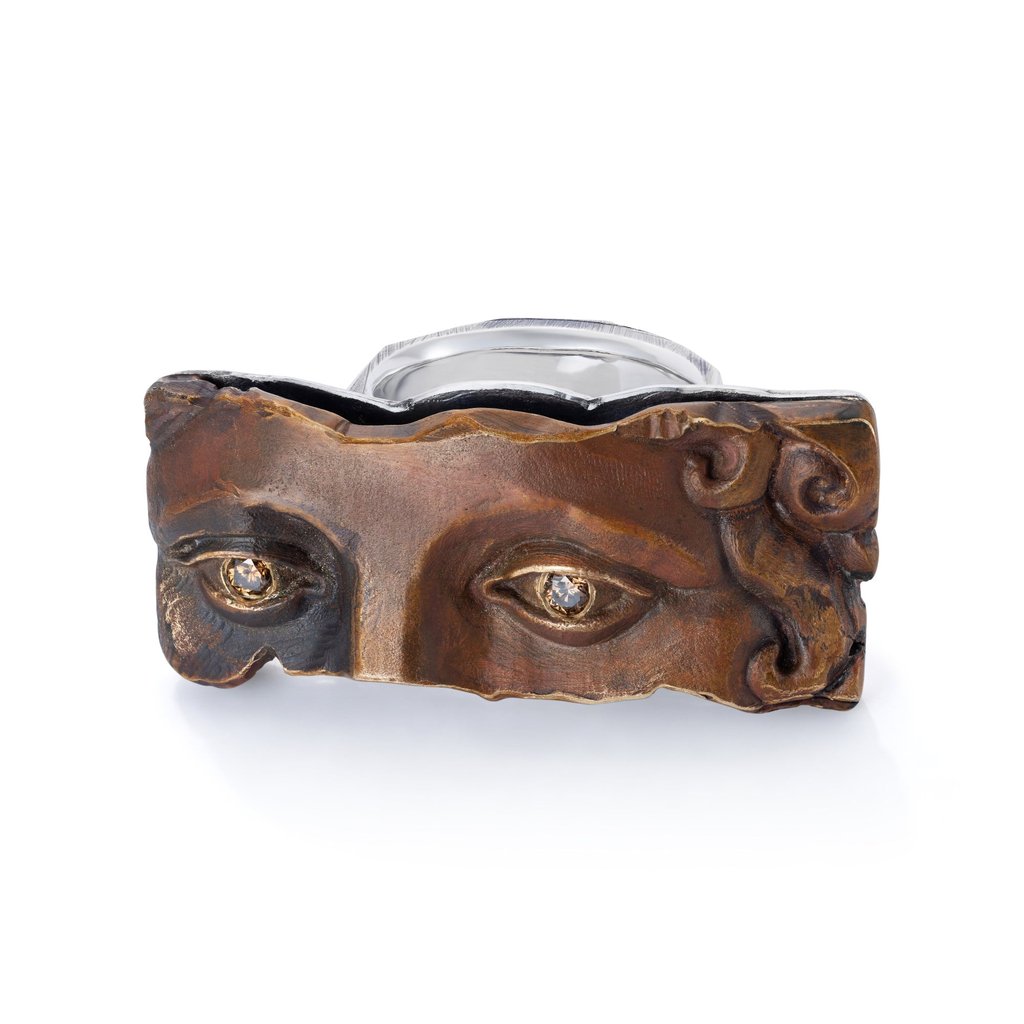
Years later, on a Royal College of Art fellowship at Kyoto’s oldest art school, she returned to the metal. The Gaze series, made in 2023 for a Kyotographie festival exhibition with the photographer Olivia Rose, is the result. Two bronze brooches, later extended into rings, draw on the 18th century European tradition of lovers’ eye jewellery. One uses an Eastern patina with hazel diamonds, the other a verdigris finish, more associated with classical Italian and Greek sculpture.