Explore Estonia: land of old believers, onions and chocolate box good looks
- Travelling south along the Russian border, from the rebuilt town of Narva to the capital Tallinn
- The beliefs of the starovery, who settled on Lake Peipsi’s shores, survive despite dwindling numbers

During World War II, Narva was contested by the Nazis and the Soviets. This northeastern Estonian town was one of the few places where the Germans halted the 1944 advance of the Red Army, delaying the Soviet victory for six months. Ninety-eight per cent of the town’s buildings were destroyed in the fighting. Today, almost 30 years after Estonian independence, 85 per cent of Narva’s population of 57,000 are ethnic Russians and more than one-third are Russian citizens.
Rebuilt in the 1970s, the town’s medieval Hermann Castle has ramparts that descend to the banks of the grey Narva River, which separates Estonia from Russia and from where it is possible to stare across the water to Ivangorod and a 15th-century fortress with Russian tricolour flags fluttering on its turrets.
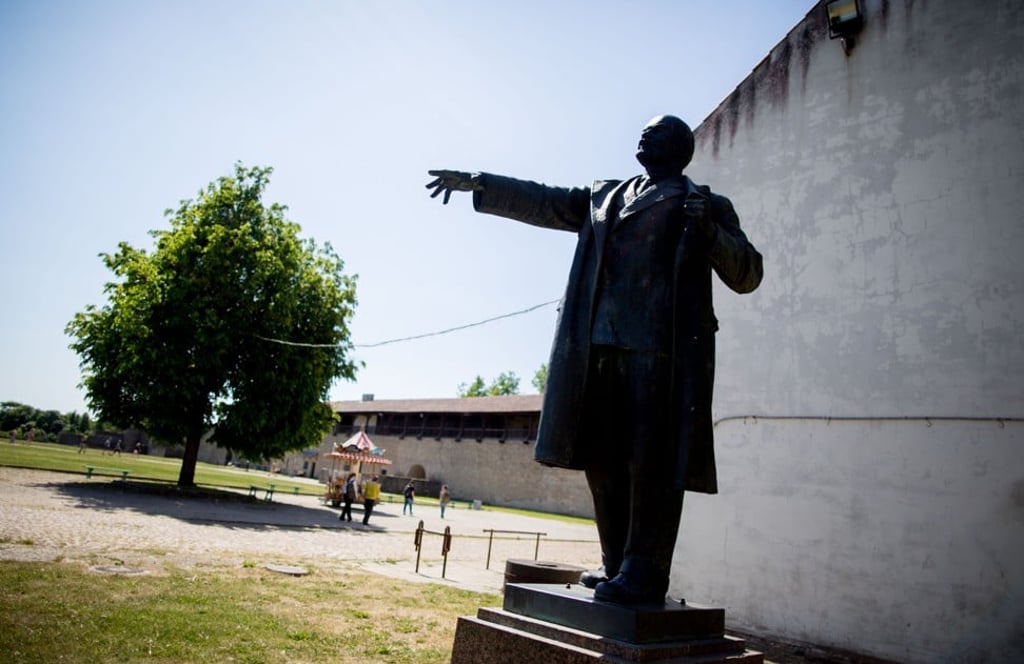
Hermann Castle’s windswept main courtyard is watched over by the last statue of Vladimir Lenin standing in Estonia. The effigy of the Soviet Union’s first leader is 10 feet tall, right arm raised, defiant and eternal in bronze. It stood proudly in Narva town centre for 41 years before being removed in 1993, two years after Estonian independence. Narva’s mayor insisted the cable used to hoist Lenin from his pedestal should not be tied around his neck as a concession to local loyalists.
The drive south from Narva follows a border of fences and fields to Lake Peipsi, where marker buoys leave visitors in no doubt whereabouts in the water Russian territory begins. Tarmac turns to gravel as my car crunches through the small villages by the lake, following a route known locally as the Onion Road – no prizes for guessing what villagers grow in these chequerboard fields. The sun is out and locals have come to swim in Peipsi’s tideless water, pick raspberries in the surrounding forest and sweat in wood-burning saunas.
The villages along the Onion Road are home to the starovery, or “old believers”, whose ancestors broke from the Russian Orthodox Church and settled here 350 years ago. They refused to shave off their beards or wear Western clothes and sought out the shores of a lake big enough for full-immersion baptisms, as their religion demands. There are no more than 2,500 starovery left and the collapse of the Soviet Union and closing of borders means the road to Leningrad is no longer busy with the old believers’ onion trucks.