“Ninety-twoVietnamese men are likely to face rioting charges today, as investigations try to piece together the causes of this week’s horrifying blaze in Sek Kong Detention camp,” ran the story in the South China Morning Post on February 6, 1992.
“The men, aged between 15 and 34, will appear in court in connection with the Lunar New Year Eve tragedy, which left 21 boat people dead [the final death toll would be 24] and 126 injured in what could become Hong Kong’s biggest murder case.”
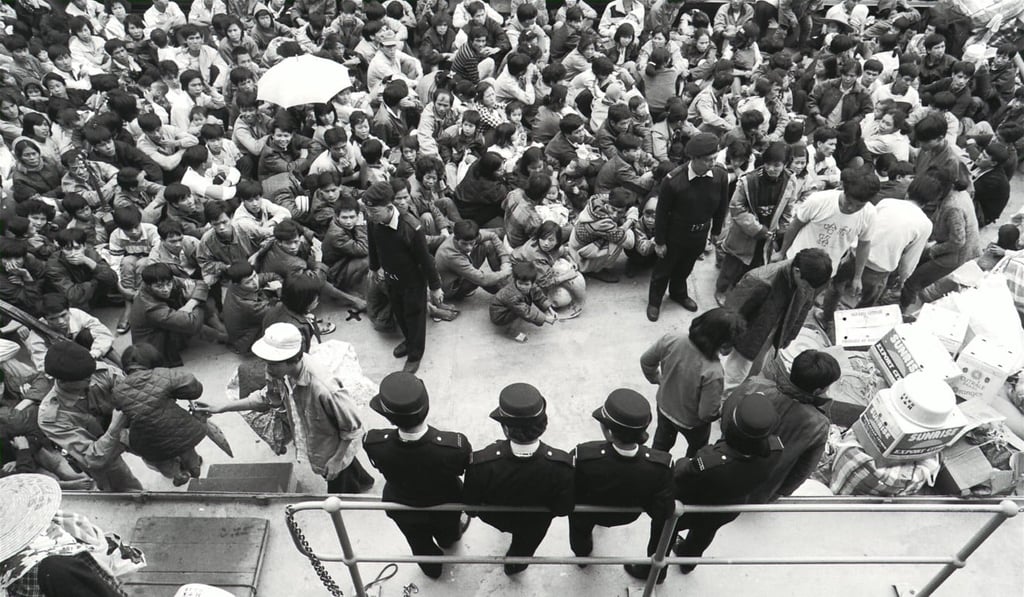
Marine police guarding a group of northern Vietnamese boatpeople, while they wait to move with their belongings to Hei Ling Chau following the 1992 fire. Picture: SCMP
The February 3 violence apparently began after a dispute between two inmates over hot water. “Later, hundreds of northern inmates of section C clashed with southerners in section D […] Police believe a group of about 200 northerners took refuge in hut 6, one of nine makeshift huts holding 830 boat people awaiting voluntary repatriation to Vietnam. [About a 1,000] southerners were believed to have encircled the hut and pushed burning blankets through the windows and a hole in the floor. A reinforced squad of 200 officers […] was unable to reach the burning hut before the deaths occurred.”
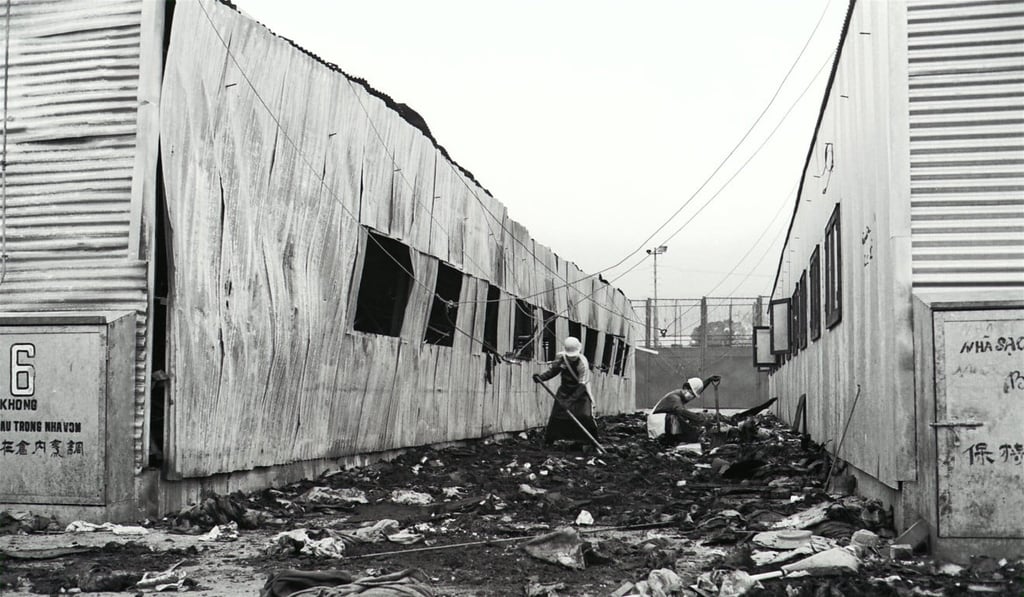
The wreckage of huts in the Sek Kong Detention camp after the blaze.
It was the worst violence between North and South Vietnamese in the facilities used to hold refugees since Hong Kong began accepting asylum seekers from the country in 1975. First reports in the Post appeared three days after the event, the newspaper not having published an issue over the Lunar New Year period.
A relief worker said, “[The southerners] set the hut on fire first, then they surrounded the hut. Then they used clubs and hit people while they ran outside, even women and children and one pregnant woman.”