When the West went East: photos of China’s treaty ports
Grand Western-style buildings scattered across China, a legacy of the 1840-1943 treaty ports, are the subject of Nicholas Kitto’s new book

In the mid-1990s, I began to travel frequently from Hong Kong to the Chinese mainland on business. In Tianjin in 1996, I managed to locate the house in which my father lived until he was six, before the family relocated to Hankou. (My grandfather worked for the Asiatic Petroleum Company [North China], one of two subsidiaries of the Royal Dutch Shell group operating in China at the time.)
In December 1997, armed with one of my father’s photographs, taken around 1930, I was able to locate the former Tientsin Country Club, which my father remembered well, if only from the outside, as children were seldom permitted within.
While visiting Tianjin with my father in November 2004, we walked around the old city centre and it was hard not to notice a significant number of Western-style buildings. I wanted to know who used them and for what purpose, how many more of them remained in China and where they were.
And so I discovered the treaty port era, loosely defined as 1840 to 1943, when Western powers established extraterritorial trading posts, consulates of profit in the Far East, the number in China growing from five to more than 70 during the century.
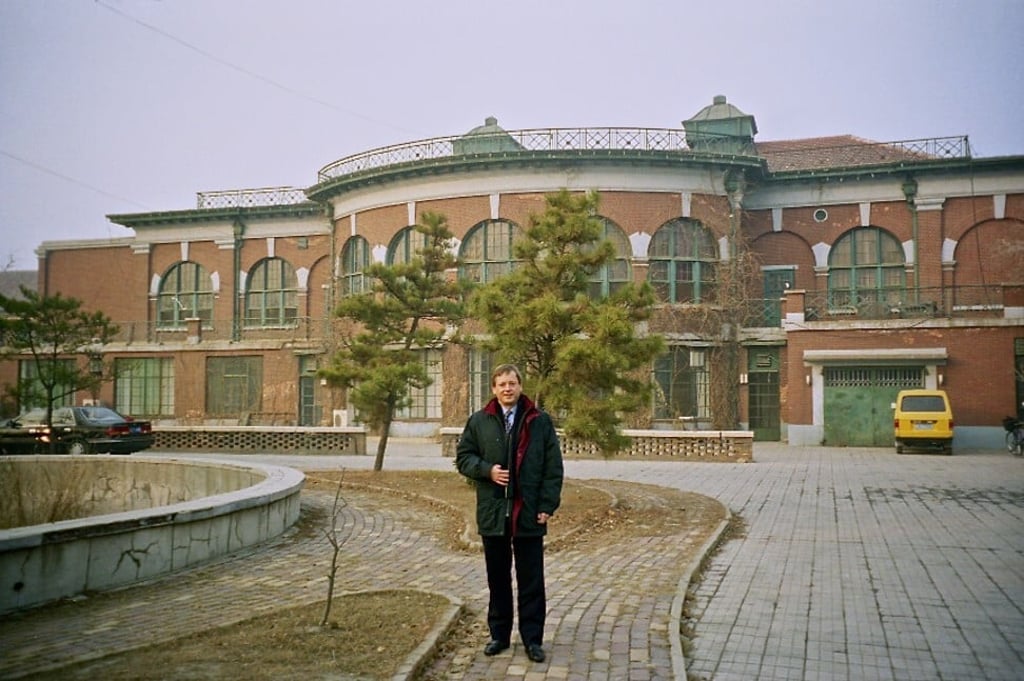
I was soon fascinated by this aspect of colonial history and my family’s place within it. In September 2008, my exploration of China’s former treaty ports commenced in earnest.