How symbol of South Korea’s Me Too era gave voice to women silenced by sexist culture
- ‘Kim Ji-young, Born 1982’, a book about a young mother’s struggles in a patriarchal society, has become a cultural touchstone
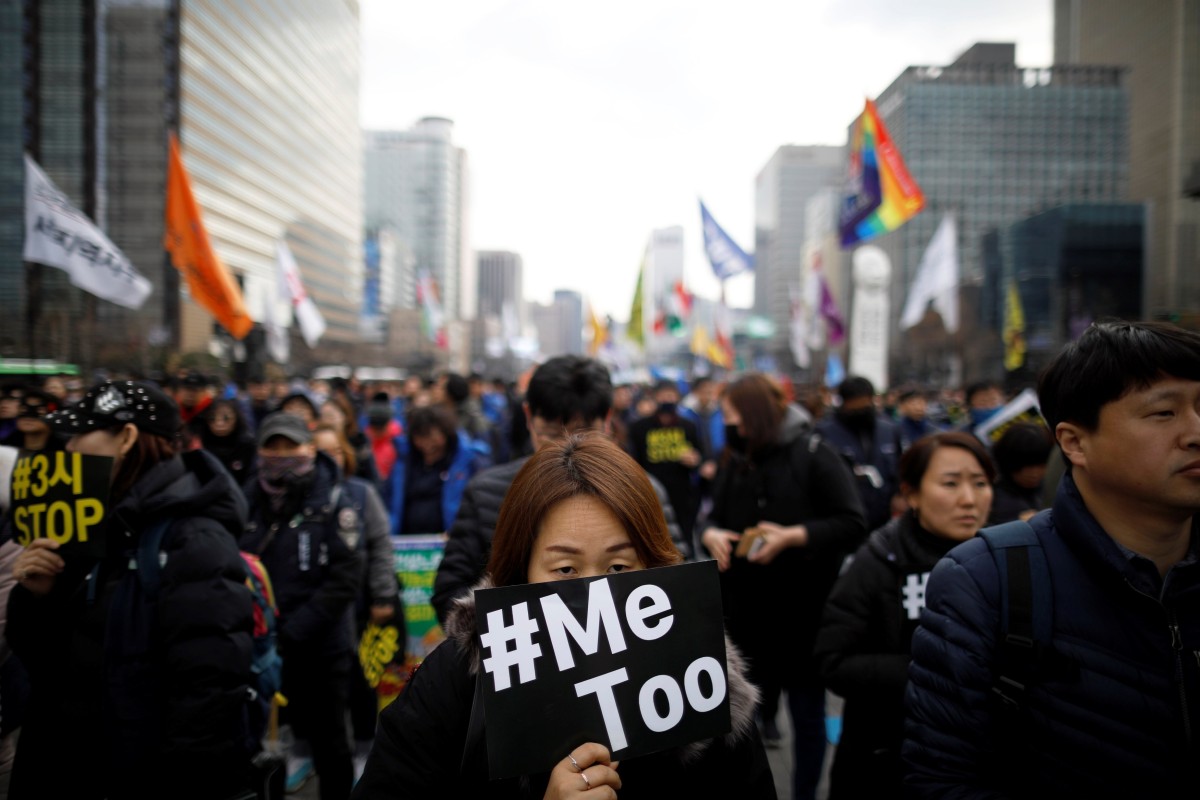
- The #MeToo movement has galvanised thousands of Koreans to take to the streets and seen several famous men imprisoned for sex crimes
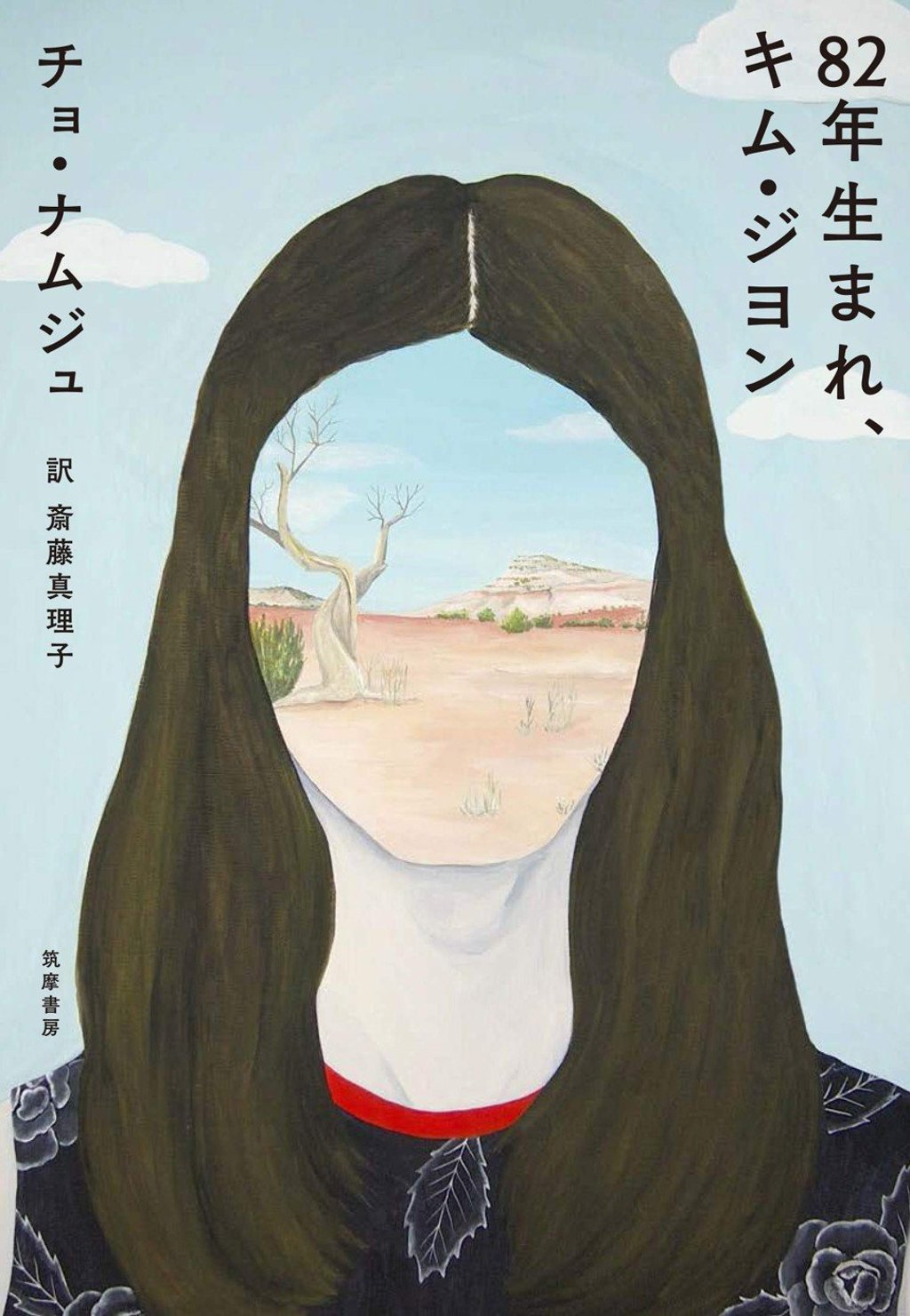
In October 2016, the Korean publishing house Minumsa released a short novel called Kim Ji-young, Born 1982, the latest in a series of works of fiction by “today’s young writers”. The author is a former television scriptwriter, Cho Nam-joo, born in 1978, who had published well-received short stories. She wrote the novel in two months, inspired by her favourite English-language writer, Rebecca Solnit, and maddened by the turns her own life had taken as a Korean woman and the treatment she faced as a new mother. One day, while taking a coffee break with her baby, she heard male passers-by refer to her as a “mum-worm”, a nasty epithet for mothers who have the gall to leave their homes.
The name in the book’s title, “Kim Ji-young”, is the Korean equivalent of “Jane Doe”, an everywoman. The novel has sold a million copies, one for every 50 people in South Korea. It’s been touted by celebrities and was given to President Moon Jae-in by another prominent politician. There are plans to translate it into 18 languages, including English (the Japanese version quickly became a bestseller), and it will soon be turned into a film. Park Hye-jin, the editor at Minumsa who acquired Kim Ji-young, tells me that the novel’s virtue lies in its broad social impact. It promises that “if we speak up, even quietly”, she says, “these issues won’t revert back to being individual problems”.
Several fiction writers I speak to call the book “middling” and “uninteresting” as literature, yet its very accessibility may be its source of power for many readers. The diction is simple, the writing artless; the world of the novel, told in a basic third-person voice, claustrophobic. To read the book is to imagine being an aggrieved millennial and to trace her path through everyday misogyny.
It is curious that a book not primarily focused on sexual violence has become a cultural touchstone for Korea’s version of the Me Too movement. But the local activism grouped under the American label of Me Too must be understood as a total rebellion against deeply patriarchal, Confucian structures that, in the digital era, have found cruel new forms.
In 2015, two years before the Harvey Weinstein allegations in the United States, a police crackdown on Soranet, an illicit porn site, forced Koreans to confront a terrible reality. Porn is illegal in Korea, and thus exchanged through underground networks – this was nothing new – but consumers were now downloading countless images of women and girls that had been obtained secretly, without their consent.
Revenge porn and footage from spy cameras in women’s bathrooms and changing rooms were being streamed on smartphones and bought and sold on websites, on a scale few had previously understood. In 2004, in response to an earlier epidemic of Peeping Tom photography, the government had banned the disabling of the camera-shutter sound on Korean mobile phones. But the regulation was less effective for video. Across the country, it’s common to see women’s bathroom stalls whose every crack and crevice are plugged with tiny wads of toilet paper.