How Chinese money is changing Sihanoukville – ‘No Cambodia left’
The once-sleepy beach town of Sihanoukville has been transformed by Chinese investment – and the sheer speed of development has divided locals

Inside a lavishly decorated casino, where chandeliers hang from the ceiling, cigarette smoke lingers in the air and platters of mango are served to gamblers, a game of baccarat is getting heated. Cards are slammed down, US$100 bills are brandished and Chinese tourists shout excitedly.
This is not Las Vegas, nor is it Macau. It is Sihanoukville, a once-sleepy seaside city in Cambodia that has become a ballooning enclave for Chinese-run casinos – despite gambling being banned. These towering skyscrapers and vast domed structures covered in flashing neon signs have transformed Sihanoukville beyond recognition in less than two years. It will have more than 70 of them by the end of this year.
As home to Cambodia’s only deep-water port – part of a vital trade route for Chinese President Xi Jinping’s Belt and Road Initiative – the city has become a focal point for investment from the Asian superpower. Vast Chinese-run construction projects are visible across almost every area of the city and its high streets are now lined with majority-Chinese businesses and restaurants.
Cambodian Prime Minister Hun Sen’s willing embrace of Chinese investment, unlike neighbouring countries Thailand, Myanmar and Vietnam, has ensured Cambodia is at the core of Belt and Road plans in Southeast Asia. The southern coast of Cambodia is now home to US$4.2 billion worth of power plants and offshore oil operations, all owned by Chinese companies. Beyond Sihanoukville, Belt and Road money is financing a new highway to the capital Phnom Penh, and a bigger airport in that city.
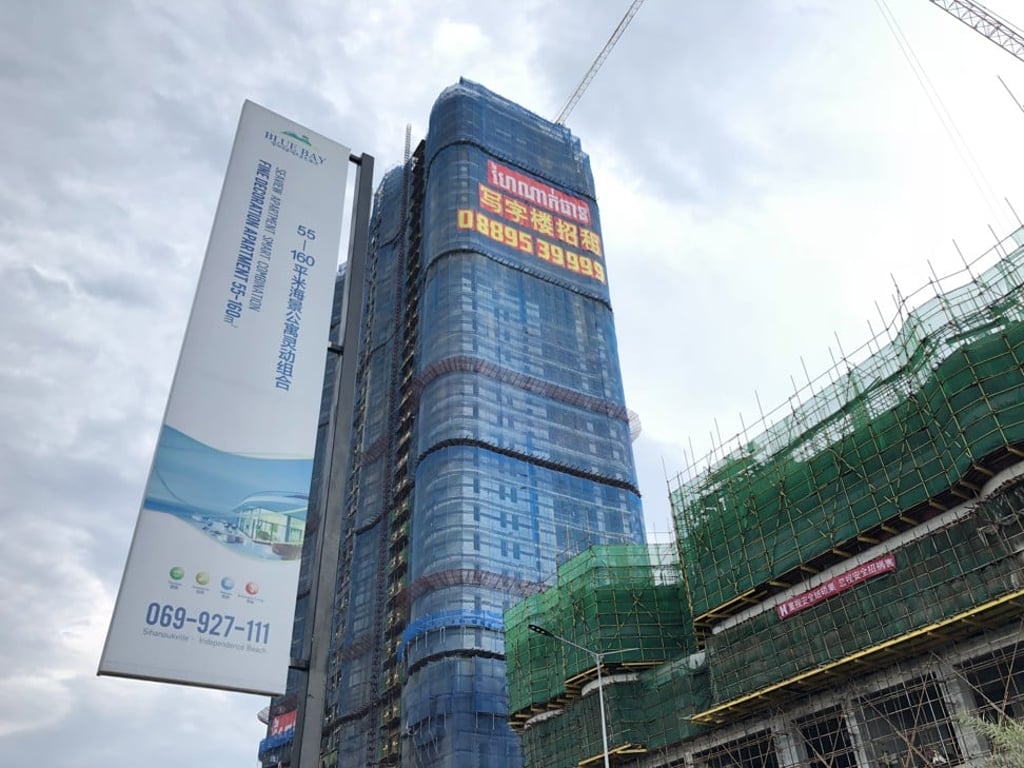
Sitting outside her family restaurant and guest house at Otres Beach, 23-year-old Deu Dy gestures with concern to the huge Chinese resort complex being built next door. It has gone up in less than a year, with construction 24 hours a day.