Hong Kong war child, surfer, biker, barrister: John Haynes on 75 years of adventures
The 75-year-old, who lives aboard a boat in the city, recalls early life in Stanley internment camp, fleeing China’s civil war, his bratty days in Japan, and making HK$133,880 at his first trial in Hong Kong in 1987

I was born in Hong Kong in October 1941, together with my twin sister, Diana. She was bigger and brighter than me and taught me early on that women rule the world. We lived in a flat on The Peak, but my earliest memory is of when we were about 3½ years old, in the summer of 1945, in Stanley prisoner-of-war camp. I remember seeing a big American plane releasing a bomb that landed in the sea adjacent to our camp. A huge amount of fish were dynamited and floated up the beach, and we all got very excited. But we weren’t allowed near them: the Japanese ate them.
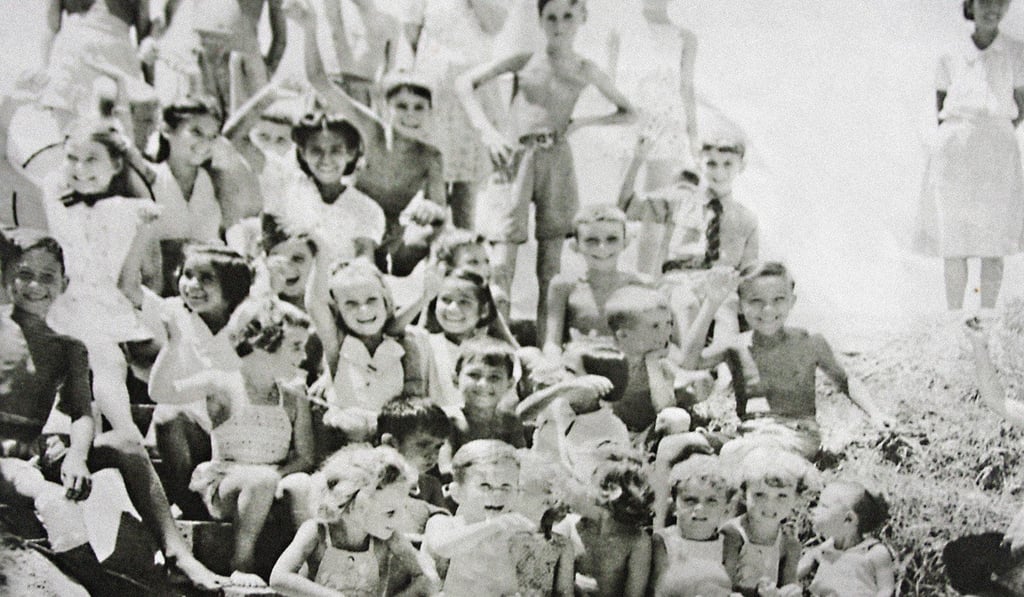
We arrived back in England on December 18, 1945. My father – who had been in Sham Shui Po prisoner-of-war camp – met us at the gang plank. He hadn’t seen his twins for exactly four years – since December 18, 1941. My parents then took us to live in Shanghai, where they had met before the war. But then, when Mao’s lot were approaching Shanghai in 1949, my mother returned home one day – she was pregnant with my brother at the time – and found Nationalists building a machine-gun nest in our garden. I remember that night: my mother, twin sister and I (aged eight) took a flying boat off the Yangtze River and landed in Hong Kong harbour.
I went to US Army School (in Japan) ... Once, we got hold of an air gun and wandered the streets, shooting out light bulbs ... The children of the victors could do whatever they liked
We stayed with friends and, ironically, went to Stanley Fort School, only a few hundred yards from our former prisoner-of-war camp. But we were allowed to roam free between Stanley and a place called Turtle Cove – a long stretch of rocky beaches and mountains and caves, where we searched for bats and snakes. Then (in 1950) my father’s work moved their Asian headquarters – and us all – to Japan.
I went to the US Army School, with rough and tough army kids. Once, we got hold of an air gun and wandered the streets, shooting out light bulbs from the public street lighting. No Japanese would dare intervene. And we got anything we wanted from the shops without paying. The children of the victors could do whatever they liked. The only people we had to watch out for were the American military police – if they caught us they would slap us around and take us back to our parents.
The decisive moment came at my ninth birthday party. My father had to search the departing child guests and strip them of stolen goods. After that, I was sent to boarding school for a better upbringing.
At prep school (in the west of England), I was sporty but I wasn’t a star academically. However, I discovered I could get through exams by remembering everything. It’s a useful thing for an advocate – you read endless facts in criminal cases, and if you get them wrong it can be a disaster. Once a year, I would fly to Tokyo to see my parents. It took three days by plane. I travelled with a large group of boarding-school kids, including my sister. We discovered that all of us running up to the front of the plane at once would upset the autopilot. I still like turbulence today – because it’s just like surfing.