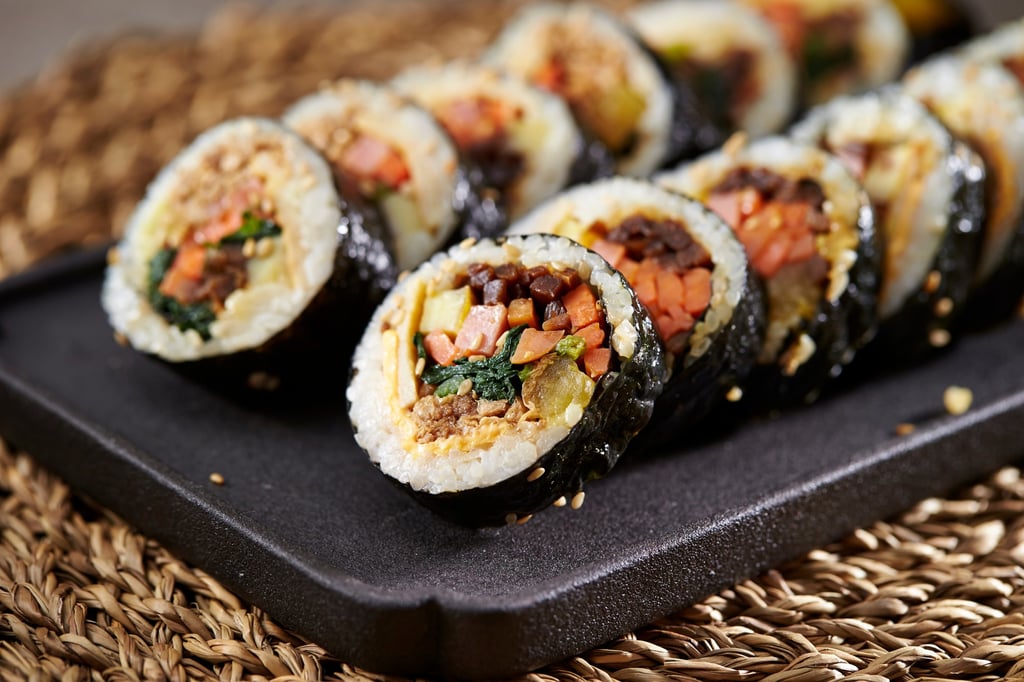
Netflix K-drama Extraordinary Attorney Woo has boosted kimbap sales worldwide, but what is this Korean food, and where did it come from?
- Extraordinary Attorney Woo, the international Netflix hit about a kimbap-loving lawyer with autism, has helped raise sales of the Korean rice and seaweed snack
- But what are the Korean staple’s roots, and how is it different from Japanese norimaki? With new twists and regional varieties, the snack is constantly evolving

This summer, global sales of a beloved Korean dish – kimbap – have been soaring thanks to the new Netflix series Extraordinary Attorney Woo. The Korean drama features an endearing lawyer with autism spectrum disorder who eats only kimbap and whose father owns a kimbap restaurant.
The show quickly became an international runaway hit and the dish has since been flooding social media.
For the uninitiated, kimbap (also transliterated as gimbap) is a Korean dish made of rice, cooked vegetables and other fillings all rolled in a dried sheet of laver seaweed and usually sliced into circular, bite-sized pieces. The two main ingredients – seaweed (kim in Korean) and rice (bap) – give the dish its straightforward name.
For my generation of Koreans – born in the 1970s and 80s – kimbap is a symbol of childhood. I remember rolling kimbap with my mother in her kitchen while I was still in primary school, learning how to slice the rolls swiftly but gingerly so as not to squash them.