Why Santiago de Compostela is increasingly desperate in the face of overtourism
Spanish city Santiago de Compostela is trying to cope with a huge increase in visitors, mostly pilgrims from the Camino de Santiago route

While some Barcelona residents sought to repel a tsunami of tourists with plastic water pistols, a neighbourhood association in Santiago de Compostela opted for a friendlier approach: a guide to good manners for visitors to their town, the endpoint of the Catholic world’s most famous pilgrimage.
Translated into several languages, the guide was posted throughout the northwestern Spanish city and distributed at its ever-growing number of hostels. It reminded tourists to keep noise down, respect traffic rules and use plastic protectors on hiking poles to avoid damaging the narrow cobblestone streets, among other things.
It was to little avail, it would seem. Large groups still take over the streets singing hymns, bikes ride in the wrong direction and metal pole tips clatter against the ground. Santiago’s social media is awash with photos denouncing a lack of decorum.
The greater offence, though, stems from their sheer numbers; today, the old town and squares surrounding the cathedral holding the reputed tomb of Saint James the Apostle are almost exclusively the domain of outsiders, whose influx has served to expel residents.
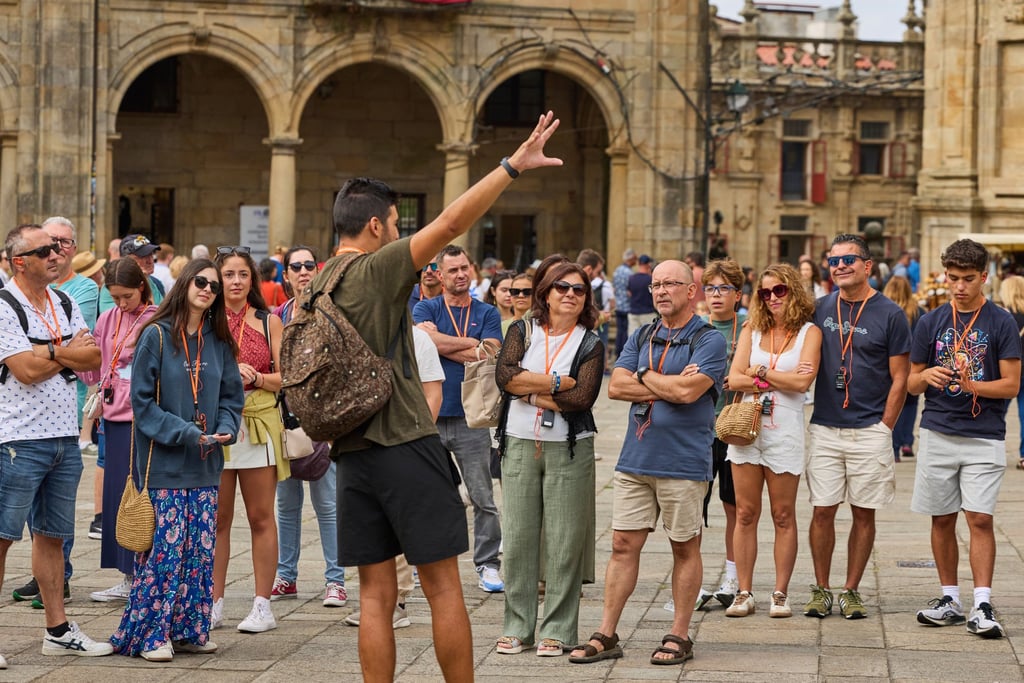
This dynamic has left Santiago emerging as the latest global destination where long-time residents have grown embittered by the overtourism transforming their community.