How Ghana is losing its coastline and parts of its slave trade history to climate change
Ocean surges are eroding the coastline of Ghana, and with it remnants of the West African country’s historical role in the slave trade

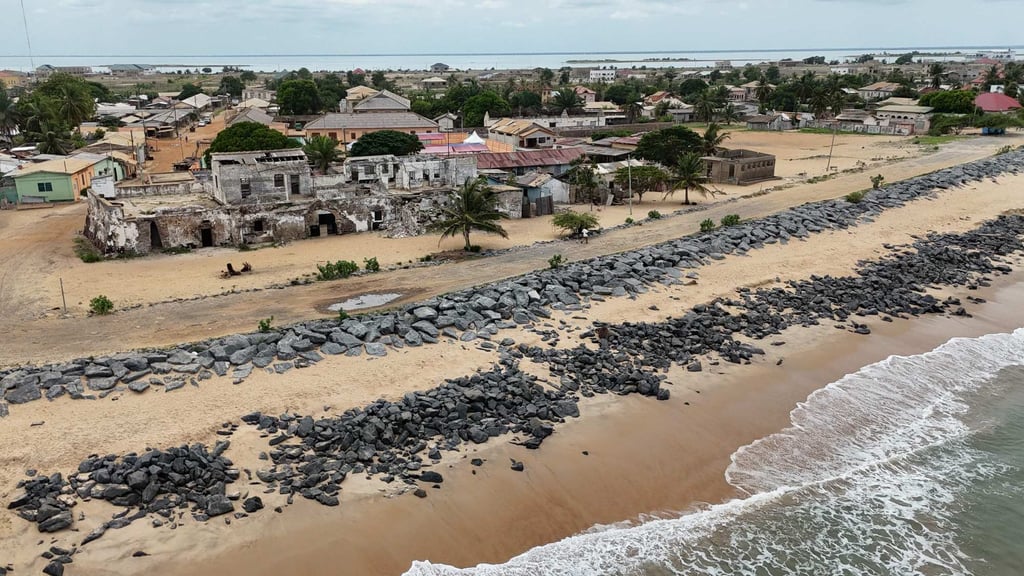
The salty wind blows across the ruins of Ghana’s Fort Prinzenstein, where thick walls once held thousands of enslaved Africans before their journey across the Atlantic. Now only a shell remains – a crumbling monument teetering at the edge of the sea.
For centuries, Ghana’s coastline has borne the brunt of history. Today it is being consumed by nature and neglect as climate change, rising sea levels and unchecked human activity eat away at the 550-kilometre (340-mile) shore. Villages are vanishing, and with them, centuries-old heritage.
The modern economy is also at risk. A few metres away from the fort, Ernestina Gavor cleans a glass behind a bar. “I’m hoping it survives a few more years,” she says, noting that the restaurant relies on tourists to keep afloat.
Fort Prinzenstein, once a Danish slave fort and now a Unesco World Heritage site, is among the most threatened sites on Ghana’s coast.
James Ocloo Akorli, its caretaker for 24 years, has watched the Gulf of Guinea claw away at the structure – and his memories.