No pain? How extreme body piercing of Thaipusam Hindu festival devotees hurts piercers more than pilgrims
- From skewers though cheeks to sharp hooks embedded in backs, body piercers preparing pilgrims for Thaipusam have the Hindu festival’s most important job
- They claim their subjects do not feel pain; in fact, they can be the ones who suffer. We find out how, from inducing trances to fasting before piercing begins
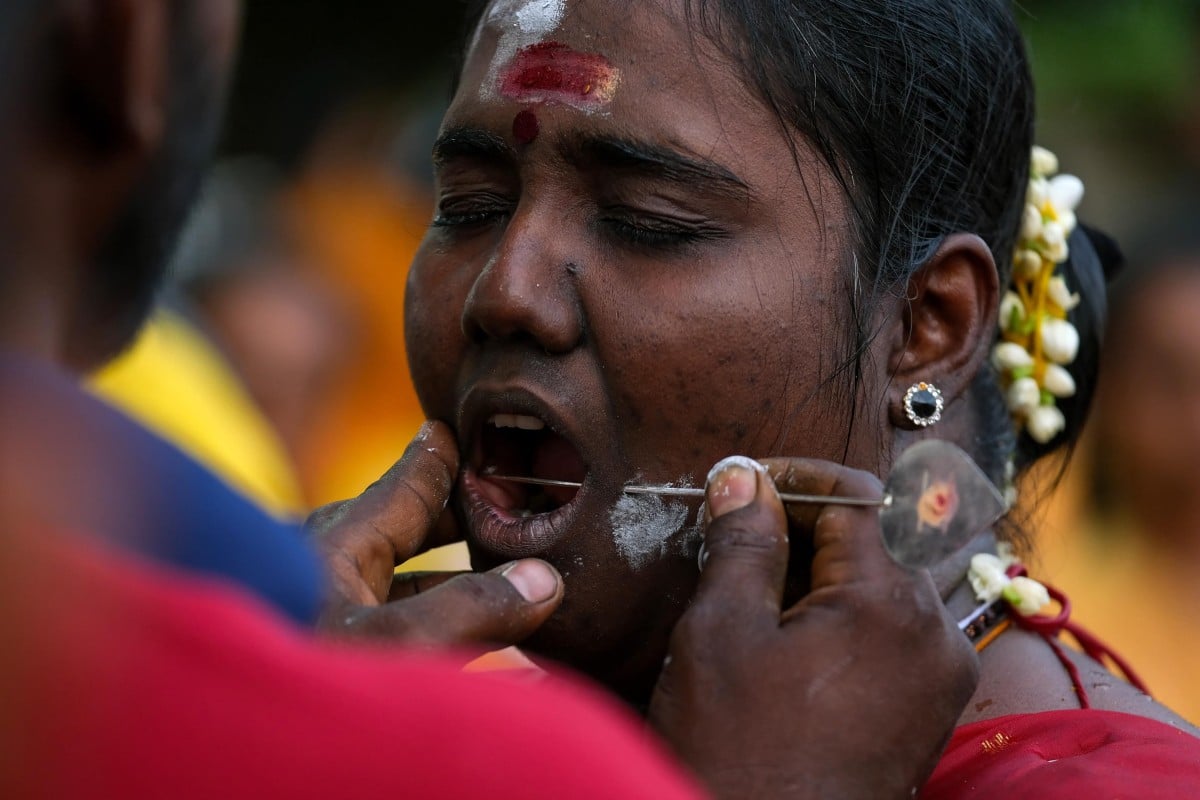
The most striking feature of the Hindu festival of Thaipusam is devotees carrying symbolic burdens of gratitude, ranging from milk pots to complex arrangements of heavy ornaments. But they don’t use their hands. Instead, the objects are attached to their bodies with sharp rods and hooks.
A heady mix of religion, culture, determination and willpower, Thaipusam marks the day when the mythical Lord Murugan – dispenser of favours, and god of courage, wealth and wisdom – defeated an evil demon using a spear called a vel, and in doing so saved humanity.
The festival’s name is derived in part from the 10th month of the Tamil calendar, called “Thai”, and “pusam”, which means “when the moon is at its brightest”. It is celebrated during the full moon in the month of Thai, which usually falls in either January and February, and takes place this year on February 8.

Kavadis range in size and style from the humble paal kavadi – a pot of milk carried on the head – to elaborate constructions comprising decorative frameworks of steel rods and plywood, laden with heavy ornaments. Almost all have one thing in common, however. Carrying a kavadi involves some kind of body piercing to secure it.
This ritual of self-sacrifice, and the trancelike state devotees enter into when their skin is being pierced, is intended to defeat inner demons and gain Lord Murugan’s blessing.